
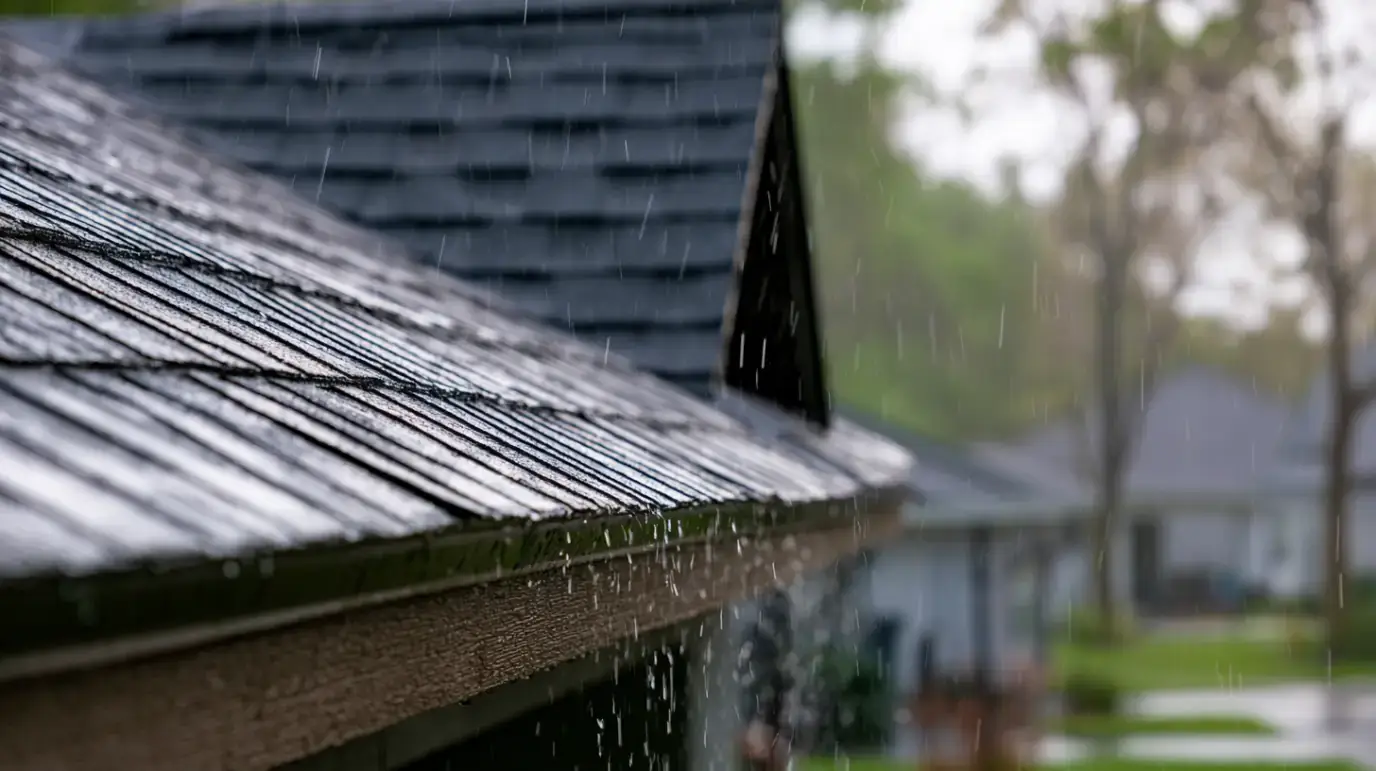
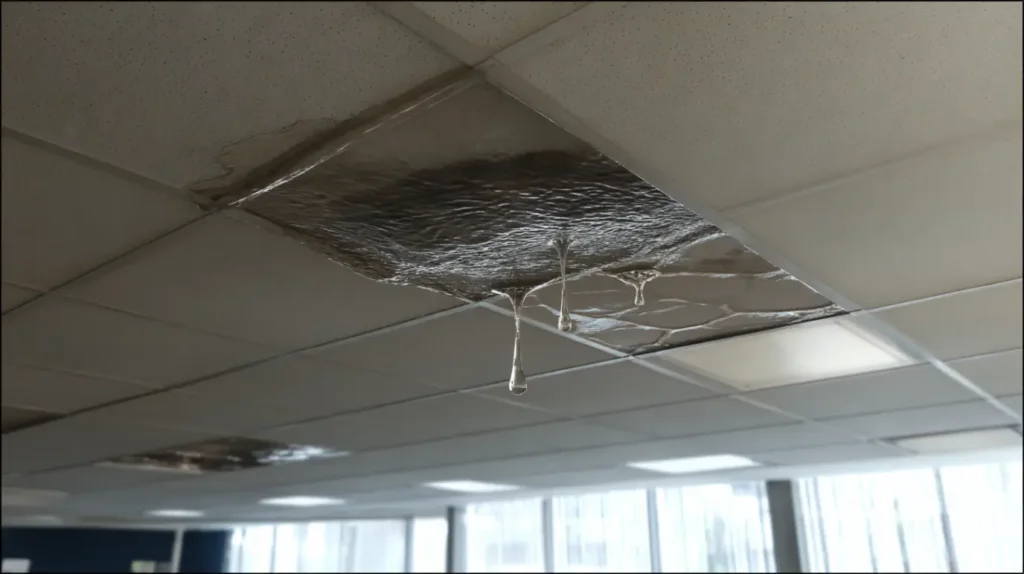
When water appears on a ceiling after a Lowcountry storm, the source is not always a simple hole in the roof. MasterRoof Mount Pleasant helps homeowners in Mount Pleasant, SC distinguish among three moisture problems: a true roof leak, wind-driven rain entering through vulnerable flashing or vents, and attic condensation formed when humid air meets a cooler surface. These problems can produce similar stains, odors, and damp insulation, but they require different repairs. Accurate diagnosis depends on when water appears, which direction the storm moved, where moisture is visible in the attic, and whether the problem occurs during calm rain, windy rain, or dry weather.
Why Water Intrusion Is Difficult to Diagnose in Mount Pleasant
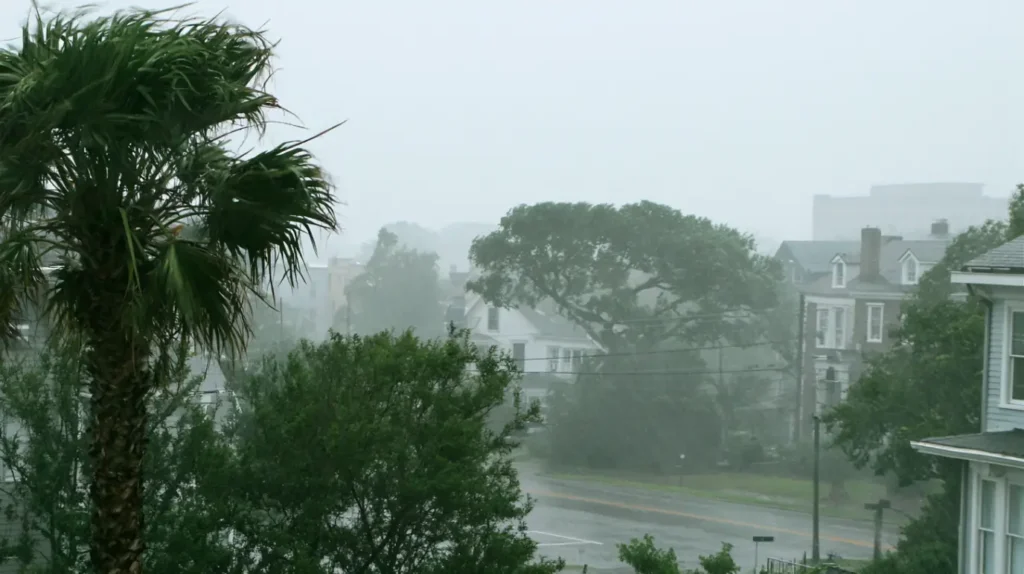
Mount Pleasant homes face humid summers, sudden thunderstorms, tropical weather, coastal gusts, and long periods of moisture in the air. A roof can remain dry during an ordinary shower yet leak when rain is pushed horizontally against a dormer, ridge vent, sidewall, chimney, or roof-to-wall transition. An attic can also develop droplets on decking, ducts, fasteners, or metal vents when no rain is falling.
The interior stain rarely identifies the entry point. Water may enter several feet upslope, follow a rafter, soak insulation, and appear at a ceiling seam. We therefore compare exterior roof conditions, attic moisture patterns, and storm behavior instead of diagnosing the problem from the stain alone.
What Counts as a True Roof Leak?
A true roof leak occurs when a physical failure allows rain to pass through the covering, underlayment, flashing, or a penetration. The opening may be obvious, such as a missing shingle or branch puncture, or small, such as an exposed nail, cracked pipe boot, failed flashing lap, or split vent seal.
Common sources include:
- Missing, torn, cracked, or creased shingles
- Nail pops and exposed fasteners
- Deteriorated pipe boots
- Damaged chimney or skylight flashing
- Open valleys and roof transitions
- Punctures caused by branches or debris
- Deteriorated underlayment
- Poorly integrated porch roofs and additions
A true leak usually repeats whenever enough rain reaches the defect. Wind may worsen it, but wind is not always necessary. If a ceiling stain darkens during different rain events, including calm rainfall, a direct roof-system defect becomes more likely.
Contact Us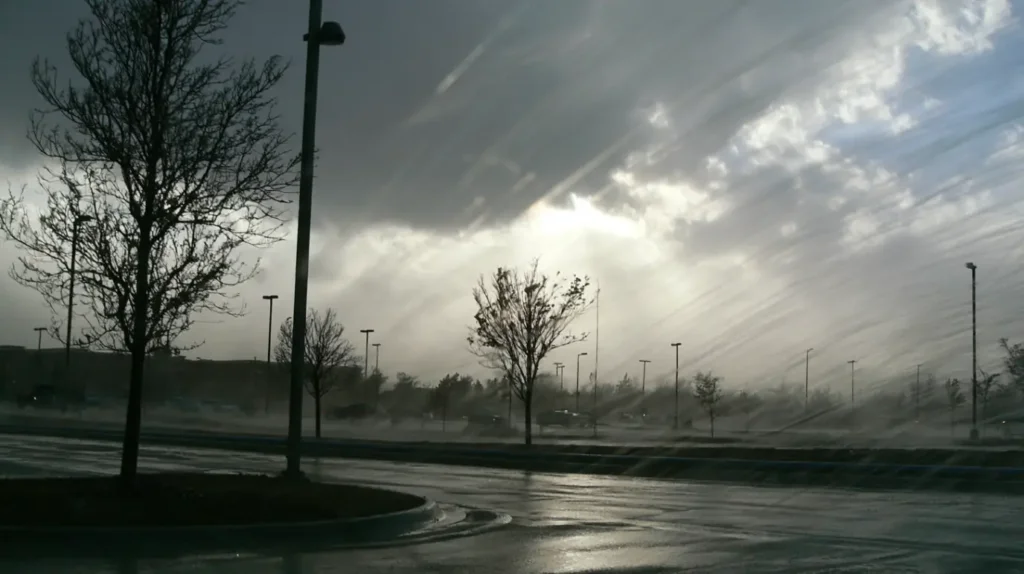
What Is Wind-Driven Rain?
Wind-driven rain is rain moved at an angle by air pressure rather than falling mainly downward. During strong gusts, water can travel sideways, curl beneath edges, move upward along laps, or strike vertical surfaces hard enough to exploit gaps that stay dry in ordinary weather. The roof covering may look intact while the building envelope admits water.
Frequent entry points include roof-to-wall flashing, step flashing, counterflashing, ridge and gable vents, soffit vents, skylights, dormer corners, siding transitions, and lifted shingle tabs. FEMA notes that damaged or separated roof flashing increases the risk of wind-driven water intrusion and recommends checking attics, ceilings, sealant, and flashing for staining, cracks, gaps, or damage.
This problem often appears only when wind comes from one direction. A northeast-facing dormer may leak during a northeast wind but remain dry when similar rainfall arrives from the southwest. That direction-specific pattern is a strong diagnostic clue.
How Wind-Driven Rain Differs from a Conventional Roof Leak
Wind-driven rain is still a leak and still requires correction; the difference is the mechanism. A conventional roof leak depends mainly on gravity and rainfall reaching a failed roof component. Wind-driven intrusion depends on pressure, direction, turbulence, and opening geometry. It may enter behind flashing, beneath siding, through a vent, or under a lifted edge.
For example, rain can be forced behind incomplete step flashing where a second-story wall meets a lower roof. Water may descend inside the wall and appear on the first-floor ceiling. Replacing shingles directly above that stain would leave the actual pathway open.
What Attic Condensation Looks Like
Attic condensation forms when moisture-laden air contacts a surface cold enough for water vapor to become liquid. In Mount Pleasant’s hot-humid climate, it can develop on air-conditioning ducts, supply boots, metal fasteners, vent housings, and roof decking. It may also occur when bathroom or dryer exhaust empties into the attic instead of outdoors.
Condensation is often more diffuse than a roof leak. We may find widespread droplets, rusted nail tips, sweating ducts, damp insulation, or moisture around HVAC equipment rather than one narrow trail below a flashing defect. A musty odor may continue during dry weather.
The U.S. Department of Energy states that air movement carries more than 98% of water vapor moving through building cavities. It also explains that condensation begins when moist air reaches its dew point and contacts a sufficiently cold surface.
Roof Leak, Wind-Driven Rain, or Condensation: Key Differences
| Diagnostic clue | True roof leak | Wind-driven rain | Attic condensation |
| Typical timing | During substantial rain | During windy storms from a particular direction | During humid periods, HVAC operation, temperature changes, or dry weather |
| Moisture pattern | Localized trail, wet decking, or soaked insulation | Moisture near walls, vents, flashing, dormers, or exposed edges | Broad droplets, sweating ducts, damp surfaces, or rusted fasteners |
| Exterior evidence | Missing shingles, punctures, cracked boots, or failed seams | Flashing gaps, lifted tabs, vulnerable vents, or siding-transition defects | Often no exterior roof damage |
| Repeatability | Repeats when rain reaches the defect | Appears under specific wind conditions | Can occur without rainfall |
| Repair category | Roofing material or flashing repair | Flashing, vent, edge, or envelope correction | Humidity, air sealing, insulation, exhaust, or HVAC correction |
Failures can overlap. A lifted shingle may create a defect that leaks mainly during wind-driven rain. Condensation can also develop around insulation already dampened by a small roof leak, so an inspection must identify every contributing condition.
Ceiling Stains: What Their Shape and Timing Reveal
A brown ring usually indicates repeated wetting and drying. A sharply defined stain may reflect a recent event, while a broad yellow-brown area can mean water spread across drywall or insulation. Bubbling paint, sagging drywall, or a soft ceiling suggests active saturation.
Photograph the stain with the date, mark its outer edge lightly with a pencil, and record the storm start time, wind direction, and when the stain darkened. Expansion during calm rain points toward a conventional leak. A stain that grows only during directional wind shifts attention to flashing, vents, wall intersections, and roof edges. Changes during dry, humid weather or heavy air-conditioner use suggest condensation or an HVAC drain problem.
Do not puncture a bulging ceiling near electrical fixtures. Shut off power to the affected area when water is near wiring, recessed lights, fans, or outlets.
Attic Moisture: Follow the Trail, Not the Room Below
The attic often provides the clearest evidence. We begin above the affected room but inspect upslope and toward nearby penetrations. Water trails can appear as dark decking lines, rafter stains, rusty nails, compressed insulation, or a clean path through attic dust.
A narrow track beginning below a pipe boot or flashing joint indicates exterior entry. Dampness near a gable or soffit after high wind may indicate rain through a vent. Uniform droplets across many nail tips or broad decking areas suggest condensation. Wet insulation beneath a sweating duct can imitate a roof leak.
Homeowners should not step between joists, touch wet electrical components, or enter beneath unstable ceilings. Roof access during or immediately after a storm is unsafe.
Flashing Gaps That Admit Wind-Driven Rain
Flashing directs water over the roof covering, but small installation or aging defects can reverse that path. Critical areas include step flashing along sidewalls, kick-out flashing where a roof edge meets a wall, chimney counterflashing, dormer aprons, and transitions between slopes or materials.
Warning signs include exposed sealant used as the main waterproofing layer, short flashing pieces, open corners, corroded metal, loose fasteners, siding pressed tightly against shingles, missing kick-out flashing, and buried flashing without a drainage exit. Wind-driven rain can exploit these defects even when vertical rain cannot.
Caulk may cover a gap temporarily, but durable repair restores the layered drainage path so water exits onto the roof surface rather than entering the wall.
Missing or Lifted Shingles After Storms
Missing shingles create an obvious opening, but lifted shingles are easier to miss. Wind can break the adhesive bond, crease the mat, or loosen fasteners while leaving the tab flat after the storm. The next gust can lift the same edge and drive water beneath it.
From the ground, look for uneven tabs, exposed underlayment, displaced ridge caps, shingles in the yard, bright granule-loss areas, or raised sections. Avoid walking on the roof, which can cause falls and additional damage.
An isolated repair may be sufficient when surrounding materials remain flexible and bonded. Widespread broken seals, repeated creasing, brittle shingles, soft decking, or leaks in several areas require a broader assessment.

The Five-Part Homeowner Checklist
1. Check Ceiling Stains
Document the stain’s size, color, location, and timing. Note whether it appears during every rain, only during windy storms, or during dry, humid periods.
2. Inspect Visible Attic Moisture
Look for a concentrated trail, damp insulation, widespread droplets, sweating ducts, stained decking, rusty nails, or moisture near vents. Do not disturb suspected mold or wet electrical components.
3. Look for Flashing Gaps
From a safe ground position, examine chimneys, dormers, skylights, sidewalls, transitions, and lower-roof connections for loose metal, failed sealant, gaps, or displaced trim.
4. Identify Missing or Lifted Shingles
Look for exposed areas, uneven tabs, damaged ridge caps, debris impact, or shingles on the property after a storm.
5. Compare Water Appearance With Storm Conditions
Record rain intensity, wind direction, wind strength, and the delay between rainfall and visible moisture. A repeated directional pattern strongly supports wind-driven entry.
When Professional Diagnosis Is Necessary
Schedule professional evaluation when stains recur, insulation is wet, flashing appears damaged, shingles are missing, moisture is near electrical systems, or the source cannot be traced safely. Inspection is also appropriate after strong storms because water may remain trapped beneath insulation or behind wall finishes after visible dripping stops.
Diagnosis may include roof-surface inspection, attic tracing, moisture-meter readings, controlled water testing, flashing review, shingle-seal assessment, vent examination, and evaluation of HVAC or exhaust sources. Controlled testing should isolate one area at a time; spraying the entire roof can produce misleading results.
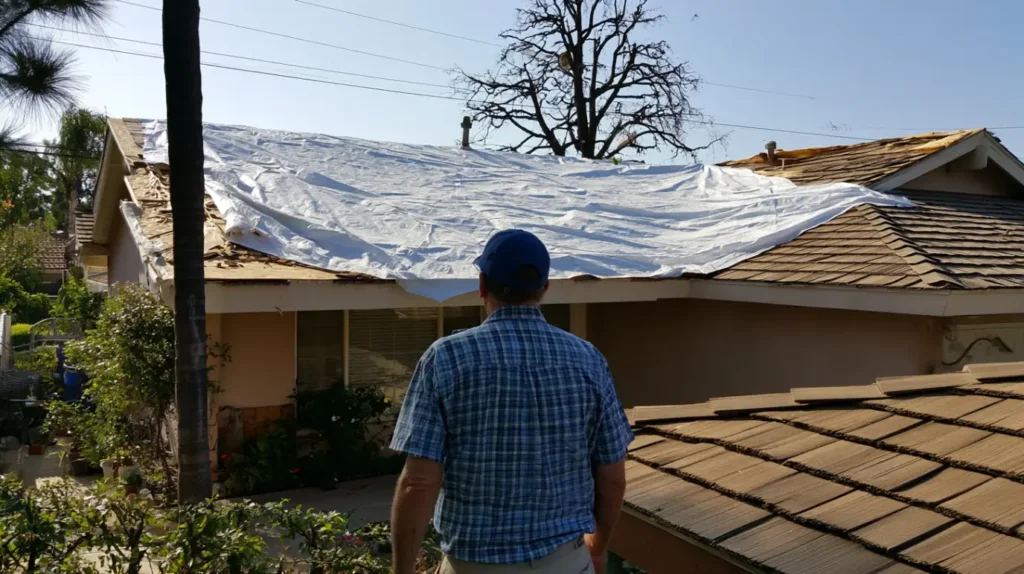
For recurring stains, storm damage, missing shingles, or failed roof components, our professional roof repair in Mount Pleasant service focuses on locating the entry path and correcting the underlying defect rather than hiding the interior symptom.
Why Waiting for the Next Storm Can Increase Damage
A dry stain does not prove the assembly is dry. Wet insulation can retain moisture against decking and ceilings. Repeated wetting can deteriorate drywall, corrode fasteners, damage finishes, reduce insulation performance, and support microbial growth.
Wind-driven leaks are easy to postpone because they may disappear for weeks until wind returns from the same direction. Condensation also demands correction; repainting or replacing insulation without addressing air leakage, humidity, sweating ducts, or improper exhaust routing allows the problem to return.
Conclusion
A true roof leak, wind-driven rain, and attic condensation can all produce ceiling stains, damp insulation, and musty odors, but their timing and moisture patterns differ. True leaks usually repeat when rain reaches a damaged roof component. Wind-driven rain appears under specific pressure and directional conditions around flashing, vents, walls, and lifted edges. Condensation may occur without rain and often affects broader attic surfaces, ducts, or fasteners. By documenting storm conditions, examining attic evidence, checking flashing and shingles, and acting early, Mount Pleasant homeowners can avoid misdiagnosis and select the repair that actually stops the moisture pathway.
FAQ
Can Wind-Driven Rain Enter a Roof That Has No Missing Shingles?
Yes. It can enter through flashing gaps, ridge or soffit vents, loose shingle edges, roof-to-wall transitions, skylight assemblies, and other openings even when the main shingle field appears intact. Wind direction and the exposed building detail are critical clues.
How Can We Tell Whether Attic Moisture Is Condensation Rather Than Rainwater?
Condensation is more likely when moisture appears during dry weather, around cold HVAC ducts, across many nail tips, or over a broad decking area. A roof leak is more likely when a concentrated trail connects to a penetration, flashing joint, damaged shingle, or storm event.
Should a Ceiling Stain Be Repaired Before the Roof Source Is Confirmed?
No. Identify and correct the moisture source before stain blocking, repainting, or replacing drywall. Cosmetic work completed too early can conceal continued water entry and may need to be repeated after the next storm.