
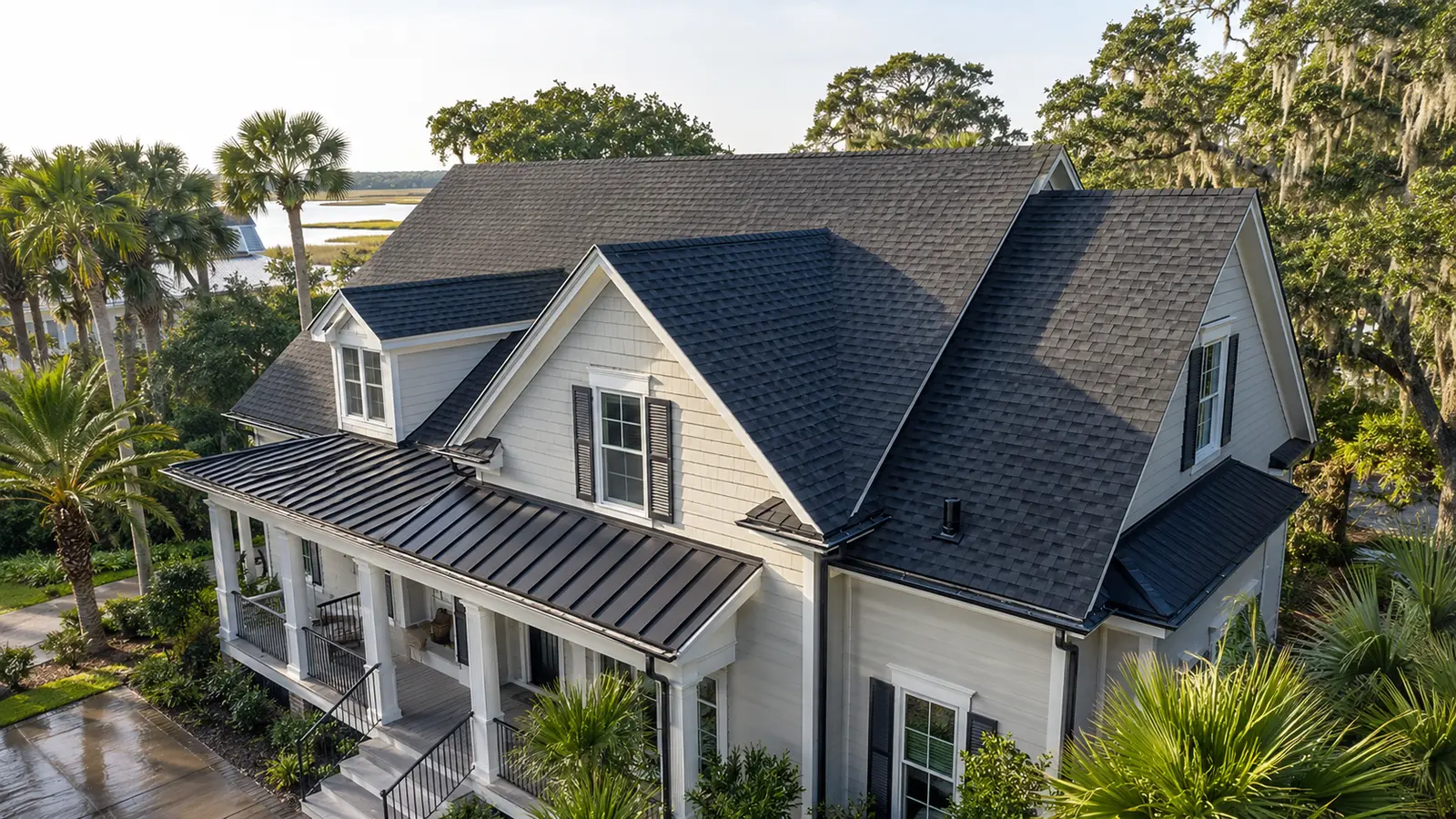
Replacing a roof in Mount Pleasant is not the same project as replacing a roof in an inland climate. At MasterRoof Mount Pleasant, we plan residential roofing around the realities of coastal South Carolina: prolonged humidity, salt-laden air, intense UV exposure, wind-driven rain, tropical storms, high wind uplift, and the possibility of hurricane conditions. A successful roof replacement must address the entire roofing system—from decking and underlayment to flashing, ventilation, fasteners, edge protection, and the final roof covering—not simply install new shingles over an aging structure.
For homeowners considering a new roof, understanding when replacement is necessary, what local permitting requires, which materials perform well near the coast, how hurricane season affects scheduling, and what should be included in a contractor’s estimate can prevent expensive mistakes. This guide explains the complete process of roof replacement in Mount Pleasant, SC, from the first inspection through final cleanup.
Signs You Need Roof Replacement in Mount Pleasant, SC
Roof age is useful, but it should never be the only reason for replacing a roof. Two roofs installed in the same year can age very differently depending on material quality, installation, attic ventilation, tree coverage, roof pitch, sun exposure, storm history, and proximity to salt air.
We recommend evaluating the entire system rather than looking for one isolated symptom.
Widespread Granule Loss
Asphalt shingles contain protective mineral granules that shield the asphalt layer from ultraviolet radiation. Some granules in gutters are normal, particularly after installation, but widespread bald areas indicate declining protection.
Once enough granules are lost, shingles absorb more heat and UV exposure accelerates deterioration. On a Mount Pleasant roof exposed to long periods of strong sun, this can shorten the remaining useful life considerably.
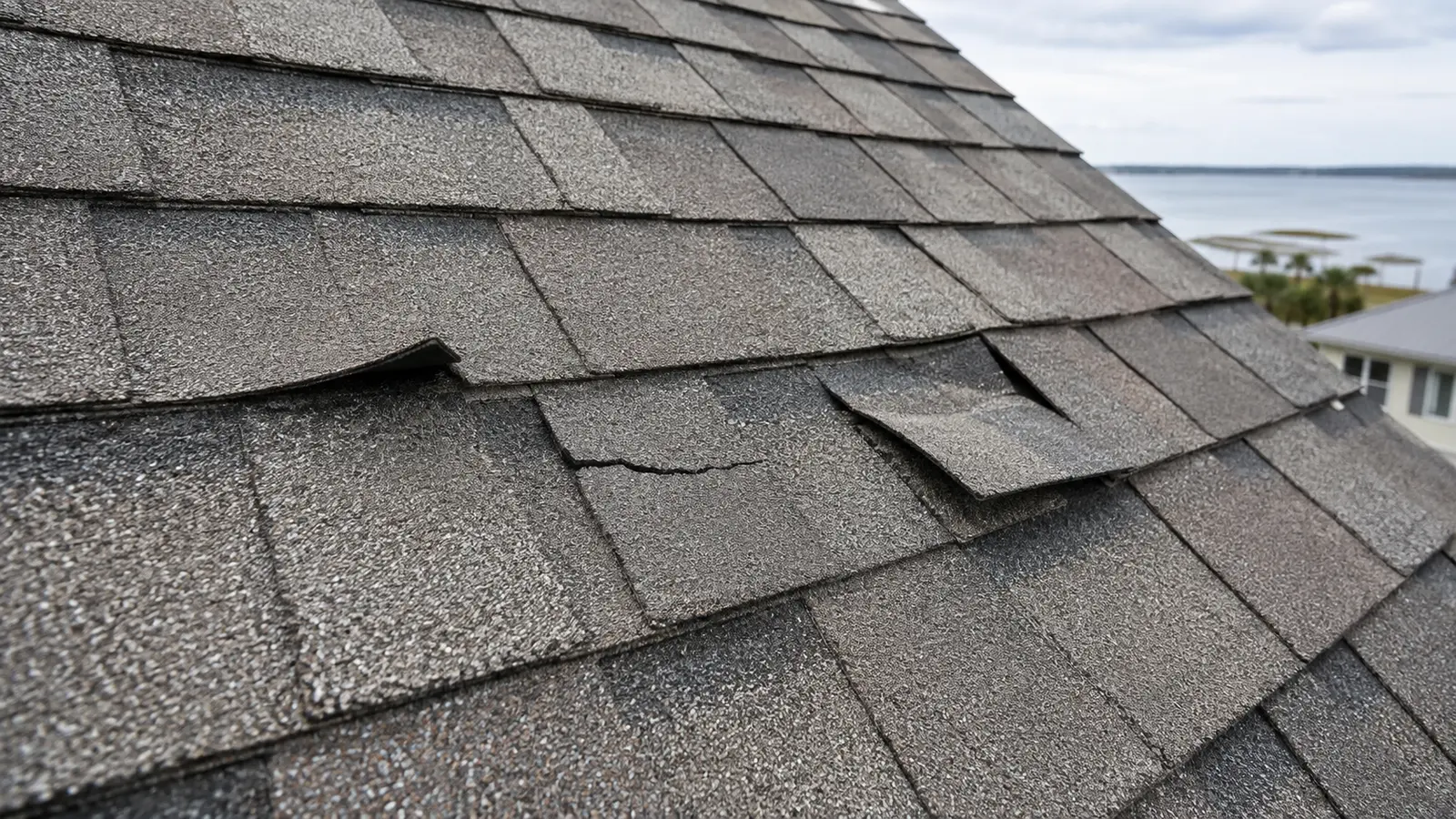
Curling, Cracking, or Lifted Shingles
Curling edges, fractured tabs, lifted shingles, and visible creases are important warning signs because coastal wind does not always tear a shingle completely off the roof.
A shingle can be lifted during a storm and settle back into position afterward while its adhesive bond or reinforcement has already been compromised. The roof may appear intact from the ground but become increasingly vulnerable to the next wind event.
Repeated Roof Leaks
One isolated flashing leak may justify a repair. Multiple leaks occurring at different roof penetrations, valleys, wall transitions, or roof slopes suggest a broader system problem.
Repeated repairs become especially concerning when new leaks continue appearing while previous areas remain patched. At that point, homeowners should compare the cumulative cost and uncertainty of continued repairs against complete replacement.
Soft or Deteriorated Roof Decking
Roof decking provides the structural surface beneath the roof covering. When chronic moisture reaches plywood or OSB, sections can become soft, swollen, delaminated, or rotten.
A replacement project gives us the opportunity to expose the deck completely and identify deterioration that cannot be properly evaluated while the existing roofing material remains installed.
Interior Moisture and Attic Evidence
Signs inside the house can reveal roofing problems long before major water stains appear on finished ceilings. We look for:
- Darkened roof decking
- Rusted roofing nails
- Moisture around penetrations
- Damp insulation
- Water tracks along rafters
- Daylight through roof openings
- Mold-like staining
- Persistent attic odors
Water rarely travels straight downward. Wind-driven rain can enter near a ridge, vent, valley, flashing transition, or roof edge and travel several feet along framing before becoming visible inside the house.
Roof Repair vs. Full Roof Replacement
Replacement becomes the stronger long-term option when deterioration is widespread rather than isolated.
A relatively young roof with one damaged flashing detail or a small area affected by falling debris may still be an excellent repair candidate. Conversely, a roof approaching the end of its service life with multiple previous repairs, widespread granule loss, recurring leaks, and storm-related lifting may continue generating problems even after another patch.
We evaluate several factors together:
| Factor | Repair May Make Sense | Replacement May Make More Sense |
| Damage area | Small and isolated | Multiple roof slopes |
| Roof age | Early or middle service life | Near expected service-life limit |
| Leak history | First isolated leak | Repeated leaks |
| Decking | Dry and structurally sound | Widespread moisture deterioration |
| Shingles | Flexible and well bonded | Brittle, curling, cracked, or loose |
| Storm damage | Localized | Broad wind-related damage |
| Previous repairs | Few | Numerous patches |
| Future ownership | Short-term considerations | Long-term protection prioritized |
The objective is not to replace every damaged roof. It is to avoid spending repeatedly on a system that can no longer provide reliable protection.
Coastal Wind Exposure Changes How a Roof Should Be Built
Mount Pleasant homes experience environmental stresses that make installation details especially important.
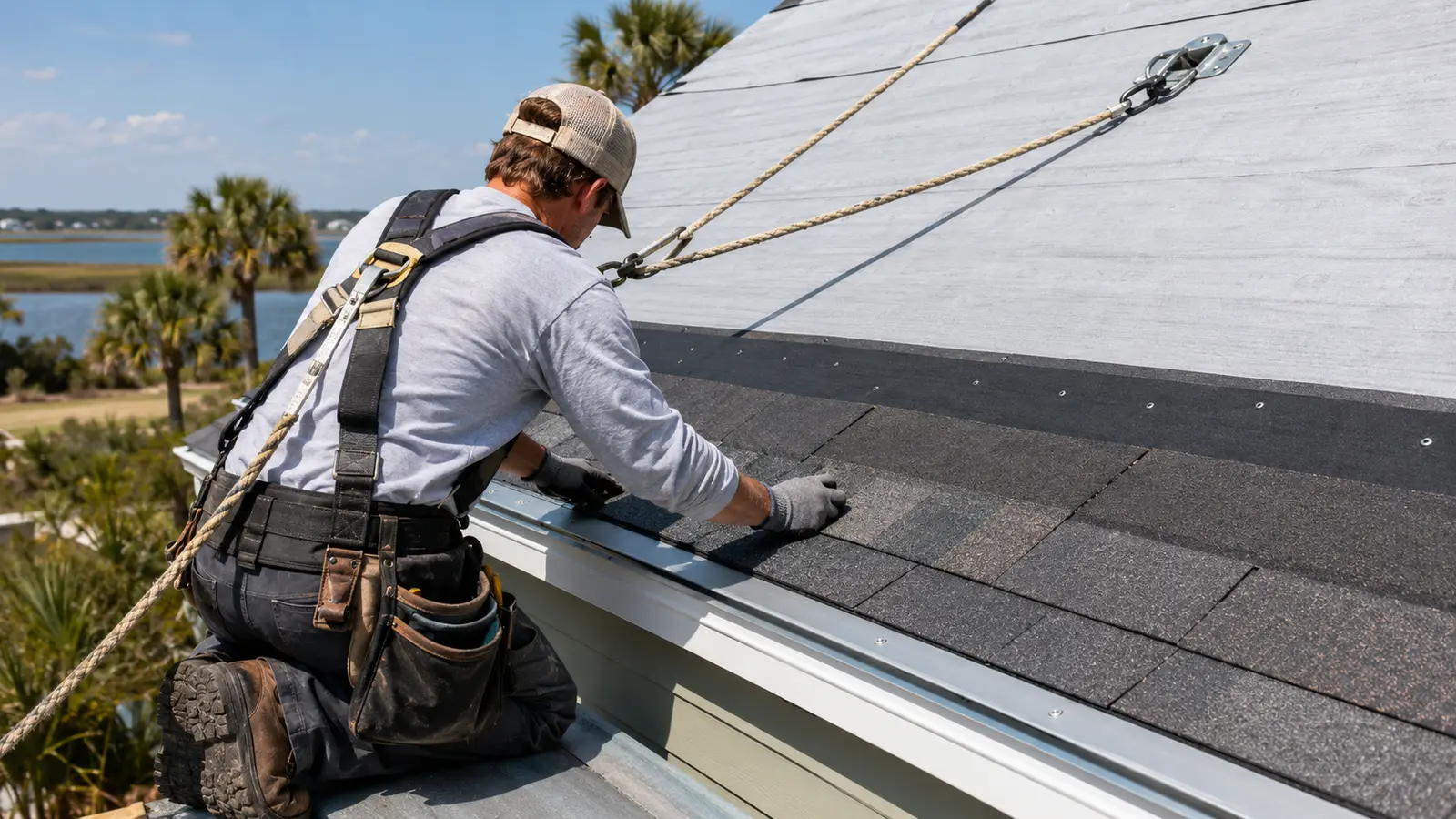
High winds create uplift forces at roof edges, corners, ridges, and other pressure-sensitive areas. Wind-driven rain can move horizontally and enter small openings around flashing, vents, wall intersections, and inadequately sealed roof penetrations.
South Carolina residential code provisions specifically address wind design, roof coverings, and the continuous load path used to transfer uplift forces through the structure. Asphalt and metal roofing systems must be installed according to applicable wind-design requirements rather than treated as purely decorative exterior coverings.
For homeowners, this means roof replacement should involve more than choosing a shingle color. Important details include:
- Correct fastener type and placement
- Proper manufacturer nailing pattern
- Secure roof-edge construction
- Correct starter-course installation
- Drip-edge integration
- Underlayment selection
- Valley protection
- Proper flashing
- Ridge and hip fastening
- Pipe-boot installation
- Roof-to-wall transitions
- Balanced attic ventilation
- Compatibility between components
Small installation shortcuts become significantly more important when a roof is exposed to sustained wind and wind-driven rain.
Roof Replacement Permits in Mount Pleasant
A residential roof replacement in Mount Pleasant requires local permitting. The Town states specifically that a permit is required to install a new roof, and the permit may be issued to the homeowner or a contractor licensed to perform the work in South Carolina. Homes located in the Old Village Historic District can require additional approval from the Historic District Preservation Commission before the permit is issued.
The Town’s Building and Permit Center provides current permitting information, application resources, and building-inspection guidance.
As of 2026, Mount Pleasant is enforcing the 2021 South Carolina building-code cycle. South Carolina has adopted the 2024 code cycle, but its statewide implementation date is January 1, 2027. Homeowners planning a project close to that transition should verify which code applies when their permit is submitted.
We recommend confirming permitting responsibility in writing before signing a roofing agreement. The estimate or contract should establish who applies for the permit, coordinates required inspections, and closes the permit after completion.
Choosing Roofing Materials for Mount Pleasant’s Coastal Climate
Material selection should balance initial cost, expected ownership period, architecture, wind performance, maintenance requirements, corrosion exposure, and long-term lifecycle cost.
Architectural Asphalt Shingles
Architectural asphalt shingles remain one of the most practical residential roofing choices because they combine affordability, availability, appearance, and relatively efficient installation.
For coastal applications, product specification matters. We prefer evaluating:
- Published wind ratings
- Manufacturer-approved fastening requirements
- Algae-resistant technology
- Warranty terms
- Starter and ridge components
- Compatibility with underlayment
- Installation requirements for high-wind conditions
A premium architectural shingle installed as a complete manufacturer-compatible system provides very different performance from a low-cost shingle installed with minimal accessories.
Metal Roofing
Metal roofing can be highly effective in coastal South Carolina because it offers strong water shedding, long service potential, and excellent wind performance when properly engineered and attached.
However, the phrase “metal roof” covers substantially different systems.
Standing-seam panels with concealed fasteners generally provide a different long-term performance profile than exposed-fastener panels. Fastener design, panel attachment, flashing, coating, substrate, and metal composition all matter.
Corrosion resistance deserves additional attention near saltwater. Aluminum, appropriately specified coated steel, and other corrosion-resistant systems may be considered depending on property location and project requirements.
Premium and Specialty Roofing
Synthetic roofing, tile, slate, and other premium systems can provide distinctive architectural value but require closer review of structural loading, fastening methods, wind exposure, replacement components, and installation expertise.
Material should never be selected exclusively from a showroom sample. The roof geometry, house structure, coastal exposure, budget, and intended ownership period should influence the final specification.
Roofing Underlayment Matters More Near the Coast
The visible roof covering is the first layer homeowners notice, but underlayment becomes critical when wind pushes rain beneath that covering.
Modern synthetic underlayments can provide better tear resistance and installation characteristics than traditional felt products. Self-adhered membranes may also be used in particularly vulnerable areas depending on the roof design, applicable code, and system specification.
We pay particular attention to:
- Eaves
- Valleys
- Roof penetrations
- Chimneys
- Dormers
- Sidewalls
- Roof-to-wall transitions
- Low-slope transitions
A roof covering sheds most rain. The layers beneath it provide additional protection when water reaches areas it normally should not.
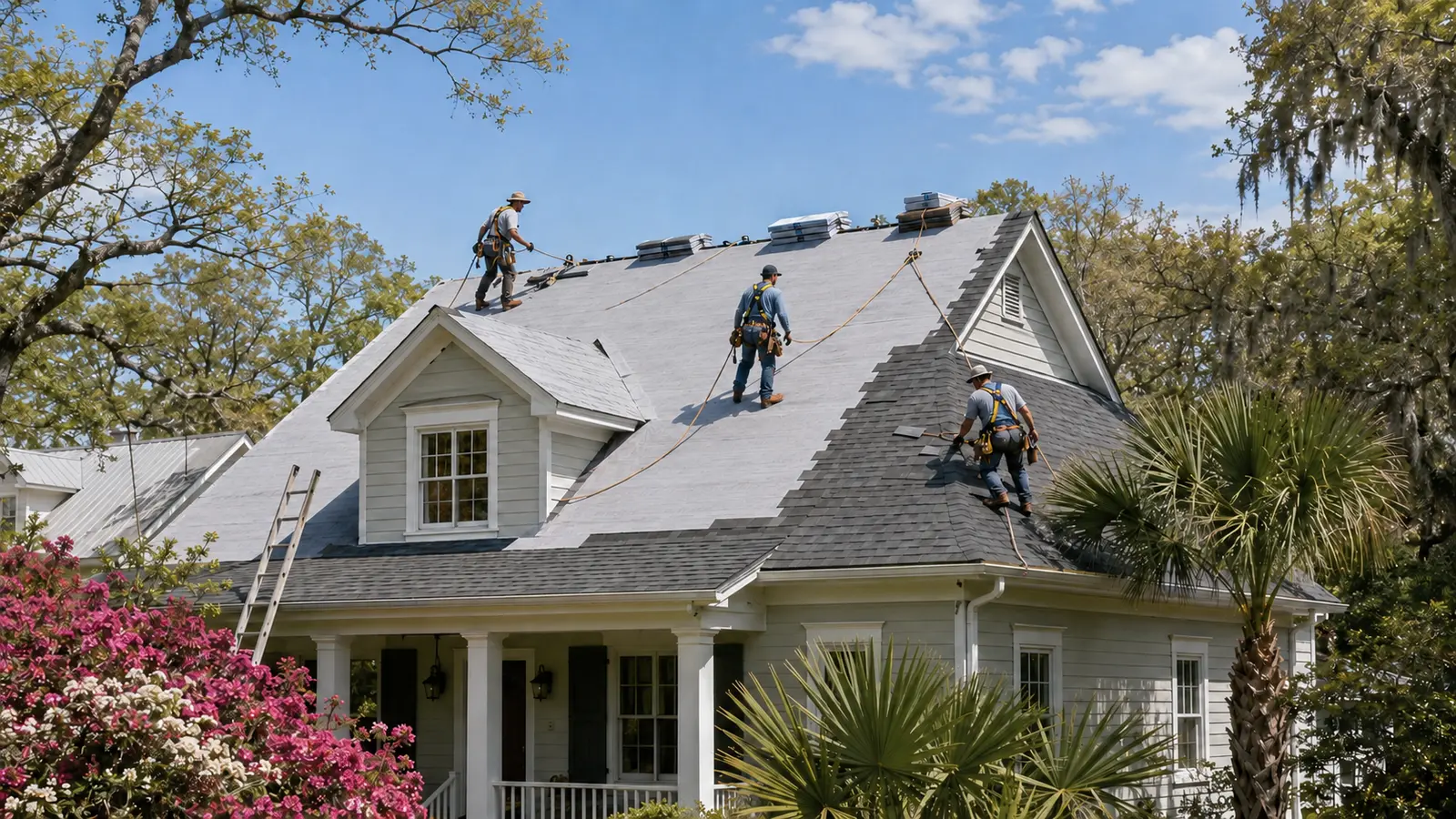
Best Time to Replace a Roof in Mount Pleasant
The official North Atlantic hurricane season runs from June 1 through November 30, with activity historically peaking during late summer and early fall. National Hurricane Center climatology also shows that 96% of major Atlantic hurricanes occur between August and October.
For that reason, homeowners with a roof already showing serious deterioration should avoid deliberately carrying the problem into peak storm season.
The National Hurricane Center’s tropical cyclone climatology provides historical context for Atlantic storm timing.
January Through February
This is an excellent period for inspections, budgeting, contractor selection, material decisions, and early scheduling.
March Through May
Spring is one of the most practical replacement windows because homeowners can address known deterioration before Atlantic hurricane season begins.
June Through July
Replacement is still possible, but scheduling becomes more weather-sensitive and homeowners should not assume unlimited time remains before increased tropical activity.
August Through October
Projects require careful weather monitoring. An aging but functional roof may need close observation, while active leaks or serious storm damage may require immediate intervention.
November Through December
After peak tropical activity decreases, late fall can become another strong replacement period, particularly for homeowners preparing their property for the following year.
We do not recommend choosing a replacement date by month alone. A structurally compromised or actively leaking roof should be addressed according to risk rather than an idealized calendar.
How Much Does Roof Replacement Cost in Mount Pleasant?
Roof replacement pricing cannot be calculated accurately from square footage alone.
For preliminary budgeting, homeowners may encounter asphalt-shingle replacement projects in roughly the $6–$10+ per square foot range, while higher-end metal systems can move into approximately $10–$18+ per square foot or more. Complex architecture, premium materials, extensive deck replacement, coastal specifications, access limitations, and specialty flashing can move a project outside these ranges.
These figures should be treated as planning ranges, not quotes.
The biggest pricing variables include:
- Total roof area. Roofing surface area is normally greater than the home’s interior square footage because of pitch and overhangs.
- Roof pitch. Steeper roofs require additional labor, staging, and safety procedures.
- Number of roof planes. Hips, valleys, dormers, and intersecting sections increase installation complexity.
- Existing layers. Tear-off requirements affect labor and disposal.
- Decking condition. Rotten or structurally compromised sheathing must be replaced.
- Material system. Architectural shingles, premium shingles, standing-seam metal, and specialty materials have significantly different costs.
- Flashing complexity. Chimneys, skylights, walls, penetrations, and transitions add detailed labor.
- Accessibility. Landscaping, narrow driveways, neighboring structures, and limited staging areas can affect production.
- Ventilation modifications. Correcting an inadequate attic ventilation system adds materials and labor but may improve long-term roof performance.
- Permit and project requirements. Local compliance should be included rather than treated as an afterthought.
A roof quote that is substantially cheaper than every other proposal deserves careful examination of what has been excluded.
What a Complete Roof Replacement Estimate Should Include
Before approving roof replacement in Mount Pleasant, SC, we recommend comparing the scope of work rather than simply comparing the final numbers at the bottom of several proposals.
A professional estimate should clearly identify:
- Roofing material manufacturer and product line
- Material color or profile
- Tear-off scope
- Number of existing layers
- Underlayment type
- Starter shingles or starter system
- Ridge-cap materials
- Drip edge
- Valley treatment
- Pipe boots
- Flashing work
- Ventilation work
- Decking replacement procedure
- Decking price if replacement is required
- Fastener specifications
- Permit responsibility
- Waste removal
- Property protection
- Cleanup
- Magnetic nail collection
- Manufacturer warranty
- Workmanship warranty
- Payment schedule
- Change-order procedure
Avoid accepting descriptions such as “replace roof” or “install architectural shingles” as a complete scope. Those phrases leave most of the roofing system undefined.
Understanding Roofing Warranties
Roofing warranties usually fall into two separate categories.
Manufacturer Material Warranty
The manufacturer warranty covers eligible defects associated with roofing materials according to the manufacturer’s written conditions.
Coverage can vary substantially by product, installation method, accessory use, contractor certification, registration requirements, and warranty tier.
Homeowners should ask:
- What exactly is covered?
- How long is full coverage available?
- When does prorated coverage begin?
- Is labor included?
- Are tear-off and disposal included?
- Is warranty registration required?
- Are matching system components required?
- Is the warranty transferable?
A headline such as “limited lifetime warranty” does not mean every roof-related problem is covered for life.
Contractor Workmanship Warranty
The workmanship warranty addresses installation performed by the roofing contractor.
This distinction matters because a perfectly manufactured shingle can still leak if flashing, fastening, valleys, penetrations, or transitions are installed incorrectly.
We recommend obtaining both warranty documents and retaining them with the contract, permit records, photographs, invoices, and material documentation.
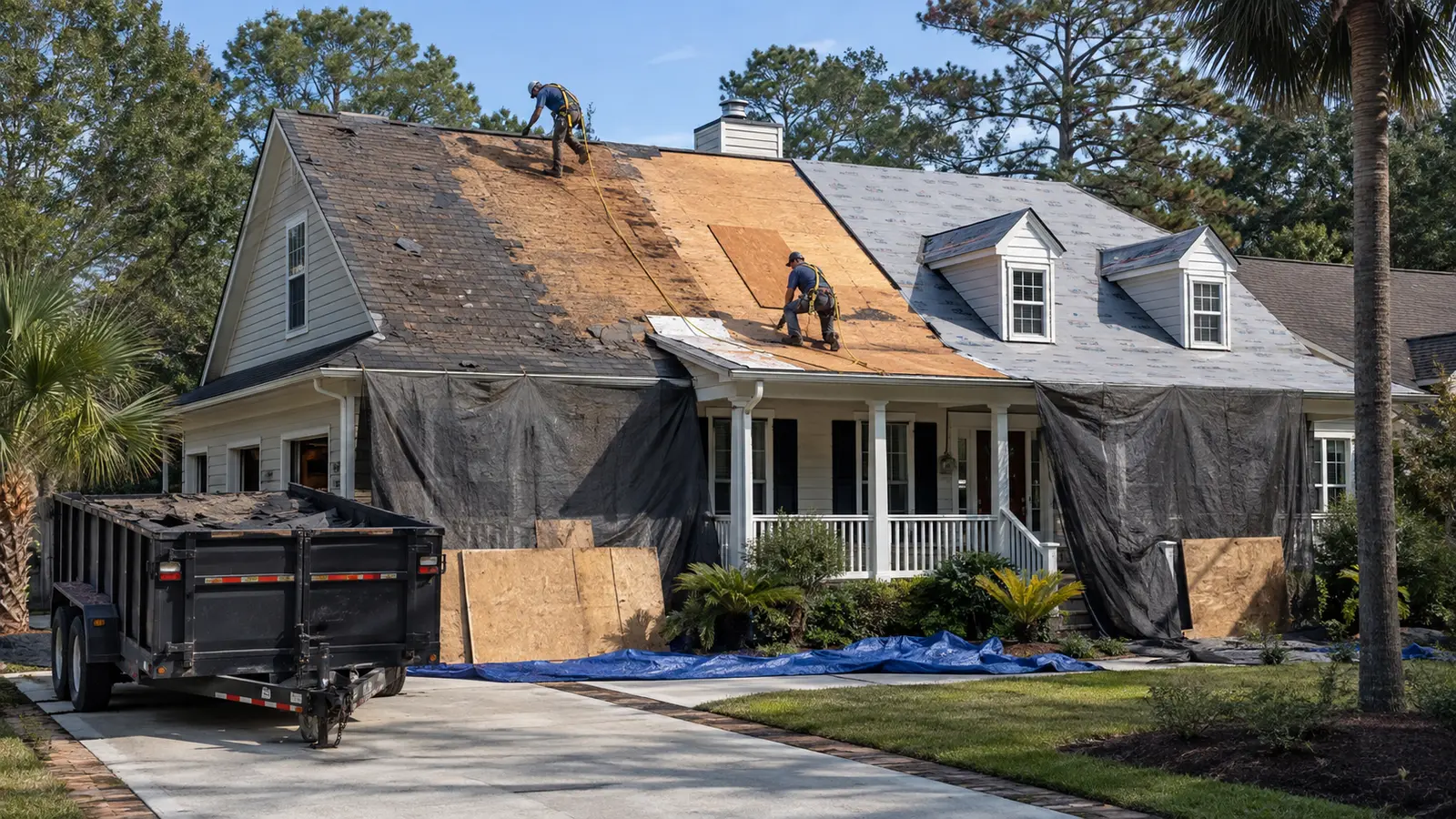
What Happens During Roof Replacement
A properly organized project follows a controlled sequence.
Property Protection
Before tear-off begins, landscaping, siding, windows, HVAC equipment, driveways, and other vulnerable areas should be considered in the staging plan.
Tear-Off
Existing roofing materials are removed so the underlying roof deck can be evaluated.
Deck Inspection
Damaged sheathing is identified and replaced according to the agreed scope and pricing structure.
Underlayment and Flashing
Protective layers, flashing components, valleys, penetrations, and roof edges are prepared before the primary roof covering is installed.
Roofing Installation
The selected material is installed according to the manufacturer’s instructions and applicable requirements.
Ventilation
Intake and exhaust ventilation should be evaluated as a system rather than installing additional vents randomly.
Final Detail Inspection
Flashing, ridge caps, exposed fasteners where applicable, sealant locations, penetrations, and roof edges should receive a final quality review.
Cleanup Should Be Part of the Contract
Roof replacement generates thousands of nails, pieces of old roofing material, packaging, flashing scraps, underlayment, and decking debris.
Cleanup should therefore be treated as a project phase rather than a courtesy.
A professional cleanup process should include:
- Removal of roofing debris
- Collection of loose fasteners
- Magnetic sweeping around the property
- Inspection of driveway and walkways
- Removal of material packaging
- Clearing debris from landscaping
- Checking gutters where appropriate
- Removal of equipment and protective coverings
- Final visual inspection
Homeowners with children, pets, pools, gardens, or heavily landscaped properties should discuss protection before installation starts.
Final Roof Replacement Checklist for Mount Pleasant Homeowners
Before authorizing the project, verify that you understand:
- Why replacement is recommended
- Current deck condition
- Exact roofing material
- Underlayment specification
- Coastal wind considerations
- Flashing scope
- Ventilation plan
- Permit responsibility
- Estimated start date
- Weather-delay procedure
- Decking replacement cost
- Cleanup procedure
- Manufacturer warranty
- Contractor workmanship warranty
- Final inspection process
- Total payment structure
A roof replacement should leave fewer unanswered questions before construction begins, not more.
Conclusion
Roof replacement in Mount Pleasant requires a coastal-specific approach because the roof must withstand far more than ordinary rainfall. Wind uplift, tropical rain, salt exposure, humidity, UV radiation, hurricane-season risk, local permitting requirements, flashing details, underlayment, ventilation, and installation quality all affect long-term performance. The best project begins with an accurate assessment of the existing roof, continues with a clearly defined material and installation specification, and ends with documented warranties, complete cleanup, and a roofing system prepared for the Lowcountry environment.
FAQ
How long does roof replacement take in Mount Pleasant, SC?
Many straightforward residential asphalt-shingle replacements can be completed within one to several working days, but roof size, pitch, complexity, decking repairs, material selection, permitting, and weather can extend the schedule. Coastal weather forecasts should always be considered before tear-off begins.
Do I need a permit to replace my roof in Mount Pleasant?
Yes. The Town of Mount Pleasant states that installing a new roof requires a permit. The owner or an appropriately licensed South Carolina contractor may obtain it, and properties within the Old Village Historic District can require additional historic-district approval before permit issuance.
Should I replace my roof before hurricane season?
If an inspection shows widespread deterioration, recurring leaks, compromised shingles, deteriorated decking, or significant previous storm damage, completing replacement before peak tropical activity can reduce risk. Because Atlantic hurricane season runs from June 1 through November 30 and activity historically intensifies in late summer and early fall, spring is often an advantageous planning and replacement window.