
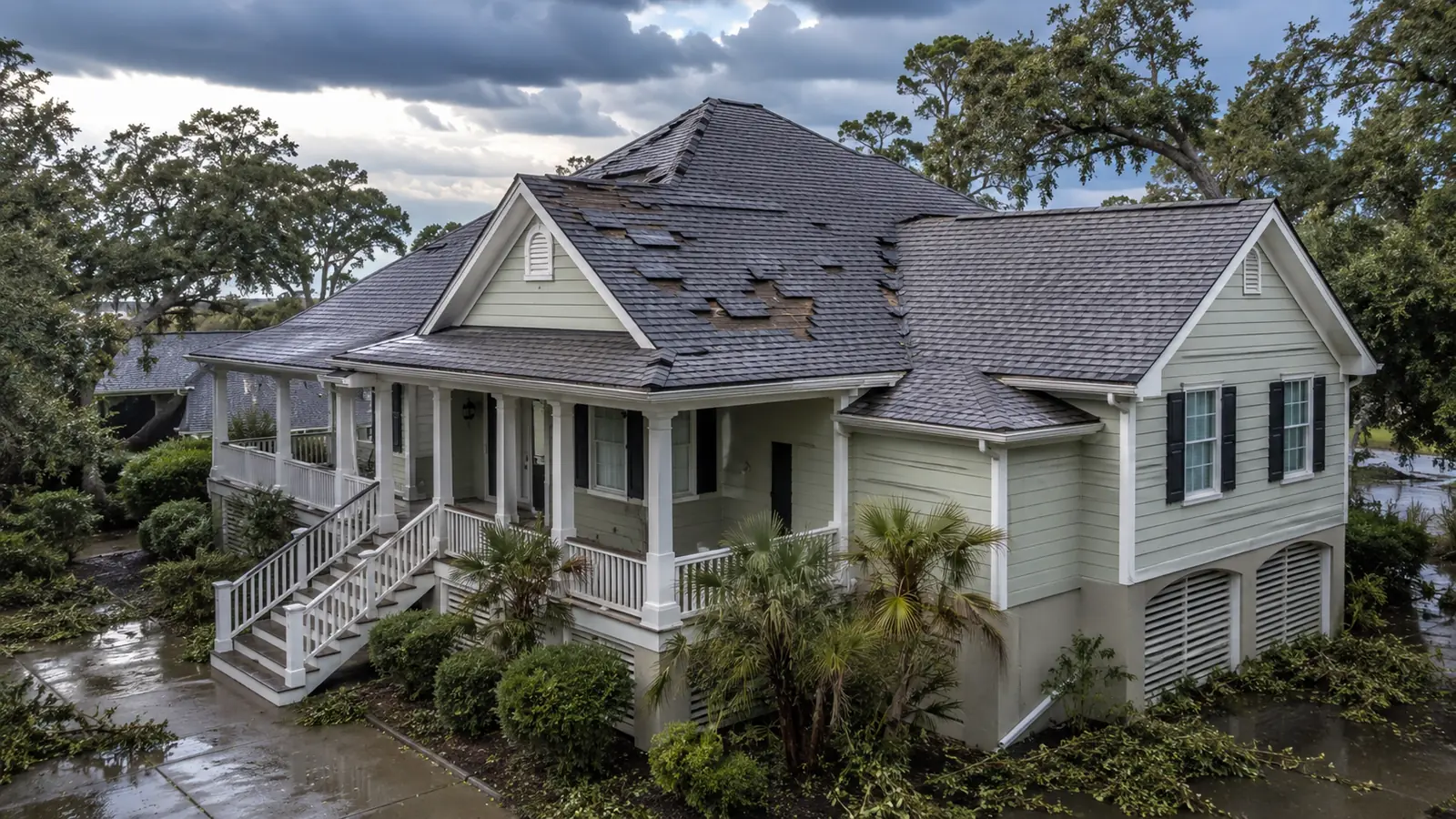
After tropical storms, hurricanes, and high-wind events move through coastal South Carolina, homeowners often face a difficult question: repair the damaged sections or replace the entire roof? At MasterRoof Mount Pleasant, we evaluate that decision by looking beyond the most visible missing shingles. Roof age, the percentage and location of damaged roofing, repeated leaks, granule loss, flashing condition, roof-deck integrity, and insurance documentation all affect whether a localized repair will restore reliable protection or merely postpone a larger problem.
Mount Pleasant homes experience a combination of wind, wind-driven rain, humidity, and salt-laden coastal air. The official Atlantic hurricane season runs from June 1 through November 30, although tropical systems can occur outside those dates. After a significant storm, determining the correct scope of roofing work requires evaluating the entire roof system rather than counting damaged shingles from the ground.
Roof Repair vs Roof Replacement: The Fundamental Difference
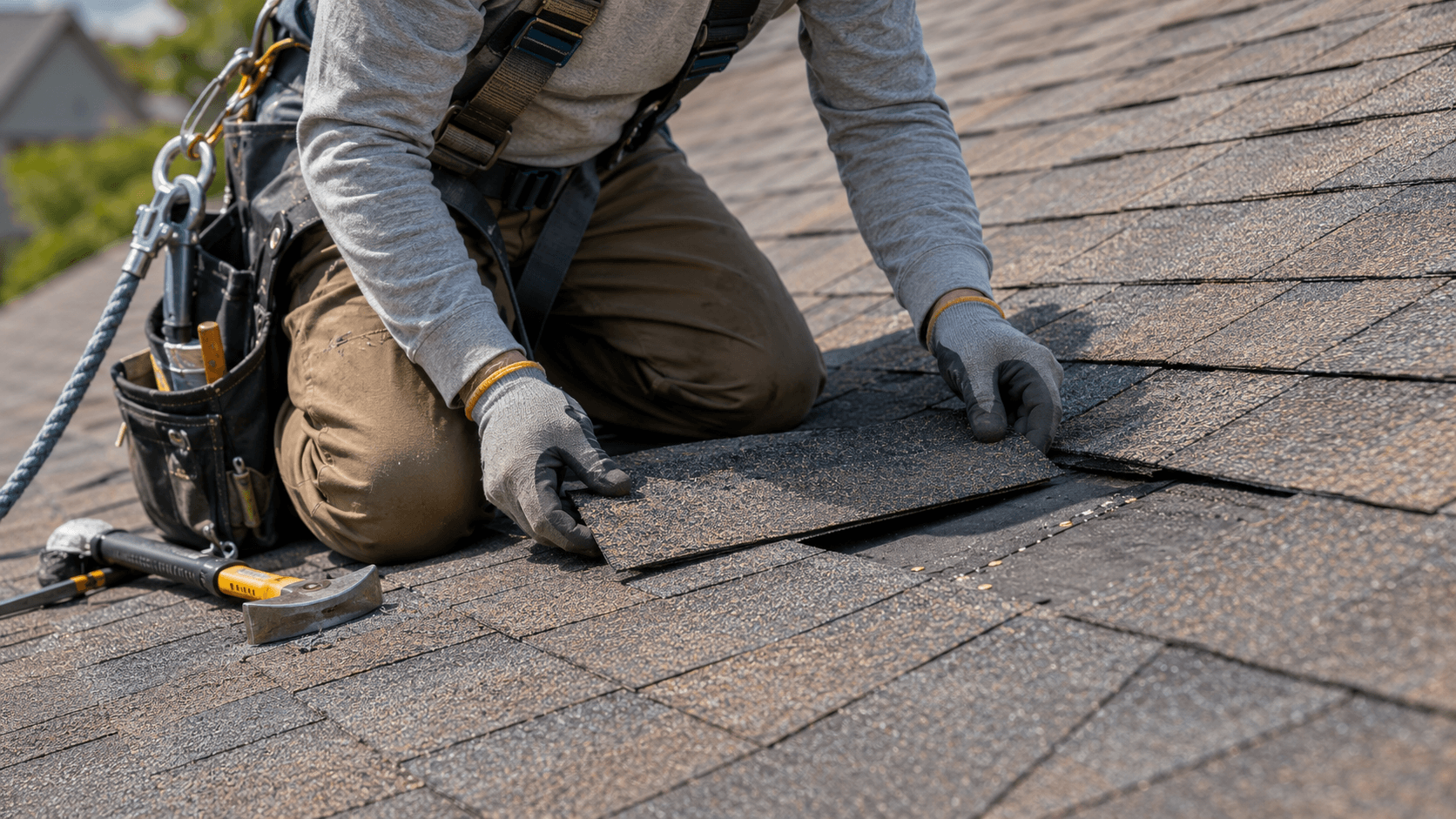
A roof repair addresses a limited failure while leaving most of the existing roofing system intact. Typical hurricane-season repairs may include replacing missing shingles, resealing exposed areas, repairing flashing, replacing a damaged pipe boot, correcting a small roof section, or restoring an isolated leak path.
Roof replacement is fundamentally different. Existing roofing materials are removed so the roof deck can be inspected and a new roofing system installed. Industry guidance distinguishes replacement from simply covering an existing roof because removing the old material exposes decking and structural conditions that otherwise may remain hidden.
Neither option is automatically better.
A technically sound repair can prevent thousands of dollars in unnecessary replacement work when storm damage is genuinely isolated. Conversely, repairing a few obvious spots on an aging, broadly compromised roof can create repeated expenses while hidden weaknesses continue developing.
The decision should therefore be based on condition, damage distribution, remaining service life, and underlying system integrity.
1. Start With the Age of the Existing Roof
Roof age changes the economics of hurricane damage.
Consider two roofs that each lose 20 shingles during the same wind event. One roof was installed four years ago and remains in excellent condition. The second is approximately 18 years old, has substantial granule loss, previous repairs, brittle shingles, and evidence of earlier leaks.
The visible storm damage may appear similar, but the appropriate solution may be very different.
Younger roofing with good adhesion, flexible shingles, intact flashing, and no history of leakage is generally a stronger candidate for localized repair.
An older roof deserves deeper evaluation because weathering affects how effectively the remaining materials can continue performing. The Insurance Institute for Business & Home Safety notes that roof performance changes as roofing ages and that aging asphalt shingles can become more vulnerable to wind failure.
Age alone should never trigger automatic replacement. Instead, we consider age plus condition.
An older roof that remains structurally sound may still be repairable. A younger roof with widespread wind uplift or damaged decking may require substantially more work.
2. Measure the Square Footage and Distribution of Damage
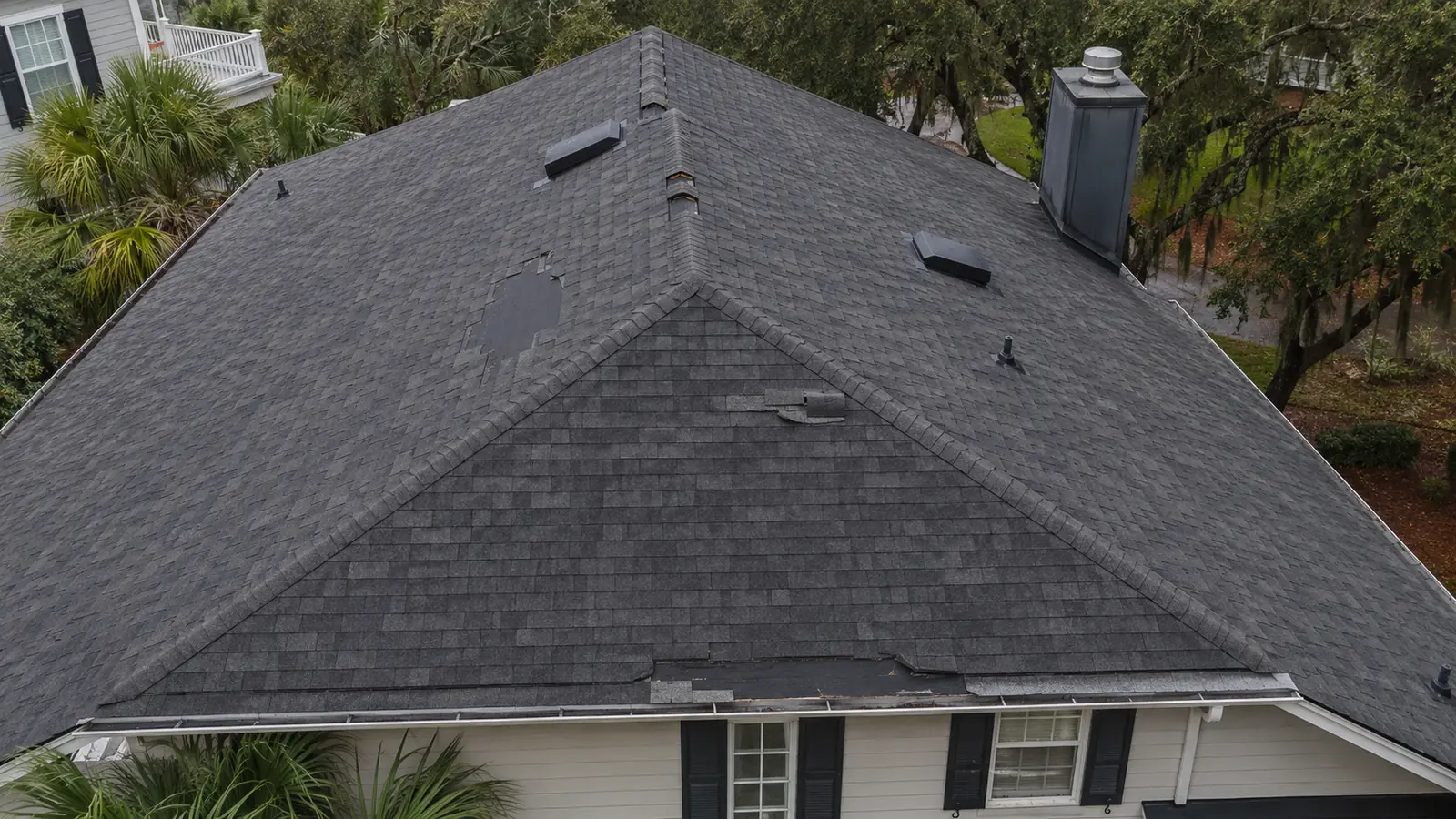
The total square footage of damaged roofing matters, but where the damage appears matters just as much.
There is no responsible universal rule stating that every roof must be replaced once storm damage reaches an arbitrary number of square feet. We instead map the affected areas across the roof.
A small cluster of missing shingles on one slope may support a targeted repair when surrounding materials remain secure.
The situation changes when damage appears across:
- multiple roof slopes;
- ridges and hips;
- roof edges;
- valleys;
- flashing intersections;
- vents and penetrations; and
- large sections where shingles have lifted or lost adhesion.
Scattered damage across several elevations can indicate that the storm affected the roofing system more broadly than a single visible patch suggests.
Wind damage can also occur without shingles completely disappearing. Shingles may lift enough to weaken their seal and then settle back into position. Flashing can loosen, fasteners can be stressed, and wind-driven rain can reach vulnerable transitions.
NRCA guidance therefore recommends professional assessment after severe storms rather than relying on homeowner roof access. As the organization states, “Closer damage assessment and subsequent repairs of a roof system should be done by a professional roofing contractor.”
3. Repeated Roof Leaks Often Change the Repair Equation
One isolated leak after a severe storm does not necessarily justify complete replacement.
Repeated leaks are different.
If a roof has already required repairs around valleys, chimneys, penetrations, flashing, or multiple slopes, new hurricane-season damage may indicate that the roofing system is reaching the point where additional patching produces diminishing returns.
We look for patterns such as:
- leaks appearing in different rooms;
- recurring moisture after wind-driven rain;
- previous patches around the same roof transition;
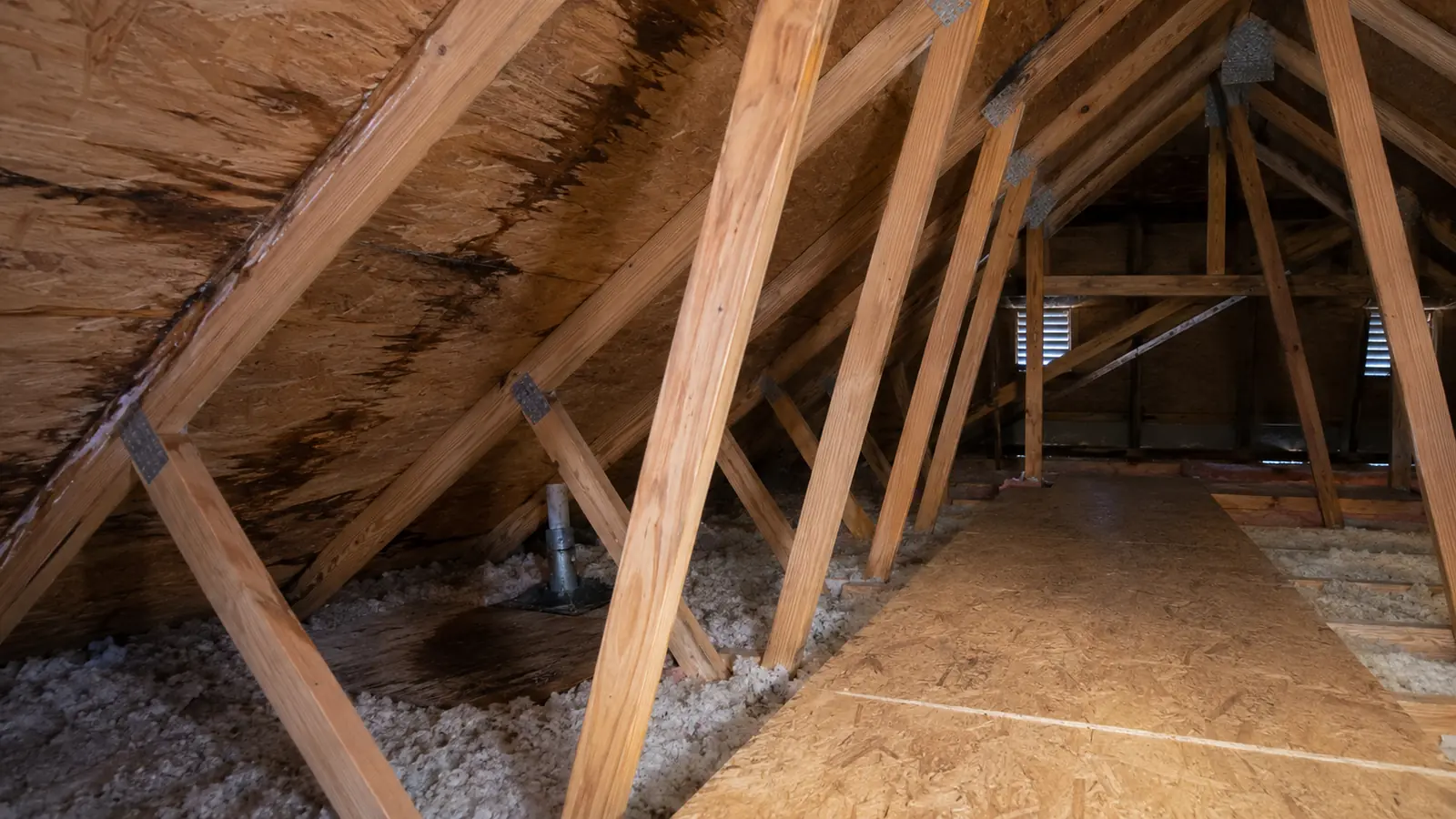
- staining beneath multiple sections of decking;
- repaired shingles becoming loose again; and
- repeated flashing failures.
The distinction is important because the latest leak may not be the only defect.
Storm-driven water can enter at one location, travel along decking or framing, and appear inside the house several feet from its actual entry point. Repairing only the interior location above a ceiling stain can therefore miss the true roofing failure.
When repeated leaks are combined with advanced roof age and widespread weathering, replacement often becomes more economically rational than continuing a cycle of localized repairs.
4. Evaluate Shingle Granule Loss Carefully
Granules are not merely cosmetic texture. They form the exposed surface of asphalt shingles and help protect the asphalt material beneath them.
Some granules naturally loosen over time, and loose particles in gutters do not automatically prove hurricane damage.
The important issue is abnormal or concentrated granule loss.
After severe weather, we examine whether shingles show exposed dark asphalt areas, localized surface damage, uneven weathering, or widespread loss that appears inconsistent with surrounding roofing.
Granule loss becomes particularly important when combined with:
- brittle shingles;
- cracking;
- curling edges;
- exposed fiberglass mat;
- previous wind damage;
- missing tabs; or
- extensive age-related deterioration.
A few otherwise healthy shingles with localized damage may be replaceable.
Extensive surface deterioration across multiple slopes creates a different situation because installing new shingles among heavily weathered existing materials does not restore the remaining roof to new condition.
5. The Roof Deck Can Decide Between Repair and Replacement
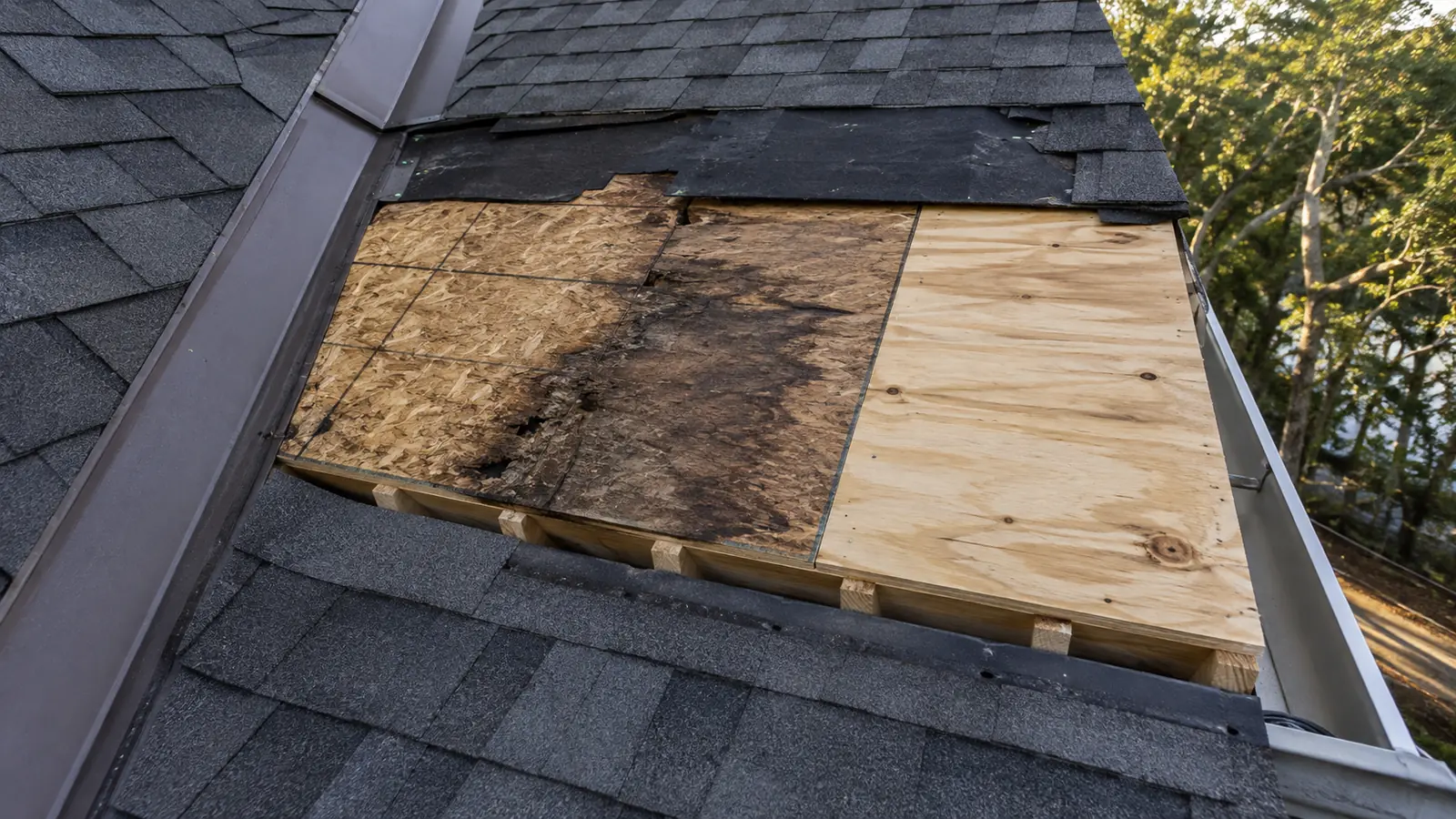
One of the most important conditions is also one homeowners usually cannot see: the roof deck beneath the shingles.
The deck provides the structural substrate to which the roofing system is attached. If prolonged water intrusion has weakened that substrate, replacing only visible shingles does not correct the underlying problem.
During evaluation, warning signs can include:
- soft or deteriorated decking;
- delamination of wood panels;
- dark moisture staining;
- damaged areas around roof penetrations;
- deteriorated sections near valleys or eaves; and
- evidence of repeated water entry.
Industry guidance specifically emphasizes documenting the condition of roof decking and framing during roofing work and avoiding installation over damaged structural roof components.
An isolated damaged deck section can sometimes be removed and replaced as part of a repair.
Widespread deterioration is more significant. If numerous areas require opening the roofing system to replace compromised decking, full replacement may provide a more complete and predictable solution.
This is why visual inspection from the driveway cannot answer every repair-versus-replacement question.
6. Determine Whether Existing Shingles Can Be Repaired Properly
A technically possible patch is not always a good repair.
Shingles become less flexible as they weather. Repair work often requires carefully lifting surrounding shingles to access fasteners and integrate replacement material correctly. If neighboring shingles crack, split, or lose adhesion during that process, the supposedly small repair can expand.
Material compatibility also matters.
A replacement shingle should integrate properly with the existing roof in dimensions, profile, exposure, installation method, and performance characteristics. Exact color matching may become difficult after years of UV exposure and weathering.
We therefore evaluate whether the existing roofing can physically accept a durable repair—not simply whether new shingles can be placed over the damaged location.
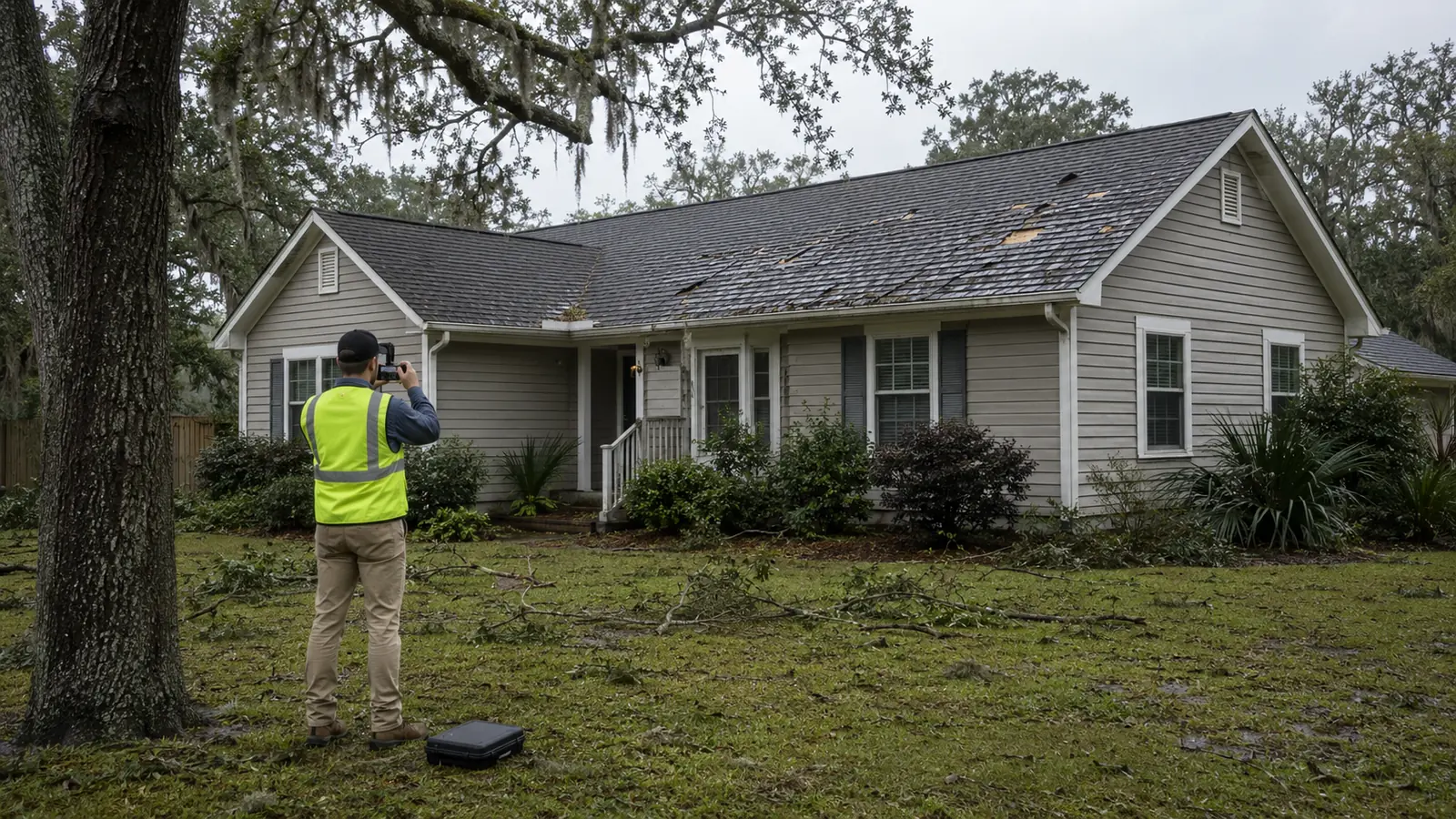
7. Insurance Documentation Should Begin Before Permanent Repairs
After hurricane-season damage, documentation can become nearly as important as the physical inspection.
South Carolina homeowners should report losses promptly and preserve evidence of storm-related damage. The official South Carolina Department of Insurance post-disaster claims guidance recommends documenting damage and keeping receipts associated with emergency measures and repairs.
A strong roof-damage record may include:
- dated overview photographs of each roof slope;
- close-up photographs of specific defects;
- photographs of missing materials around the property;
- interior photographs of water staining;
- attic photographs showing water entry or damaged decking;
- notes identifying affected slopes and roof components;
- invoices from previous roofing work;
- receipts for temporary mitigation;
- the contractor’s written inspection findings; and
- the insurer’s estimate and adjuster documentation.
Reasonable temporary measures may still be necessary to prevent additional water intrusion. Documentation should be completed whenever safely possible before storm debris or damaged materials are removed.
Homeowners should also distinguish roof damage from flooding. Standard homeowners insurance commonly treats wind-related property damage differently from flood damage, so the cause of water intrusion can affect which coverage applies. Policy terms, deductibles, exclusions, depreciation, and replacement-cost provisions vary by insurer and policy.
A roofing contractor can document physical conditions and propose a repair or replacement scope, but the insurance carrier determines coverage.
When Roof Repair Usually Makes More Sense
Localized repair is generally the stronger candidate when the roof is relatively young, damage is confined to a clearly identifiable area, surrounding shingles remain serviceable, the roof deck is sound, previous leaks are limited, and compatible replacement materials can be integrated correctly.
The repair should solve a defined failure — not simply conceal storm damage.
For example, several missing shingles on one otherwise healthy slope may warrant repair. The same number of missing shingles combined with loose flashing, widespread lifted tabs, significant granule deterioration, and multiple historical leaks requires a broader assessment.
When Full Roof Replacement Becomes the Stronger Option
Replacement becomes increasingly reasonable as multiple risk factors accumulate.
Common indicators include widespread wind damage across several slopes, advanced shingle deterioration, extensive granule loss, recurring leaks, brittle roofing that cannot be repaired without additional breakage, significant deck deterioration, or storm damage affecting a roof already near the end of its practical service life.
Replacement also allows the existing roof covering to be removed so the deck, vulnerable transitions, flashing details, and other concealed components can be evaluated systematically.
When inspection findings show that localized repairs would leave substantial compromised roofing in service, homeowners can review our roof replacement options in Mount Pleasant and compare the complete replacement scope with the cost and limitations of continued repair.
A Practical Repair-vs-Replacement Decision Framework
We recommend evaluating hurricane-season roof damage in this order:
First, identify storm-related damage. Determine which shingles, flashings, penetrations, edges, valleys, and roof sections were affected.
Second, map the damage. Establish whether the problem is isolated or distributed across multiple slopes.
Third, evaluate roof age and remaining condition. Separate storm damage from long-term deterioration while considering how much dependable service life remains.
Fourth, inspect the underlying system. Check accessible decking, attic areas, moisture pathways, and structural substrate.
Fifth, review leak history. One isolated failure carries different implications than repeated water intrusion across several areas.
Sixth, determine repairability. Confirm that surrounding roofing materials can be manipulated and integrated without creating additional failures.
Seventh, document everything. Preserve photographs, inspection findings, estimates, receipts, and insurer communications before deciding on permanent work.
This approach prevents the two most expensive mistakes: replacing a roof that could have been reliably repaired or repeatedly repairing a roof that can no longer provide dependable protection.
Conclusion
The decision between roof repair and roof replacement after hurricane-season damage in Mount Pleasant should be based on the entire roofing system, not a single missing shingle or ceiling stain. A localized repair can be the correct solution when damage is limited, the roof remains serviceable, and the deck is sound; replacement becomes increasingly appropriate when storm damage intersects with age, widespread granule loss, repeated leaks, brittle materials, multiple affected slopes, or deteriorated decking. Careful inspection and detailed documentation provide the evidence needed to choose the scope that restores long-term protection rather than simply addressing the most visible symptom.
Frequently Asked Questions
1. Does hurricane damage automatically mean I need a new roof?
No. Isolated missing shingles, localized flashing damage, or a limited leak may be repairable when the surrounding roof and decking remain in good condition. Replacement becomes more likely when damage is widespread or the storm exposes significant pre-existing deterioration.
2. How much storm damage is enough to justify roof replacement?
There is no single square-foot number that determines the answer for every roof. Damage distribution, roof age, shingle condition, repairability, previous leaks, deck condition, and the number of affected slopes should be evaluated together before choosing repair or replacement.
3. Should I repair hurricane roof damage before the insurance adjuster inspects it?
Necessary temporary measures can be taken to prevent additional damage, but conditions should be thoroughly photographed and documented first whenever it is safe to do so. Keep receipts, damaged-material evidence when practical, inspection records, and all claim-related documentation because the insurer may need them when evaluating the loss.