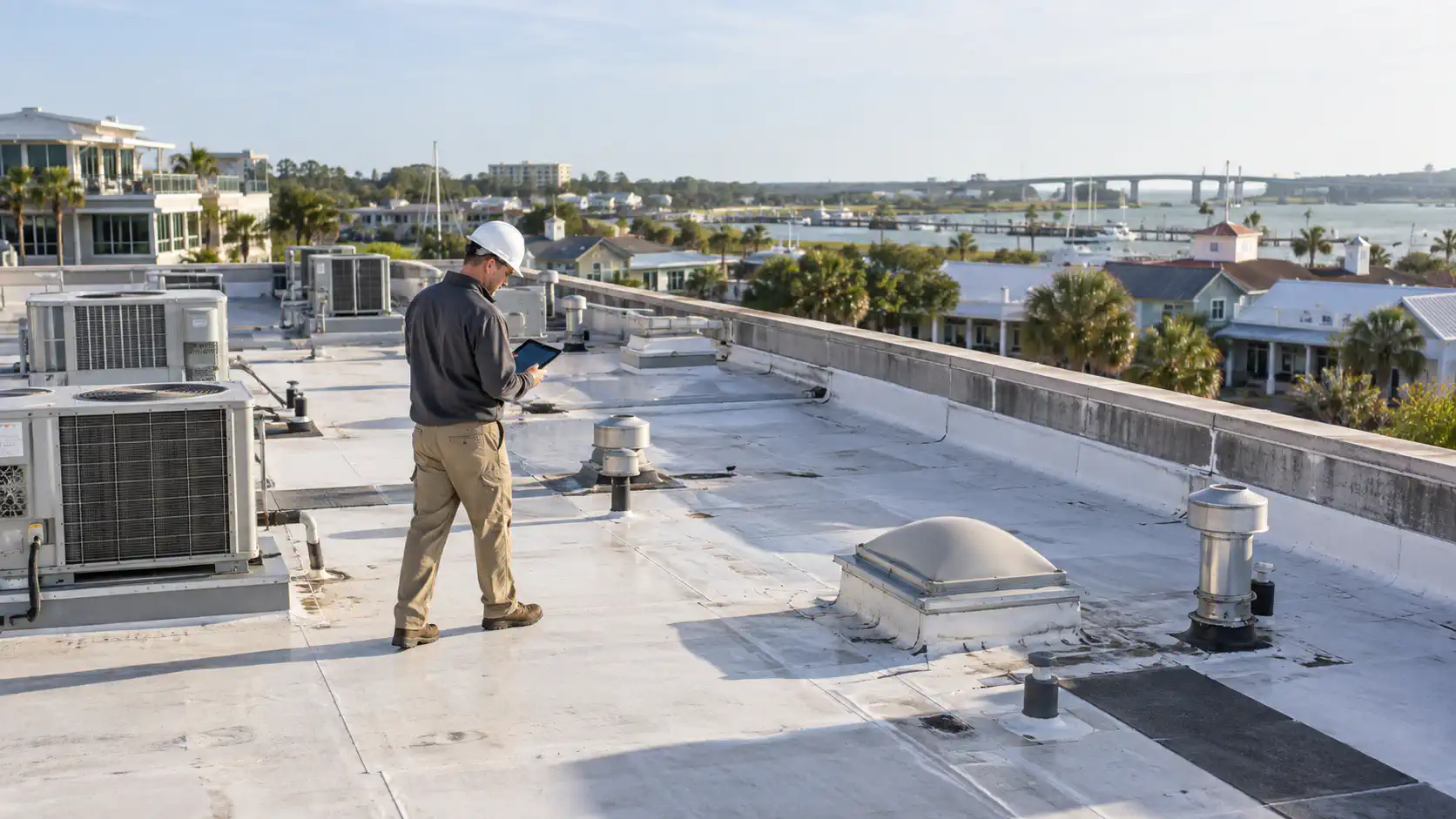
Commercial roofs near Shem Creek and the Highway 17 corridor face conditions that residential inspections often fail to address. At MasterRoof Mount Pleasant, we inspect commercial roofing systems with the building’s operations in mind: rooftop HVAC equipment, restaurant exhaust penetrations, signage attachments, drainage, roof access, tenant spaces, previous repairs, and documented leak locations. For Mount Pleasant businesses, the objective is not simply to identify visible damage — it is to find vulnerabilities before they interrupt customers, employees, inventory, or daily operations.
Why Commercial Roof Inspections in Mount Pleasant Require a Different Approach
Restaurants, professional offices, retail stores, and multi-tenant commercial buildings typically have more rooftop penetrations and equipment than homes. Every penetration creates another location where water can enter if flashing, sealants, curbs, or membranes deteriorate.
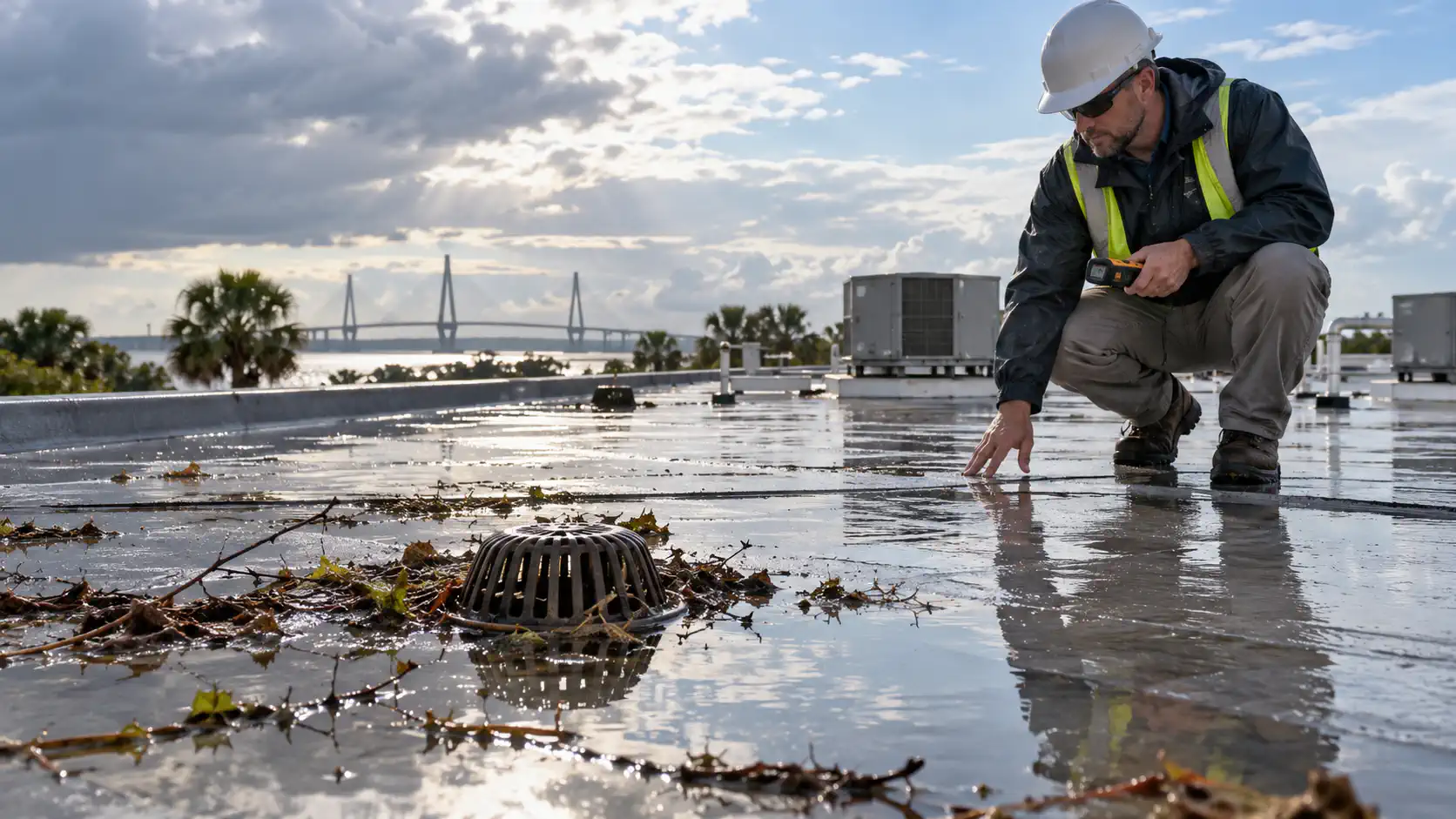
Mount Pleasant also receives periods of intense coastal rainfall. During Tropical Storm Debby in August 2024, National Weather Service observations recorded 15.83 inches of rainfall at a Mount Pleasant station northeast of town by August 8.
That type of event can expose weaknesses that remain invisible during ordinary showers: partially separated flashing, clogged drains, deteriorated seams, loose edge metal, saturated insulation, and penetrations that allow wind-driven rain beneath the roofing system.
For businesses near Shem Creek, inspections should also pay particular attention to exposed metal components, fasteners, rooftop equipment, and flashing where moisture and coastal conditions can accelerate deterioration.
Restaurant Roof Inspections Near Shem Creek
Restaurant roofs deserve especially detailed inspections because commercial kitchens introduce conditions not normally present on office or retail roofs.
Grease Exhaust Fans and Kitchen Vent Penetrations
We inspect around exhaust fan curbs, vent stacks, duct penetrations, equipment bases, and nearby roofing material. Grease residue can accumulate around kitchen exhaust equipment and contaminate certain roofing surfaces, while maintenance crews servicing fans create repeated rooftop foot traffic.
Inspection points should include:
- membrane or flashing separation around exhaust curbs;
- deteriorated sealant at penetrations;
- grease accumulation on the roof surface;
- punctures or compression damage from service traffic;
- loose counterflashing or metal components;
- ponding water around equipment;
- previous patches that are cracking or releasing.
A ceiling stain near the kitchen does not automatically mean the exhaust penetration directly above it is leaking. Water can travel across decking, insulation, structural members, or membrane layers before appearing indoors. We therefore document both the interior symptom and the probable exterior entry point.
Office Roof Inspections Along Highway 17
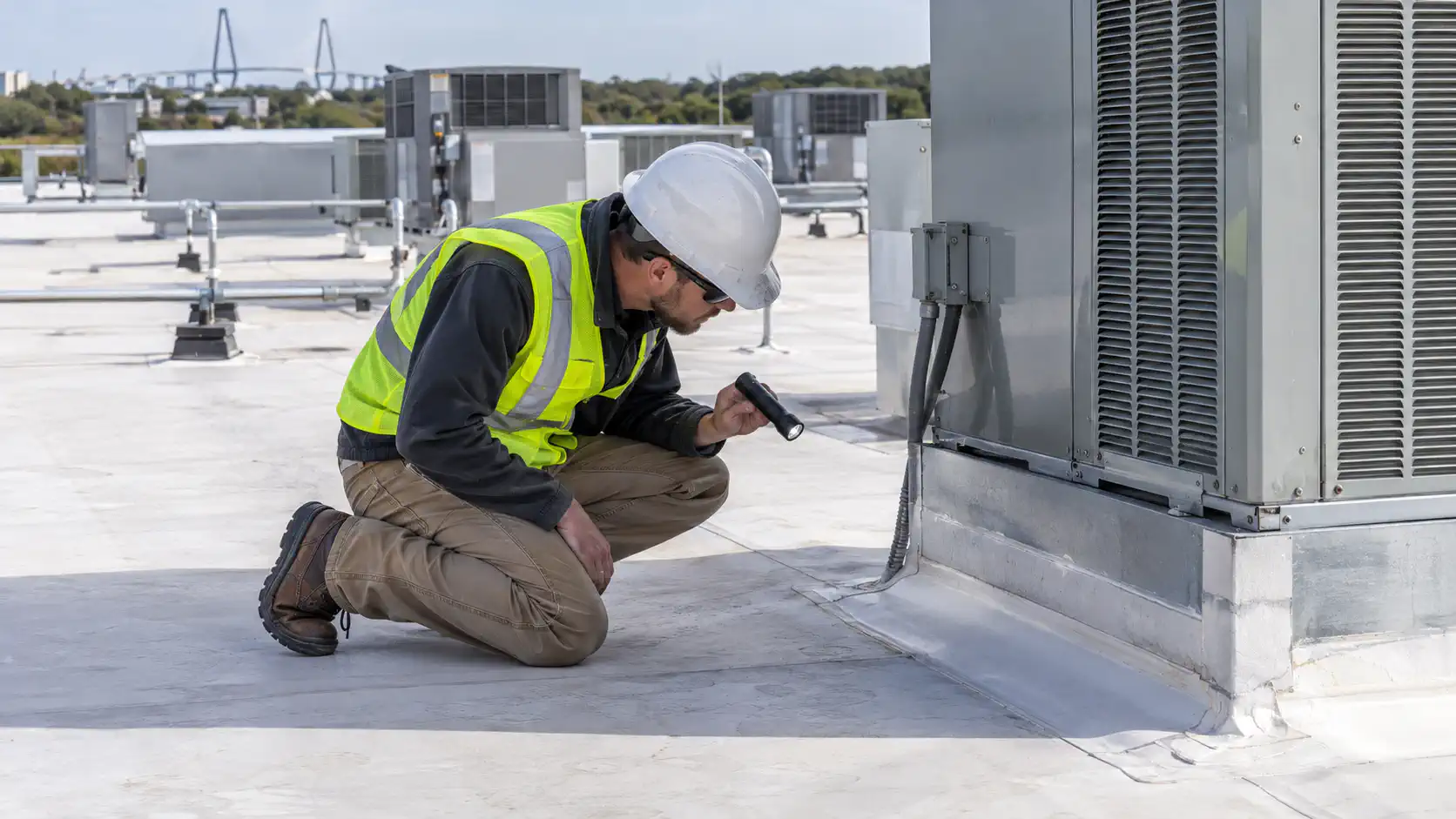
Office buildings frequently depend on rooftop HVAC systems serving multiple suites. These installations create curbs, electrical penetrations, condensate lines, service paths, and flashing transitions that require close inspection.
We examine the membrane or roofing material around each unit rather than looking only at the equipment itself. Common vulnerabilities include open seams, failed curb flashing, deteriorated pitch pans, displaced service panels, damaged membrane from technicians, and drainage restrictions caused by debris.
Office inspections should also evaluate:
- roof drains, scuppers, and gutters;
- parapet walls and coping;
- expansion joints;
- roof-to-wall transitions;
- skylights and access hatches;
- pipe penetrations;
- membrane seams and previous repairs;
- evidence of trapped moisture or persistent ponding.
When several tenants occupy the building, we correlate rooftop findings with specific suites whenever possible. That makes future repairs easier to prioritize and helps property managers maintain accurate maintenance records.
Retail and Shopping Center Roof Inspections
Retail roofs along Highway 17 may contain several HVAC units, storefront signage systems, electrical components, satellite equipment, drainage points, and roof sections maintained by different contractors over time.
Signage deserves particular attention. Roof-mounted or building-mounted signs can introduce fasteners, electrical penetrations, support structures, and flashing transitions near the roofline. Changes to signs in Mount Pleasant may also require municipal review or permits; the Town specifically states that changing or relocating signs requires a sign permit.
An inspection should determine whether penetrations remain watertight and whether modifications have disturbed adjoining roofing components.
Safe Roof Access Must Be Part of the Inspection Plan
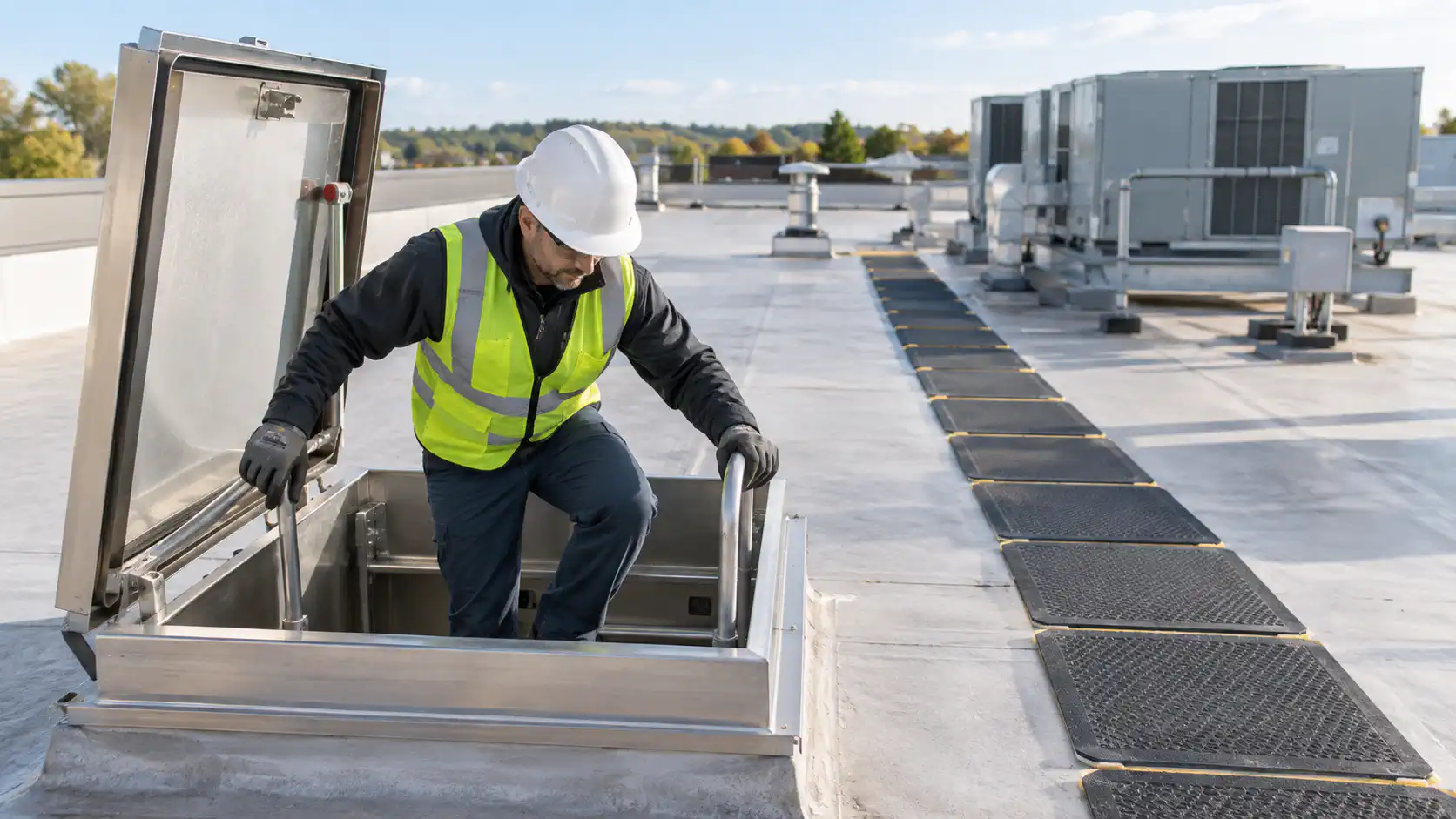
Before inspecting the roofing system, we identify how the roof is accessed.
Commercial buildings may use interior ladders, exterior ladders, roof hatches, stair towers, or restricted mechanical areas. Access conditions can affect both inspection quality and future maintenance.
We document obstacles such as stored materials, blocked hatches, unsafe walking areas, fragile sections, crowded mechanical equipment, and roof zones where repeated technician traffic has damaged the surface.
A roof that cannot be accessed efficiently is also harder to maintain. If HVAC contractors repeatedly cross an unprotected membrane to reach equipment, designated walk pads or controlled service routes may reduce unnecessary wear.
Tenant Protection During Commercial Roof Inspections
Inspection planning should minimize disruption below the roof.
For restaurants, we avoid unnecessary interference with kitchen operations and customer areas. For offices, interior leak investigation may need to be coordinated around occupied workspaces. Retail inspections may require access above ceilings containing merchandise, lighting, electrical systems, or customer-facing displays.
When an active leak is suspected, we record what is directly below the affected roof area. Water entering above electrical equipment, food preparation areas, inventory, servers, or occupied spaces should receive greater urgency than an isolated cosmetic stain.
Leak Documentation That Creates a Usable Maintenance Record
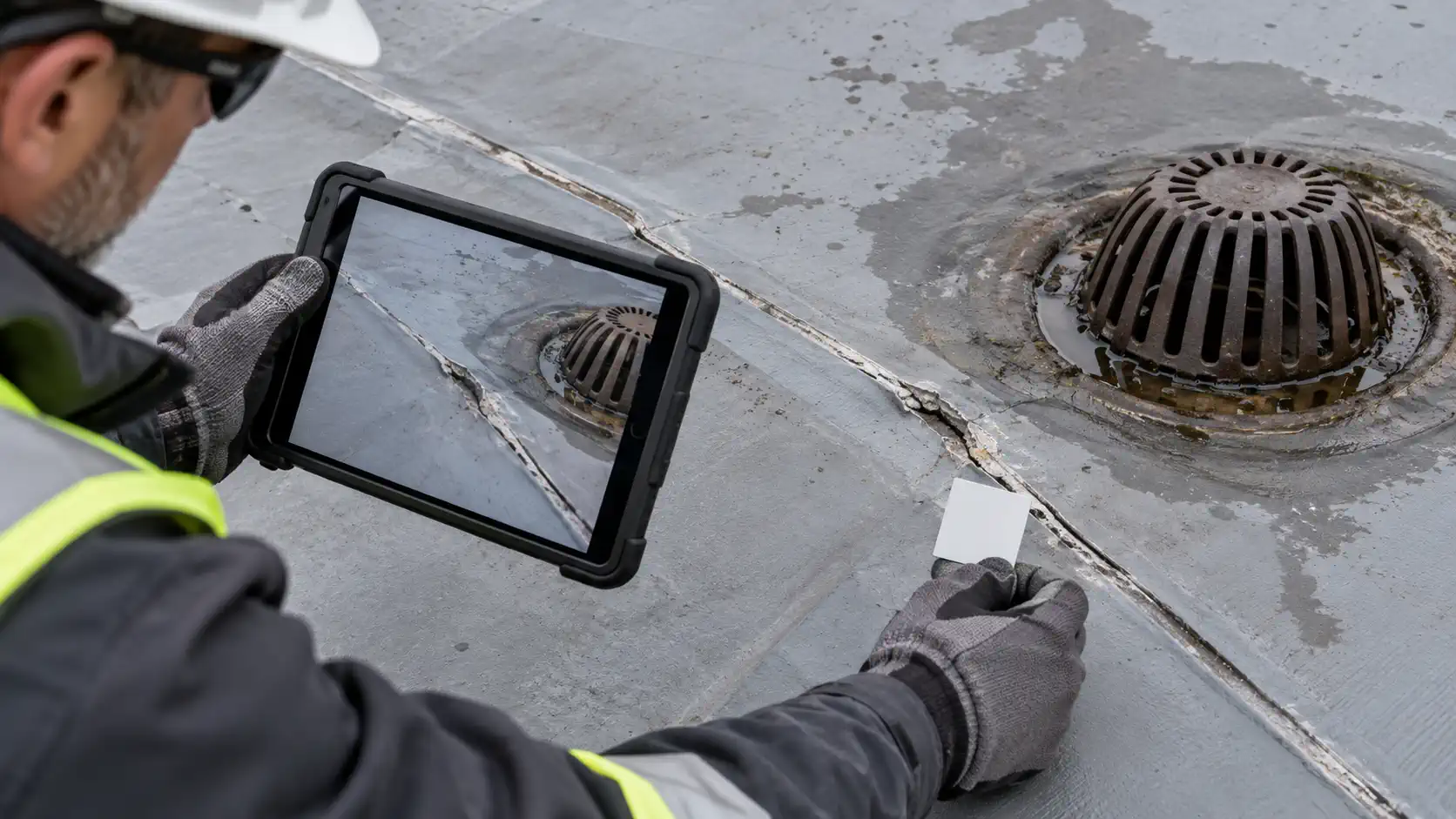
A commercial roof inspection report should do more than state that a leak exists.
We recommend documenting each concern with:
- a roof-area location;
- overview and close-up photographs;
- the affected component;
- observed deterioration;
- corresponding interior symptoms;
- urgency level;
- recommended corrective action;
- previous repair history when available.
For recurring leaks, photographs from earlier inspections are especially valuable. They can show whether a seam is progressively separating, ponding is increasing, flashing is deteriorating, or a repair has repeatedly failed.
Businesses that need a documented commercial roof inspection in Mount Pleasant should maintain these records with invoices, warranties, equipment service records, and roof plans whenever available.
How Often Should a Commercial Roof Be Inspected?
We recommend establishing a schedule based on roof complexity rather than waiting for an interior leak.
A practical program for many Mount Pleasant commercial buildings includes a detailed inspection at least twice each year, supplemented by inspections after significant wind or rainfall events.
Restaurants and buildings with heavy rooftop service activity may justify more frequent checks because exhaust systems, HVAC contractors, grease exposure, and regular foot traffic create additional opportunities for damage.
Inspections should also be considered after:
- HVAC replacement or major mechanical work;
- installation or modification of signage;
- severe wind-driven rain;
- tropical storms;
- reports of ceiling stains;
- drainage backups;
- work performed by other rooftop contractors.
The Town of Mount Pleasant notes that permits and inspections “ensure the basic safety of the buildings in our community.” Commercial repairs or alterations that extend beyond ordinary maintenance may require municipal approval, so scope should be verified before significant work begins.
CONCLUSION
Commercial roof inspections near Shem Creek and Highway 17 should account for how each property actually operates. Restaurants require careful evaluation of exhaust and grease-related penetrations; offices need detailed HVAC, drainage, and tenant-area documentation; retail properties demand attention to signage, equipment, multiple penetrations, and customer-facing spaces. By documenting vulnerabilities before they become active leaks, we can help businesses prioritize repairs, maintain reliable records, and reduce the risk that roof problems interrupt operations.
FAQ
How often should a restaurant roof in Mount Pleasant be inspected?
We generally recommend inspections at least twice per year and after significant storms. Restaurants with frequent rooftop HVAC or exhaust-system maintenance may benefit from additional inspections because equipment servicing and foot traffic can damage roofing materials.
What are the most common leak areas on commercial roofs?
Common problem areas include HVAC curbs, exhaust penetrations, flashing transitions, membrane seams, drains, scuppers, parapet walls, roof edges, pipe penetrations, access hatches, and previously repaired areas.
Should we inspect a commercial roof after a major Mount Pleasant storm even if there is no visible leak?
Yes. Wind-driven rain can expose loose flashing, compromised seams, drainage problems, displaced components, and small openings before water becomes visible inside the building. A post-storm inspection also establishes documentation that can be compared with future roof conditions.