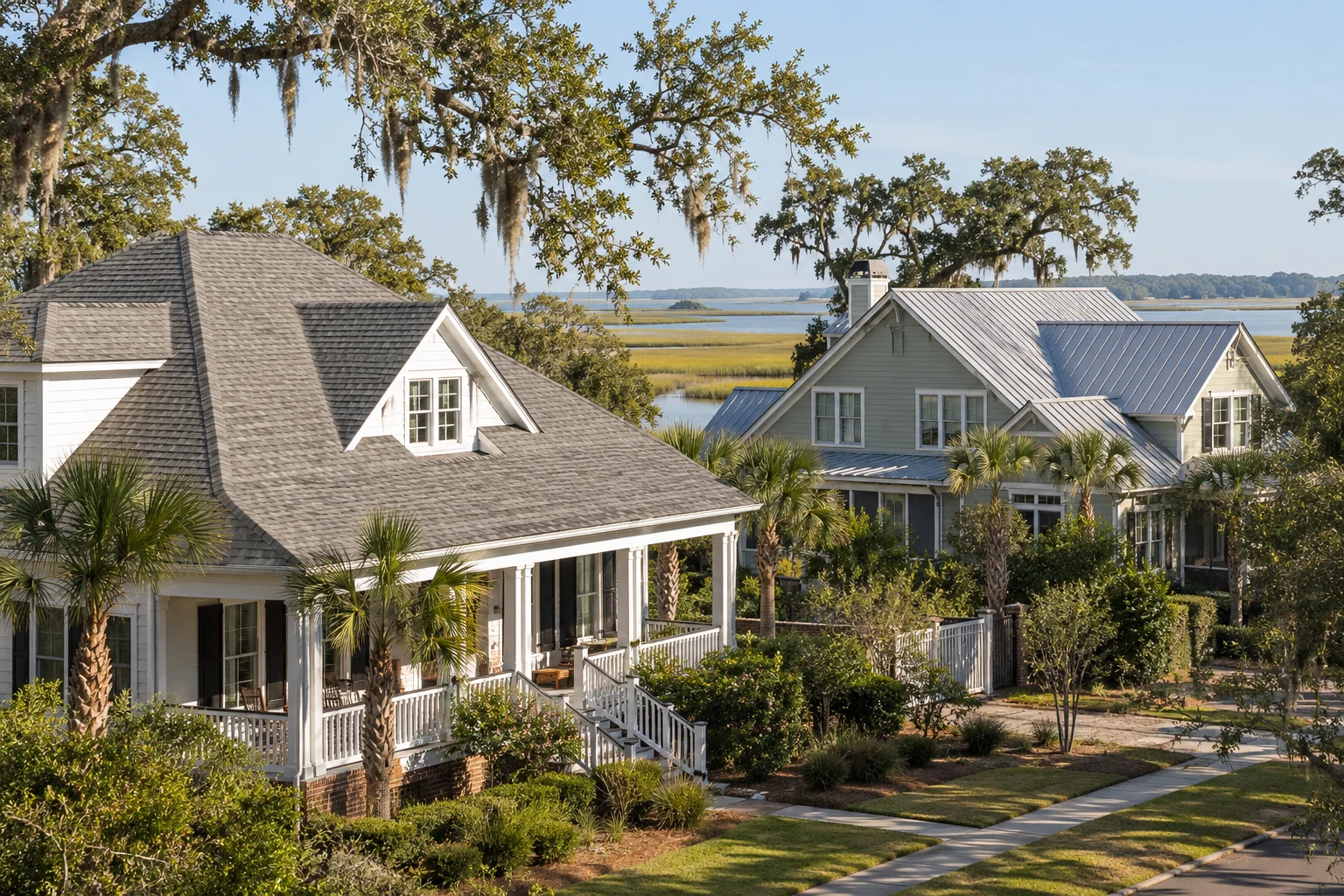
Choosing between metal and asphalt shingles in coastal South Carolina requires more than comparing appearance and installation price. At MasterRoof Mount Pleasant, we evaluate roofing materials against the conditions that actually shorten roof life in Mount Pleasant, SC: hurricane-force winds, wind-driven rain, salt exposure, persistent humidity, algae growth, intense summer heat, and repeated wet-dry cycles. Both metal and architectural shingles can protect a coastal home effectively, but their performance, maintenance requirements, lifespan, repairability, and long-term cost are substantially different.
Metal Roofing vs Asphalt Shingles: Coastal Comparison
| Factor | Standing-Seam Metal Roofing | Architectural Asphalt Shingles |
| Typical service life | 40–70+ years | 20–30 years under favorable conditions |
| Coastal wind performance | Excellent with engineered attachment | Good to excellent with high-wind-rated products |
| Salt-air exposure | Excellent with correct metal, coating, and fasteners | Shingles do not rust, but metal accessories can corrode |
| Humidity/algae resistance | Very good | Moderate; algae staining is common in humid climates |
| Heat performance | Highly reflective options available | Greater heat absorption, especially in dark colors |
| Initial cost | Higher | Lower |
| Routine maintenance | Low, but specialized | Moderate and straightforward |
| Localized repair | More complex | Usually easier |
| Curb appeal | Coastal, contemporary, traditional standing seam | Traditional and widely compatible |
| Long-term replacement frequency | Usually lower | Usually higher |
The important distinction is that material alone does not determine performance. Roof deck condition, underlayment, flashing, fastener selection, ventilation, panel or shingle attachment, roof geometry, and installation quality all influence whether a roof survives decades of coastal exposure.
Wind Resistance: Metal vs Shingles in Mount Pleasant
Wind performance deserves priority in Mount Pleasant because roofing is part of a complete structural load path. Wind creates uplift pressures that are especially severe near roof edges, corners, ridges, eaves, and overhangs.
A properly engineered standing-seam metal system performs exceptionally well because panels are mechanically secured to the roof structure and seams interlock across large sections of the roof. Concealed-fastener systems also eliminate thousands of exposed attachment points that can become potential maintenance locations.
However, describing every metal roof as “hurricane-proof” would be inaccurate. FEMA specifically emphasizes attachment, tested assemblies, roof-zone pressures, flashing, clips, fasteners, and manufacturer requirements when designing metal roofing for high-wind regions. A premium metal panel installed with inadequate clips or incorrect spacing can still fail under uplift.
Architectural shingles can also achieve strong wind performance when the entire installation matches the product’s tested system. Correct starter strips, nail placement, nail quantity, deck attachment, adhesive sealing, ridge caps, and edge detailing matter. Shingles are more vulnerable when tabs or edges become loose because wind can progressively lift adjacent material.
Mount Pleasant currently enforces the 2021 International Code series with South Carolina amendments, making site-specific code compliance an essential part of material selection rather than an optional upgrade.
Coastal advantage: properly engineered standing-seam metal generally provides the stronger long-term wind-resistance platform, while high-quality architectural shingles remain a practical alternative when installed as a complete high-wind system.
Salt Air and Corrosion Near Charleston Harbor, Marshes, and Creeks
Salt does not affect every roof equally.
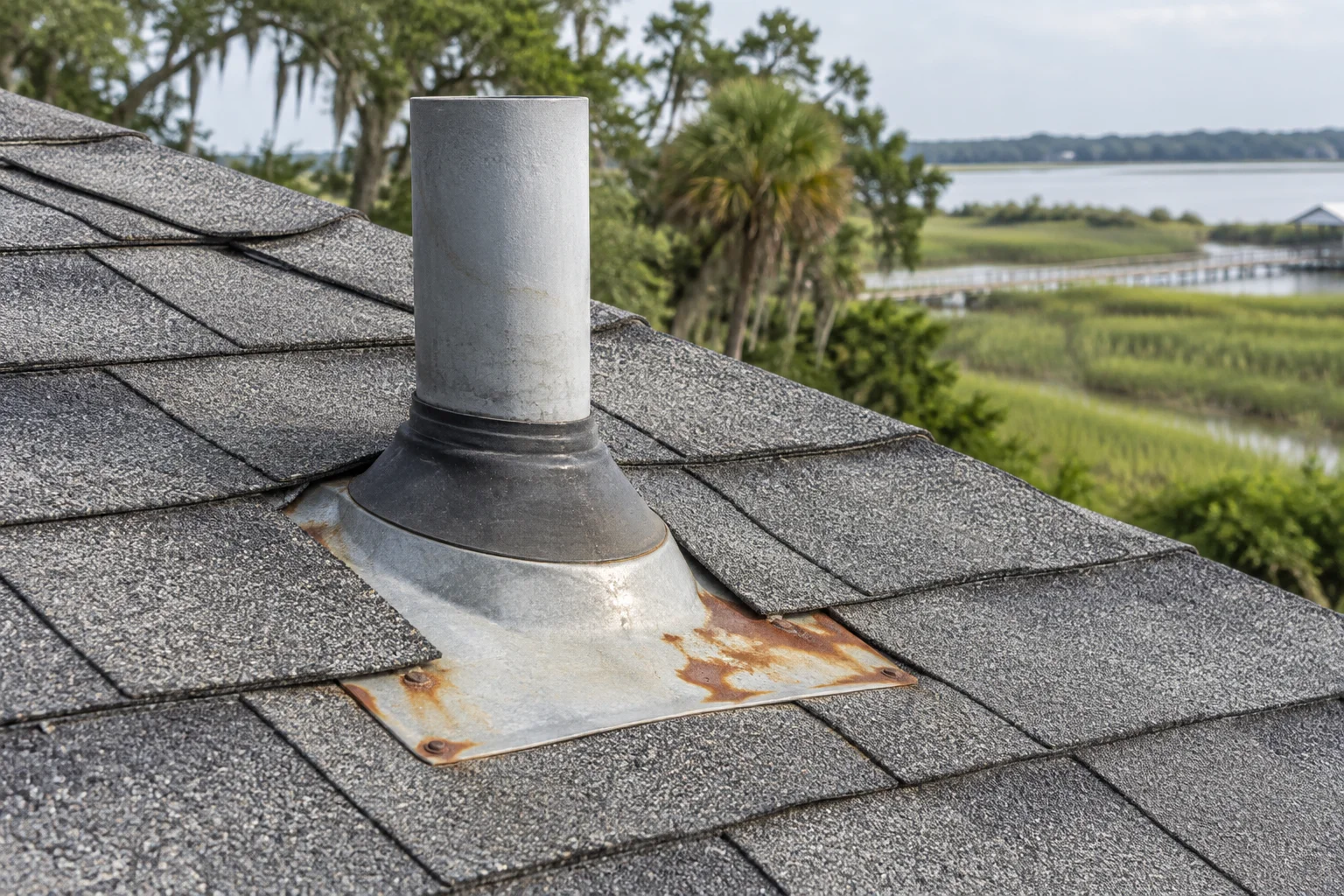
Asphalt shingles themselves do not rust, which gives them an apparent advantage around saltwater. However, a shingle roof still contains metallic components: flashing, nails, vents, pipe penetrations, drip edge, valley metal, fasteners, and sometimes gutters. Premature corrosion of these components can create leaks even while the shingles remain usable.
Metal roofing requires more deliberate material selection. Coastal-grade aluminum performs particularly well because it does not develop red rust like carbon steel. Steel systems can also perform well when protected with appropriate metallic coatings and high-performance finishes, but exposure distance, panel specification, cut edges, incompatible metals, and fastener quality become critical.
We avoid judging a coastal metal roof simply by panel thickness. The system must be evaluated as a combination of:
- base metal;
- protective coating;
- paint finish;
- concealed or exposed fastening;
- fastener composition;
- flashing material;
- sealants;
- drainage details;
- proximity to saltwater.
A cheap exposed-fastener metal system and a premium standing-seam coastal system may both be called “metal roofing,” yet their durability can be dramatically different.
For homeowners comparing coastal-grade systems, our metal roofing in Mount Pleasant, SC service explains the installation approach used for local residential and commercial properties.
Humidity, Moisture, and Algae Growth
Mount Pleasant’s warm, moisture-rich environment creates conditions where biological staining and trapped moisture deserve attention.
Asphalt shingles commonly develop dark algae streaks. The staining may begin as a cosmetic issue, but the larger concern is maintaining a roof that stays wet for prolonged periods because of shade, debris accumulation, poor drainage, or inadequate ventilation.
Modern algae-resistant shingles can slow visible staining by incorporating specially designed granules, but they do not eliminate the underlying coastal moisture environment.
Metal provides a smoother surface that generally retains less organic material and does not provide the same granular surface for algae colonization. Properly pitched metal panels also shed rain efficiently.
Neither material solves attic moisture problems. A poorly ventilated roof assembly can trap heat and moisture beneath metal or shingles, contributing to condensation, deteriorated decking, insulation problems, and shortened component life.
Heat and Solar Exposure
Roof surfaces in coastal South Carolina experience months of strong solar exposure.
Metal roofing can be manufactured with highly reflective finishes that reject a larger percentage of solar energy before it enters the roof assembly. Light-colored and reflective metal is particularly effective when energy performance is part of the project objective.
Asphalt shingles absorb more solar energy, especially in dark colors. Heat accelerates aging of asphalt materials by contributing to oxidation, loss of flexibility, and gradual deterioration of protective granules.
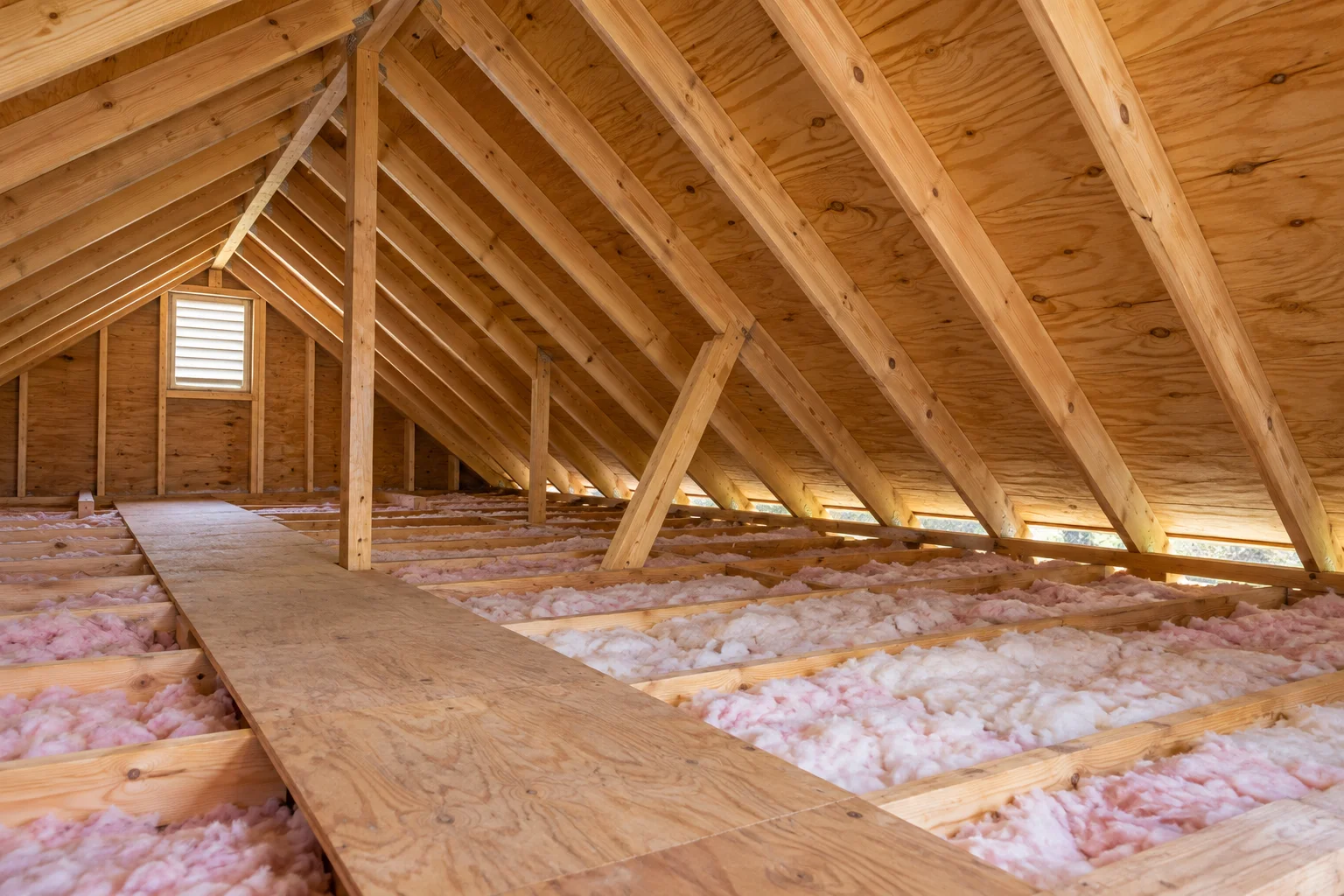
That does not mean roof color alone determines indoor temperature. Attic ventilation, insulation, roof deck configuration, radiant exposure, air sealing, and HVAC efficiency all contribute.
For long-term coastal performance, metal’s ability to combine durable finishes with high solar reflectance creates a meaningful advantage.
Curb Appeal and Lowcountry Architecture
Both materials can complement Mount Pleasant homes.
Architectural shingles remain popular because their dimensional profiles work naturally with traditional Lowcountry houses, subdivisions, cottages, Colonial-inspired architecture, and homes where owners want a familiar roof appearance.
Metal provides greater visual distinction. Standing seam works particularly well with coastal architecture, porches, dormers, modern homes, farmhouses, waterfront properties, and accent roofs.
Color selection should be approached strategically. Coastal roofs receive strong sunlight, so appearance should be evaluated outdoors rather than from a small material sample. HOA requirements should also be confirmed before changing roofing type, profile, or color.
Metal Roof vs Shingle Roof Cost
Asphalt shingles normally provide the lower initial project cost. Material is less expensive, installation is faster, and labor availability is broad.
Standing-seam metal requires a larger initial investment because of the panel system, specialized flashing, fabrication, clips, detailing, and skilled installation. Depending on roof geometry and metal specification, the initial cost can be substantially higher than architectural shingles.
Initial price, however, is only one calculation.
A useful comparison is:
Total ownership cost = installation + maintenance + repairs + expected replacements
A homeowner who expects to own a property for several decades may replace shingles more than once during the service life of a properly installed metal roof. Conversely, owners prioritizing the lowest immediate replacement cost may obtain better financial flexibility from architectural shingles.
Complex roofs with many valleys, dormers, chimneys, walls, skylights, and penetrations also narrow or widen the cost difference because metal requires detailed fabrication at every transition.
Lifespan in a Coastal Climate
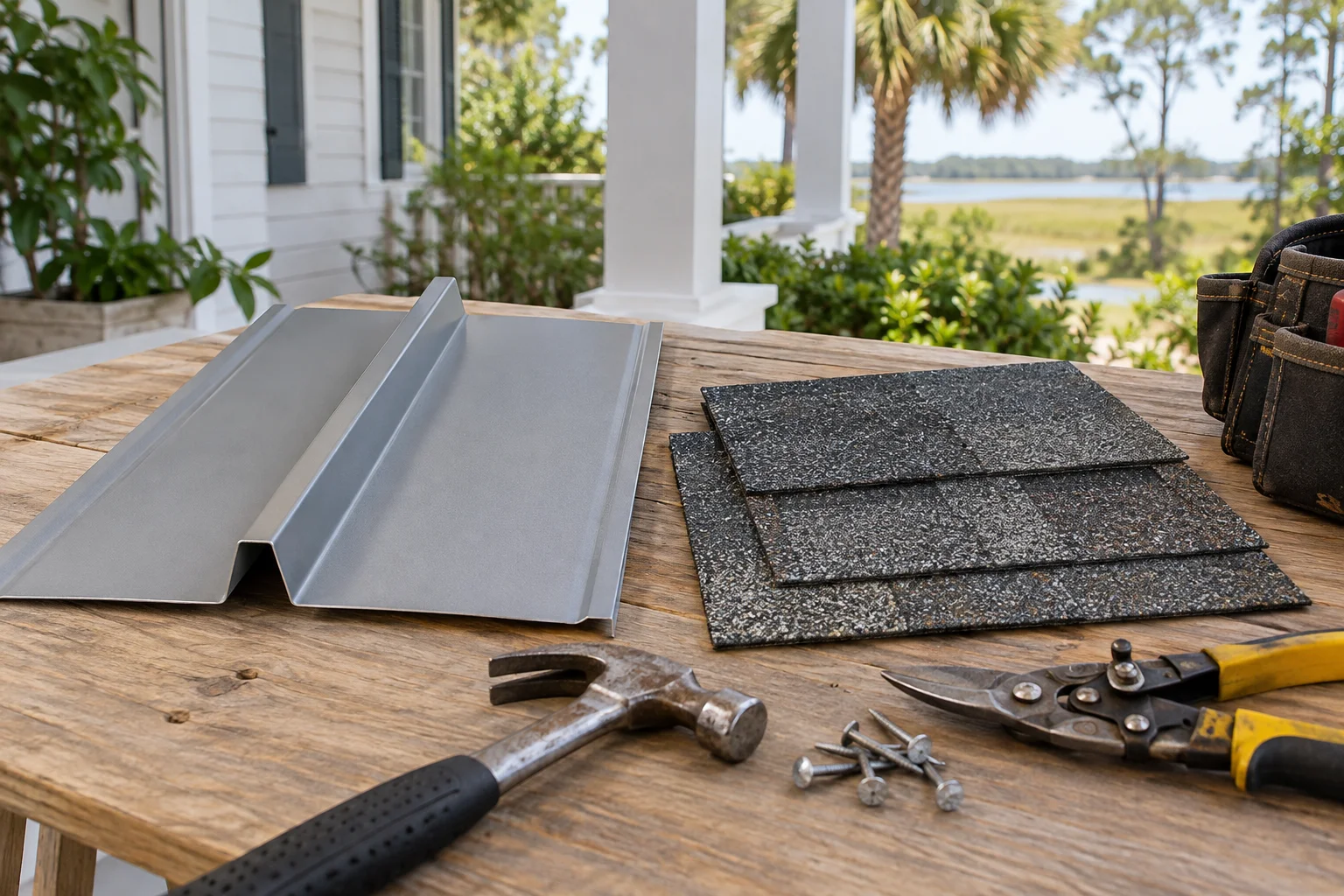
A quality standing-seam metal roof can commonly provide approximately 40–70 years or more when the material, coating, fasteners, and installation are appropriate for the exposure.
Architectural asphalt shingles are commonly marketed around service lives of 20–30 years, but actual coastal service life depends heavily on sun exposure, ventilation, storm damage, maintenance, product grade, roof orientation, and installation quality.
Coastal aging is rarely caused by one dramatic event. More often, degradation accumulates through repeated exposure:
UV radiation → heat expansion → humidity → salt deposition → heavy rain → wind → drying → renewed moisture
That cycle repeats thousands of times during a roof’s service life.
Metal generally tolerates repeated environmental cycling better, which is why its higher initial price becomes more attractive for long-term ownership.
Maintenance Requirements
Metal roofs require relatively little routine maintenance, but inspections should still evaluate:
- seams and panel terminations;
- flashing;
- sealants;
- penetrations;
- fasteners;
- scratches or coating damage;
- corrosion around incompatible metals;
- debris trapped in valleys;
- storm-related deformation.
Asphalt shingle maintenance focuses on:
- missing or lifted shingles;
- granule loss;
- exposed fasteners;
- cracked shingles;
- algae and debris;
- damaged ridge caps;
- flashing deterioration;
- pipe boots;
- sealant failure;
- storm damage.
The mistake with either system is assuming that “low maintenance” means “no inspection.” Small flashing or attachment defects can allow water intrusion long before obvious interior symptoms appear.
Repairability: Shingles Have an Important Advantage
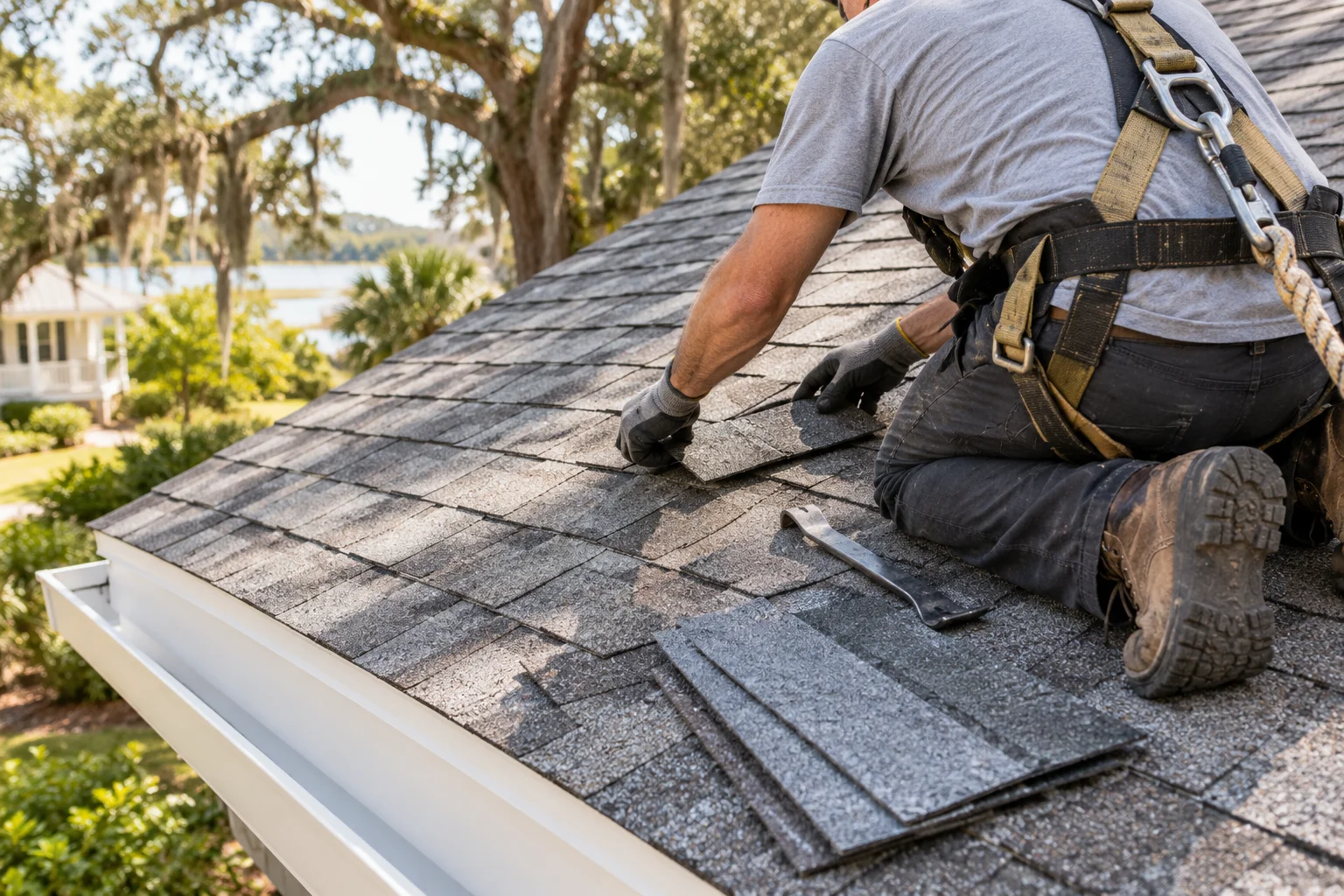
Asphalt shingles are generally easier to repair locally.
A roofer can often remove several damaged shingles and install replacements without disturbing a large portion of the roof. Matching becomes more difficult as shingles age and colors fade, but the repair process itself is relatively straightforward.
Standing-seam metal repairs can require greater skill. Panels may run continuously from eave to ridge, and accessing a damaged panel can involve disengaging adjacent seams or removing surrounding components. Custom colors or profiles may also be difficult to reproduce decades after installation.
Metal usually requires fewer material repairs, but when repair is necessary, it can be more specialized.
This makes shingles attractive for homeowners who prioritize inexpensive localized repairs, while metal favors owners who prioritize reducing the frequency of repairs and full replacements.
Which Roofing Material Is Better for Mount Pleasant Coastal Homes?
For long-term coastal resilience, standing-seam metal has the stronger overall performance profile. Its combination of wind resistance, efficient water shedding, reflective finishes, algae resistance, and extended service life makes it particularly well suited to waterfront, marsh-adjacent, and long-term residential properties.
Architectural asphalt shingles remain a strong choice where initial budget, traditional appearance, straightforward repairs, or neighborhood architectural requirements are the priority. The strongest shingle roof is not simply the most expensive shingle; it is a complete roofing assembly with suitable underlayment, edge protection, flashing, ventilation, fastening, and wind-rated installation.
The most important comparison is therefore not merely metal vs shingles. It is coastal-rated metal installed correctly vs high-quality architectural shingles installed correctly.
Conclusion
Metal and shingle roofing can both protect homes in Mount Pleasant, SC, but they solve the coastal roofing problem differently. Architectural shingles offer lower upfront cost, familiar aesthetics, broad availability, and convenient repairability. Standing-seam metal demands a larger initial investment but offers longer potential service life, strong wind performance, efficient heat reflection, reduced algae concerns, and fewer full roof replacements over a long ownership period. For properties exposed to significant salt air, storms, heat, and humidity, material specifications and installation details should carry as much weight as the roofing material itself.
FAQ
Is a metal roof better than shingles for hurricanes in Mount Pleasant, SC?
A properly engineered standing-seam metal roof generally offers excellent high-wind performance because panels and attachment systems can be designed specifically for uplift pressures. Architectural shingles can also perform well in high winds, but correct fastening, edge sealing, underlayment, starter strips, roof-deck attachment, and manufacturer requirements are critical.
Does salt air damage metal roofs in Mount Pleasant?
Salt air can accelerate corrosion when unsuitable metals, coatings, fasteners, or flashing materials are used. Coastal-grade aluminum and appropriately coated steel systems can provide excellent durability, but the complete system — including screws, clips, flashings, cut edges, and accessories — must be compatible with the exposure.
How long do metal roofs last compared with asphalt shingles in coastal South Carolina?
A properly specified metal roof commonly provides approximately 40–70 years or longer, while architectural asphalt shingles commonly provide roughly 20–30 years under favorable conditions. Intense UV exposure, humidity, wind, storm damage, ventilation problems, installation quality, and proximity to saltwater can shorten the actual service life of either system.