
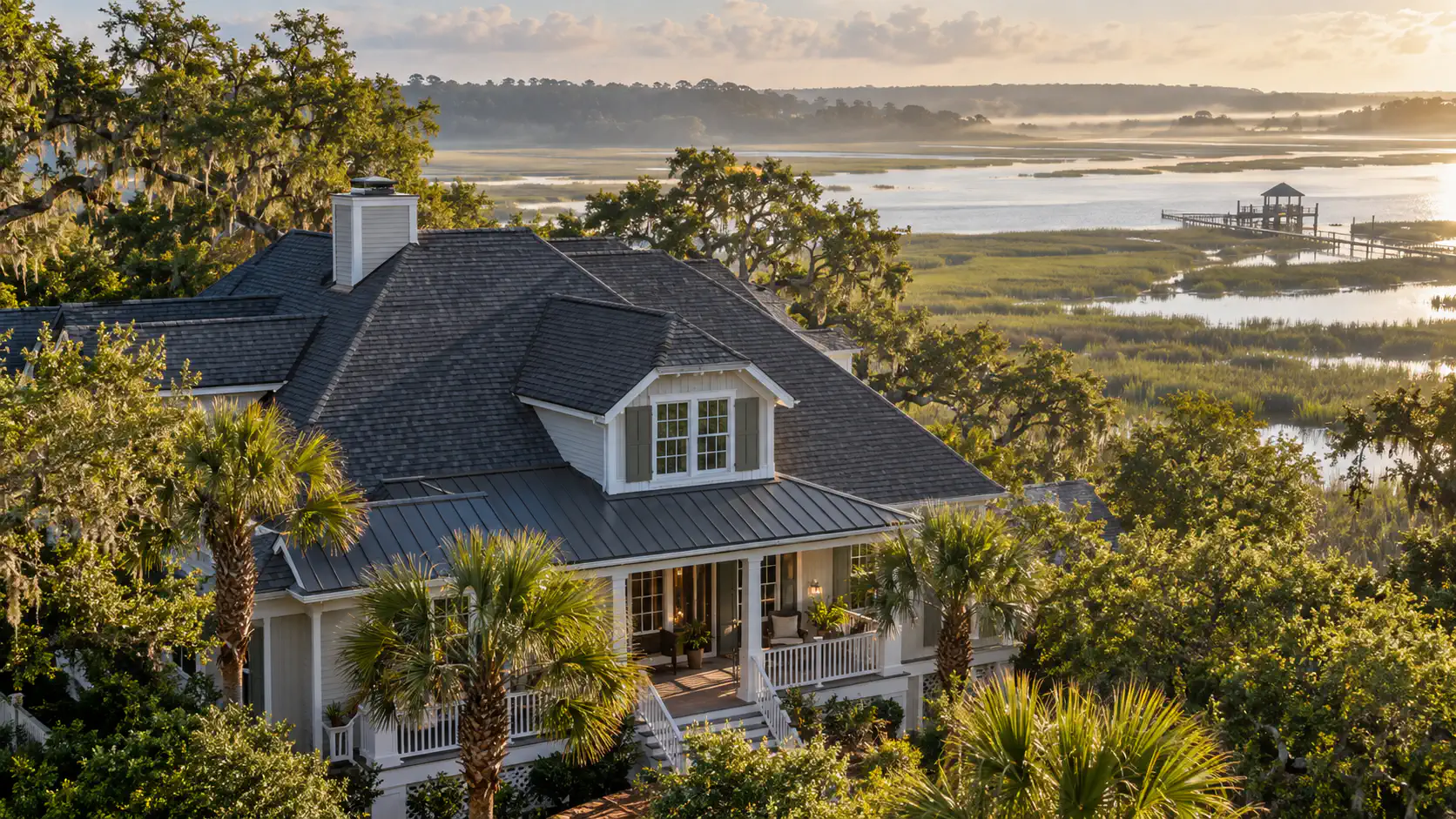
A roof in coastal South Carolina ages under conditions far more aggressive than simple rainfall and seasonal temperature changes. At MasterRoof Mount Pleasant, we see roofing systems exposed to airborne salt, persistent humidity, intense solar heat, wind-driven moisture, and long cooling seasons. Together, these forces can accelerate corrosion, weaken fasteners, encourage algae growth, dry and embrittle asphalt materials, and trap moisture inside poorly ventilated attic spaces.
Why Coastal South Carolina Roofs Age Faster
Roof lifespan is often discussed in broad national ranges, but local exposure matters. A shingle, flashing, vent, screw, or metal panel near the coast can age differently from the same component installed inland. FEMA identifies shoreline proximity, high temperature, high humidity, salt spray, exposure, and airborne pollutants as important factors in coastal corrosion. Salt carried inland by onshore winds can remain on metal surfaces; when combined with moisture, it supports the electrochemical reactions that cause corrosion.
A roofing system also depends on fasteners, flashing, vents, drip edge, sealants, and transition details. The visible covering may still look serviceable while concealed metal components are deteriorating.
Salt Air Accelerates Corrosion of Roof Components
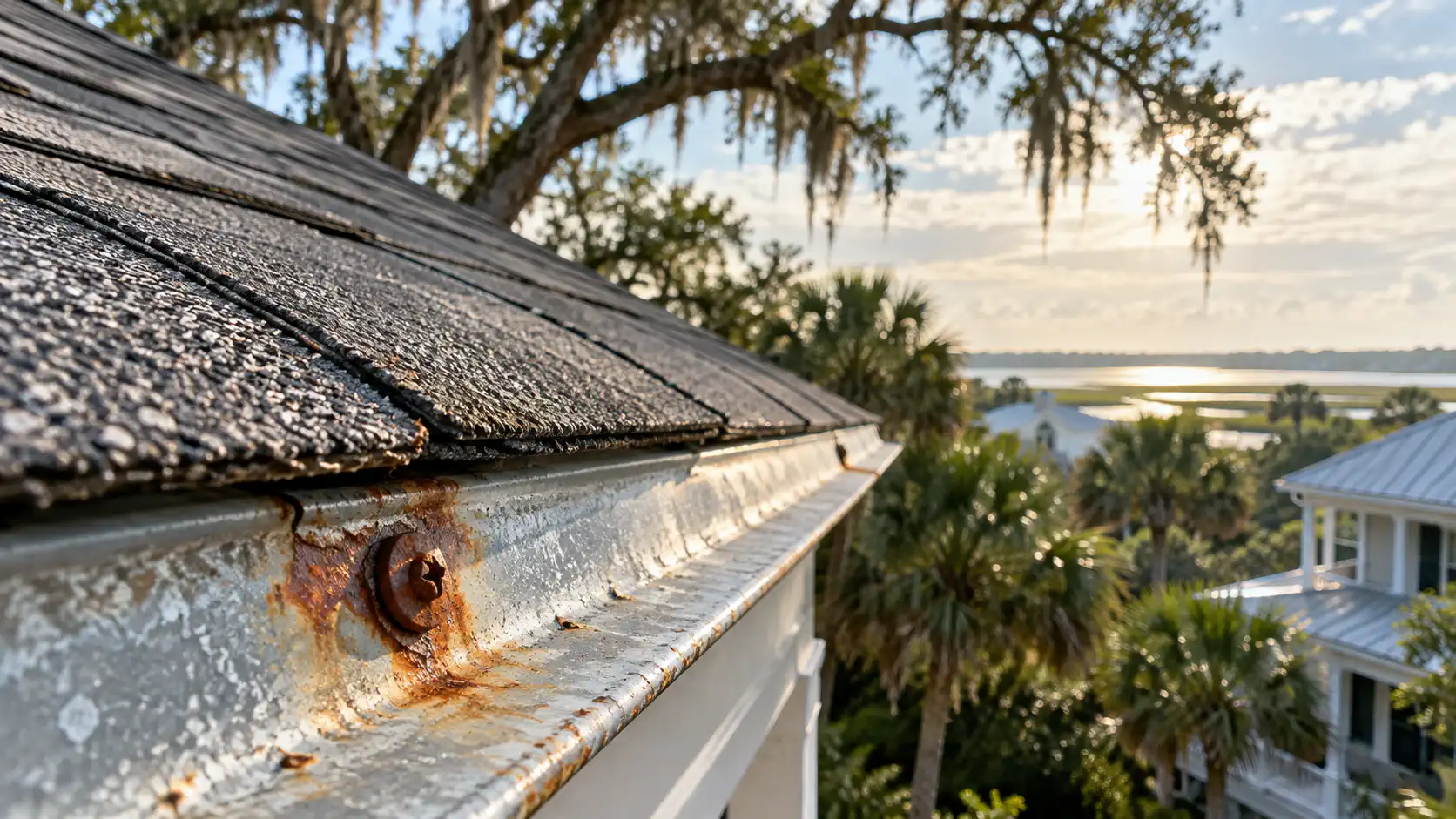
Salt does not need to arrive as visible ocean spray. Fine particles can travel on coastal air and settle on exposed metal. When humidity or rain wets those deposits, the resulting salt solution becomes more conductive than clean water and accelerates oxidation. FEMA states that “salt spray from breaking waves and onshore winds significantly accelerates the rate of corrosion.” Its coastal corrosion guidance also emphasizes the damaging combination of salt accumulation and high humidity.
Vulnerable areas include exposed fastener heads, cut metal edges, flashing joints, vent caps, chimney counterflashing, roof-to-wall transitions, valleys, and hardware around penetrations. Once protective coatings are scratched or cut, corrosion can begin at the exposed substrate. We also watch for galvanic corrosion, which can occur when dissimilar metals remain in contact in the presence of salty moisture.
High Humidity Extends Roof Wetting Time
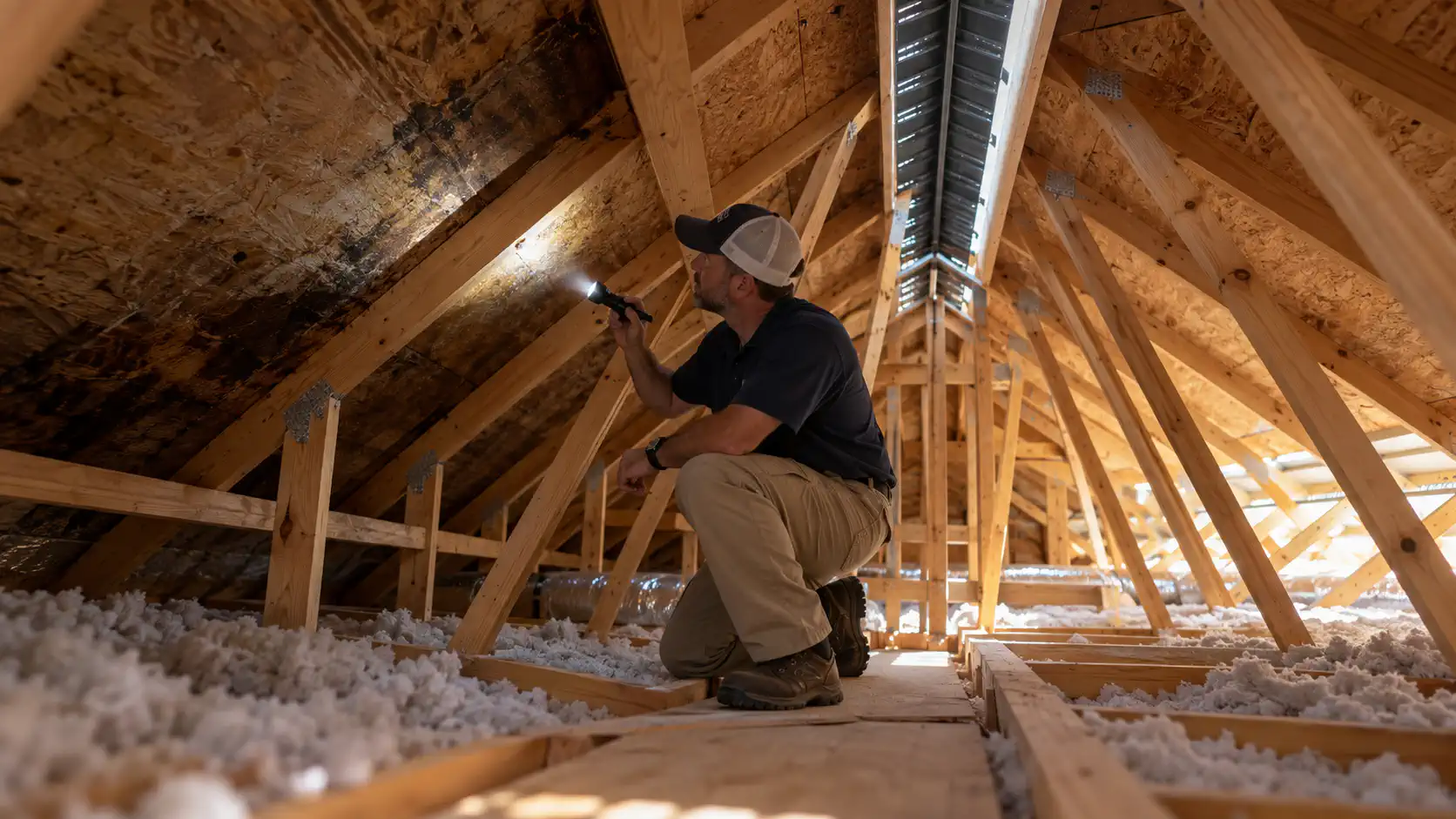
Humidity changes how long surfaces remain damp after dew, rain, or condensation. The longer metal stays wet, the longer corrosion reactions can continue. Moisture also affects the underside of the roof. Warm, humid air entering an attic can condense on cooler decking, fasteners, ductwork, or other surfaces when ventilation and air sealing are inadequate.
Repeated condensation can darken sheathing, corrode nail points, soften wood fibers, reduce fastener holding strength, and contribute to mold growth. These conditions can develop without an active roof leak, which is why attic moisture should be evaluated as part of roof aging rather than treated as a separate problem.
Algae Staining Shows Where Moisture Persists
Dark streaks on asphalt shingles are commonly associated with algae growth. Algae does not automatically mean the roof is leaking, but it shows that enough moisture remains on the surface for biological growth to persist.
North-facing slopes, shaded sections, and surfaces that dry slowly are more vulnerable. Debris can hold moisture against shingles, while moss and lichen can conceal cracks, lifted edges, or deteriorated flashing. Aggressive pressure washing can remove protective granules, so cleaning should follow manufacturer guidance.
UV Radiation and Heat Accelerate Asphalt Aging
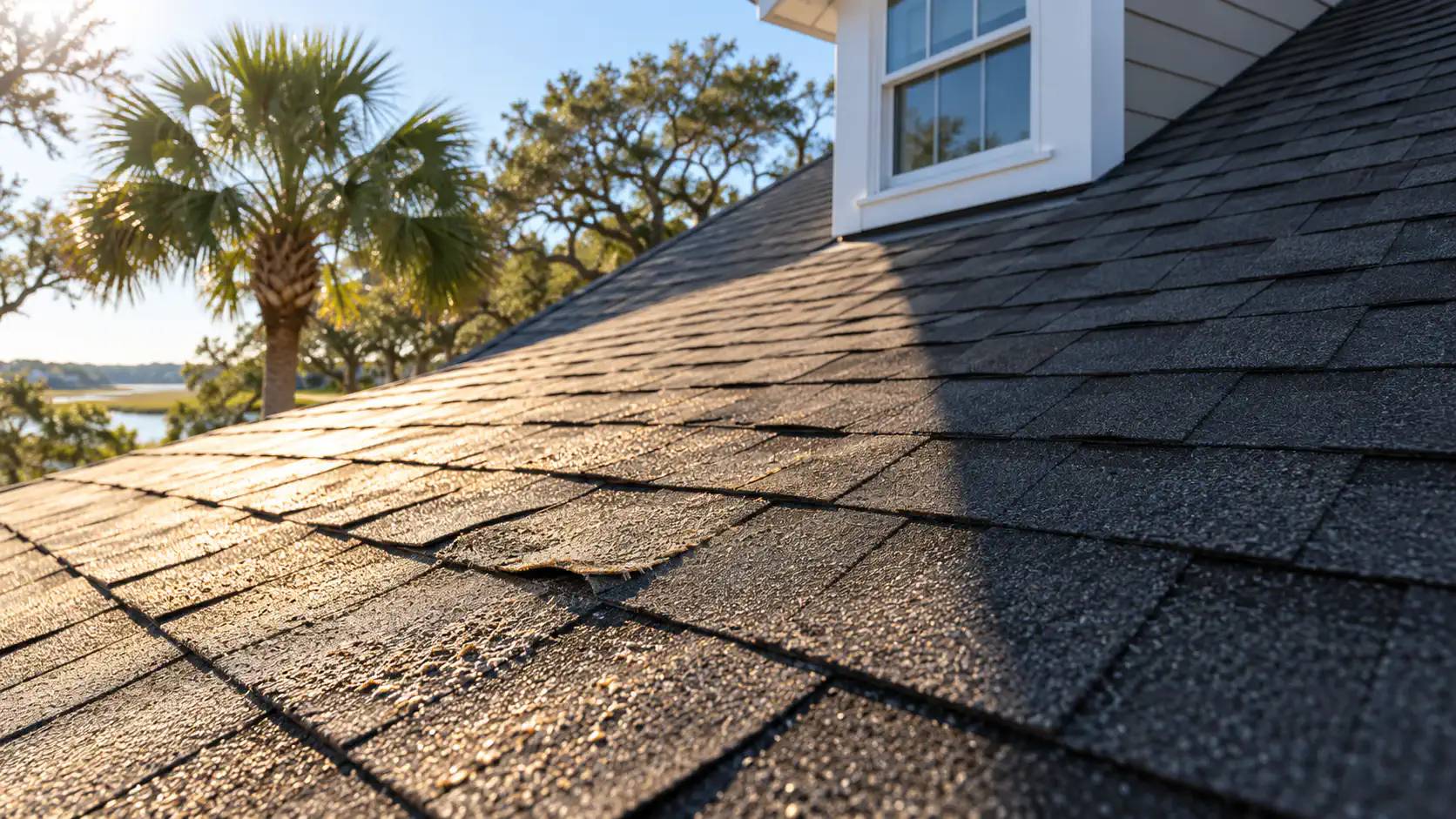
Coastal humidity is only half of the problem. South Carolina roofs also receive strong solar exposure. The U.S. Department of Energy reports that many dark roofs absorb 90% or more of incoming solar energy and can exceed 150°F in warm, sunny conditions. Its cool-roof guidance explains how solar reflectance and thermal emittance affect roof temperature.
High roof temperatures accelerate chemical aging in asphalt-based materials. Over time, shingles lose flexibility as asphalt oxidizes. Granules loosen, exposed asphalt becomes more vulnerable to sunlight, and shingles may curl, crack, blister, or become brittle.
Heat also drives expansion and contraction. Because flashing, sealants, shingles, decking, and framing move at different rates, repeated daily cycles stress joints and penetrations, especially where sealants have hardened.
Fasteners and Flashing Often Deteriorate First
Many coastal roof leaks begin at details rather than across the broad field of the roof. A corroded nail, backed-out screw, split pipe boot, failed sealant joint, or rusting flashing edge can create a water pathway while nearby shingles or panels remain intact.
We look for rust staining, pitting, loose screws, enlarged fastener holes, cracked sealants, and movement around penetrations. Even concealed shingle nails can corrode where moisture reaches the underside of the deck. Early correction is simpler than repairing rot after water travels beneath the covering.
Poor Ventilation Compounds Heat and Moisture Damage
Ventilation cannot stop salt air or sunlight, but it can reduce unnecessary heat and moisture accumulation in the attic. A balanced system allows intake air to enter low at the eaves and exhaust air to leave near the ridge or another high point.
Problems develop when soffit vents are blocked, exhaust is inadequate, bathroom fans terminate in the attic, or indoor air leaks carry moisture upward. Excessive attic heat adds thermal stress, while cooler periods can produce condensation on sheathing and fasteners. Ventilation must work with air sealing and insulation; adding exhaust without adequate intake can create pressure problems.
Early Warning Signs of Coastal Roof Aging
Coastal roof aging rarely appears as one dramatic defect. More often, several small signs develop together: granules in gutters, exposed asphalt, curling shingle edges, rust at flashing, corroded vent caps, loose fasteners, recurring sealant cracks, dark algae streaks, damp attic sheathing, musty odors, or water stains around penetrations.
These symptoms should be evaluated as a system. One rusted screw may be isolated; corrosion across multiple details suggests broader exposure. Widespread sheathing discoloration can point to condensation or ventilation problems.
A professional coastal roof inspection in Mount Pleasant helps separate cosmetic aging from active deterioration and identifies whether corrosion, moisture, ventilation, or heat exposure is shortening the roof’s remaining service life.
What a Coastal Roof Inspection Should Evaluate
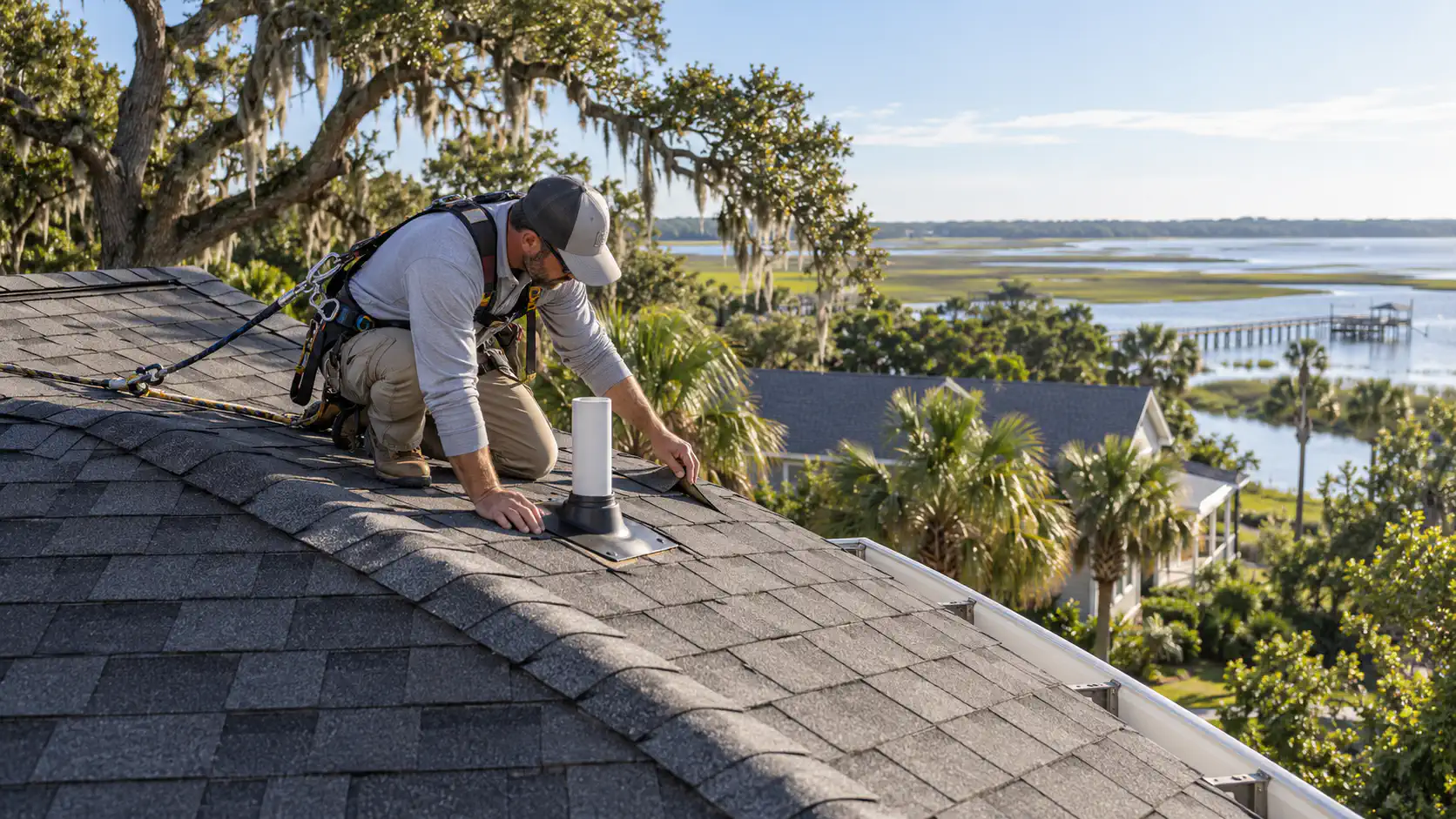
We assess the covering, flashing, penetrations, fasteners, drainage, sealants, roof edges, attic ventilation, visible decking, and moisture movement. We also consider orientation, shade, salt exposure, repair history, and component age to identify premature deterioration before wind or water turns gradual wear into sudden damage.
Conclusion
Coastal South Carolina roofs age under a combined load of salt, humidity, solar heat, moisture, and repeated thermal movement. Salt accelerates corrosion, humidity keeps surfaces wet longer, heat and UV degrade asphalt materials, and poor ventilation can trap damaging heat and condensation below the deck. Regular inspection provides the clearest view of fastener condition, flashing integrity, surface wear, attic moisture, and ventilation performance before manageable aging becomes expensive failure.
FAQ
How often should a roof be inspected near the South Carolina coast?
We generally recommend a professional inspection at least once a year and after major wind or tropical weather events. Coastal exposure can deteriorate metal details and sealants faster than the main roof surface, so routine inspection is especially useful for catching small defects early.
Does salt air affect asphalt shingle roofs even though shingles are not metal?
Yes. Salt exposure can corrode the metal components that keep an asphalt roof watertight, including flashing, vents, drip edge, fasteners, and penetration hardware. Humidity and heat also affect the shingles by increasing moisture exposure and accelerating material aging.
Can better attic ventilation extend roof lifespan in Mount Pleasant?
Proper ventilation can reduce excess attic heat and help manage moisture, protecting roof decking and fasteners from avoidable stress. It is most effective when balanced with adequate intake, air sealing, and insulation rather than treated as a stand-alone fix.