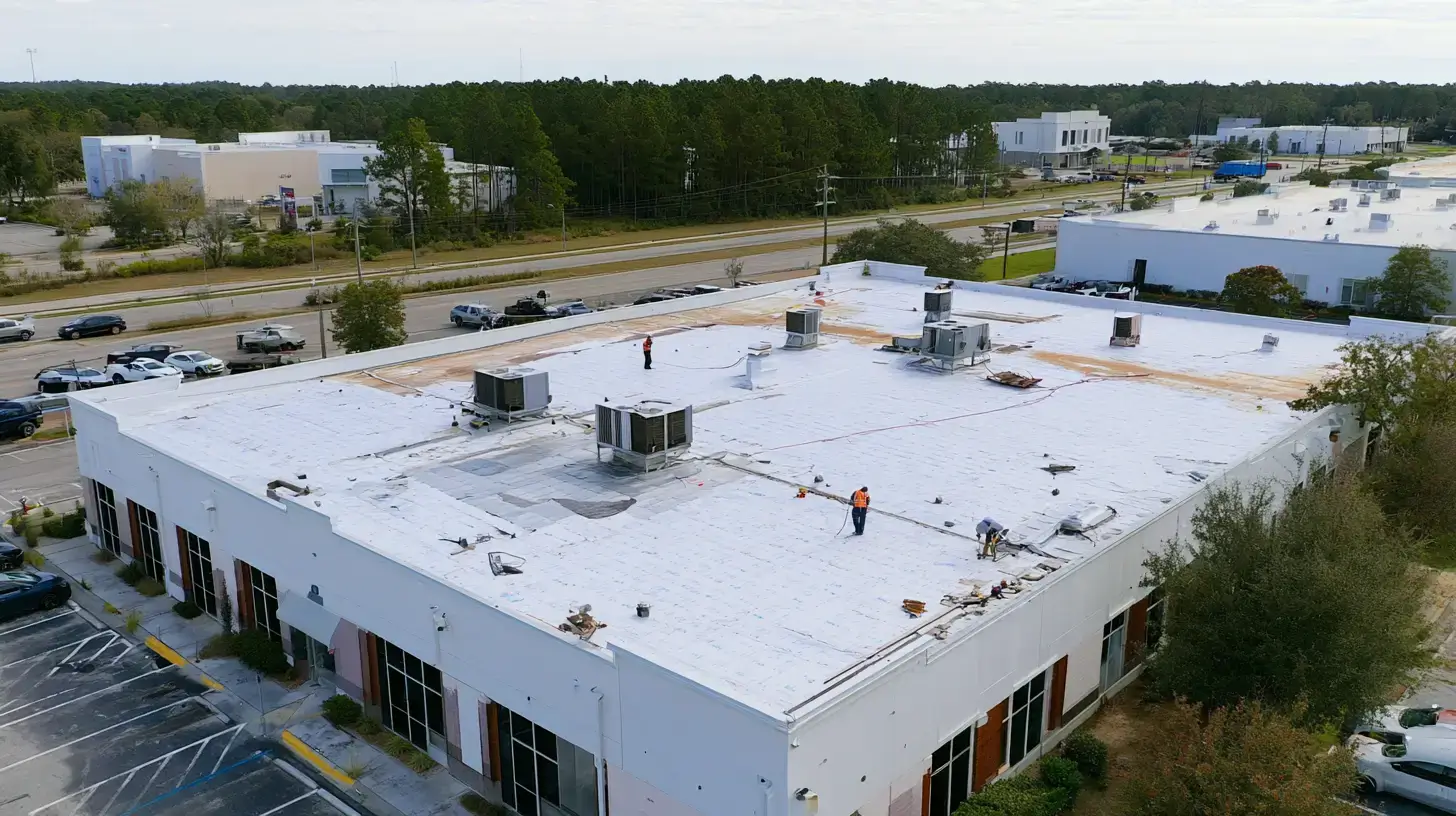
When a roof leak interrupts operations, MasterRoof Mount Pleasant helps Mount Pleasant, SC businesses move from confusion to control with a practical emergency commercial roof leak response plan. A leaking commercial roof is not just a building issue. It can threaten inventory, equipment, electrical systems, tenant safety, records, production schedules, customer access, and insurance documentation. The faster the response is organized, the easier it is to reduce damage, preserve evidence, and restore normal operations.
Commercial Roof Leaks in Mount Pleasant Require Fast, Organized Action
Mount Pleasant businesses operate in a coastal environment where heavy rain, tropical systems, wind-driven storms, high humidity, and sudden downpours can expose weak points in a commercial roofing system. The National Weather Service identifies tropical cyclone hazards as including heavy rainfall, strong winds, tornadoes, storm surge flooding, and high surf, all of which can create roof stress and water intrusion risks for coastal properties.
Commercial leaks often begin at roof penetrations, seams, flashing, drains, rooftop HVAC curbs, skylights, wall transitions, scuppers, ponding areas, or older membrane sections. During a storm, the visible drip inside the building may not be directly below the actual roof opening. Water can travel across insulation, decking, beams, ceiling grid, conduit, or interior walls before appearing indoors.
That is why emergency response should focus first on safety, containment, documentation, and professional inspection—not guessing at the leak source from inside the building.
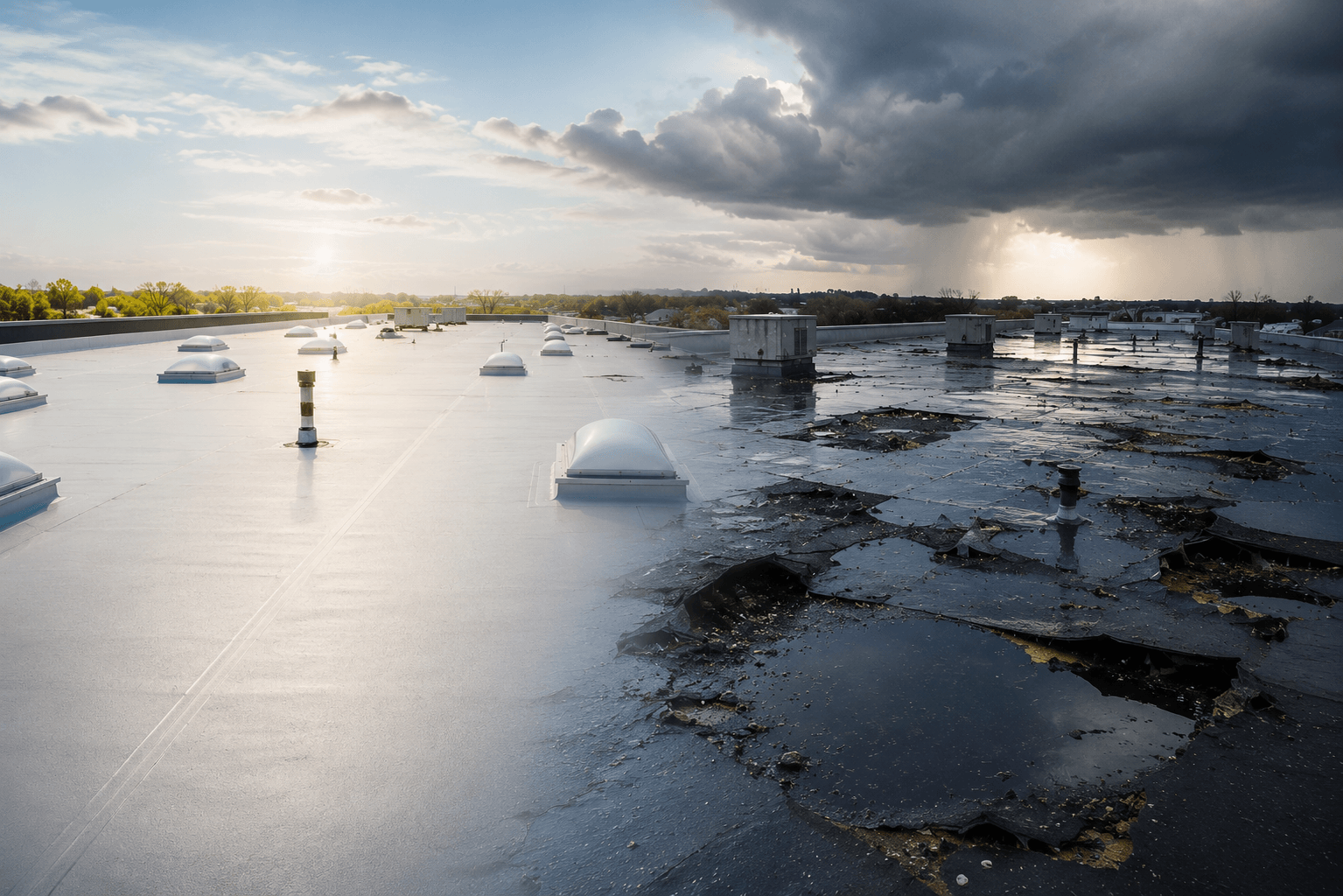
Step 1: Protect People Before Protecting Property
The first action is to keep employees, tenants, customers, vendors, and visitors away from the leak zone. Any area with active dripping, ceiling staining, sagging ceiling tiles, wet flooring, electrical exposure, or falling debris should be treated as unsafe until evaluated.
We recommend immediately:
- Blocking off the leak area with cones, caution tape, signs, or temporary barriers
- Moving foot traffic away from wet floors
- Keeping staff away from saturated ceiling tiles
- Avoiding contact with water near outlets, breaker panels, computers, lighting, machinery, or extension cords
- Not sending employees onto the roof during rain, wind, lightning, or darkness
- Not lifting ceiling tiles if they appear bowed, swollen, or waterlogged
Commercial roof leaks can create slip hazards, electrical hazards, indoor air concerns, and overhead collapse risks. If water is near active electrical systems, the area should be isolated and the proper maintenance, electrical, or emergency personnel should be contacted before anyone attempts cleanup.
Step 2: Isolate the Leak Area and Control Interior Spread
Once people are safe, the next priority is to contain the leak inside the building. The goal is not to “fix” the roof from indoors. The goal is to reduce secondary damage until a qualified roofer can inspect and mitigate the roof.
Use buckets, plastic bins, wet-floor mats, absorbent pads, towels, tarps, or commercial water diverters to collect water. If water is spreading across the floor, create a controlled path away from inventory, walls, equipment, and customer areas. If the ceiling is actively dripping from one point, place collection containers beneath the drip and monitor them so they do not overflow.
For larger facilities, assign one person to monitor the leak area every 10–15 minutes during active rainfall. This person should check for new drip points, expanding stains, sagging ceiling materials, wet electrical areas, or water movement into storage, office, retail, or production zones.
Step 3: Protect Inventory, Equipment, Records, and Electronics
Commercial roof leaks become expensive when water reaches business-critical assets. Move vulnerable items away from the leak area as soon as it is safe.
Priority items include:
- Computers, servers, phones, printers, routers, POS systems, and security equipment
- Product inventory, packaged goods, tools, and raw materials
- Paper files, contracts, invoices, employee records, permits, and financial documents
- Furniture, flooring materials, display fixtures, shelving, and tenant improvements
- Machinery, shop equipment, appliances, and electrical components
- Chemicals, food products, medical supplies, or regulated materials that cannot be exposed to water
If items cannot be moved, cover them with plastic sheeting or waterproof tarps. Keep coverings elevated where possible so water does not pool and collapse onto the contents. For warehouse or retail settings, relocate inventory to dry zones, upper shelving, pallets, or protected rooms.
Businesses with servers, records, or critical equipment should include roof leak procedures inside their broader emergency response plan. Ready.gov states that every business should develop and implement an emergency response plan for protecting employees, contractors, and visitors.
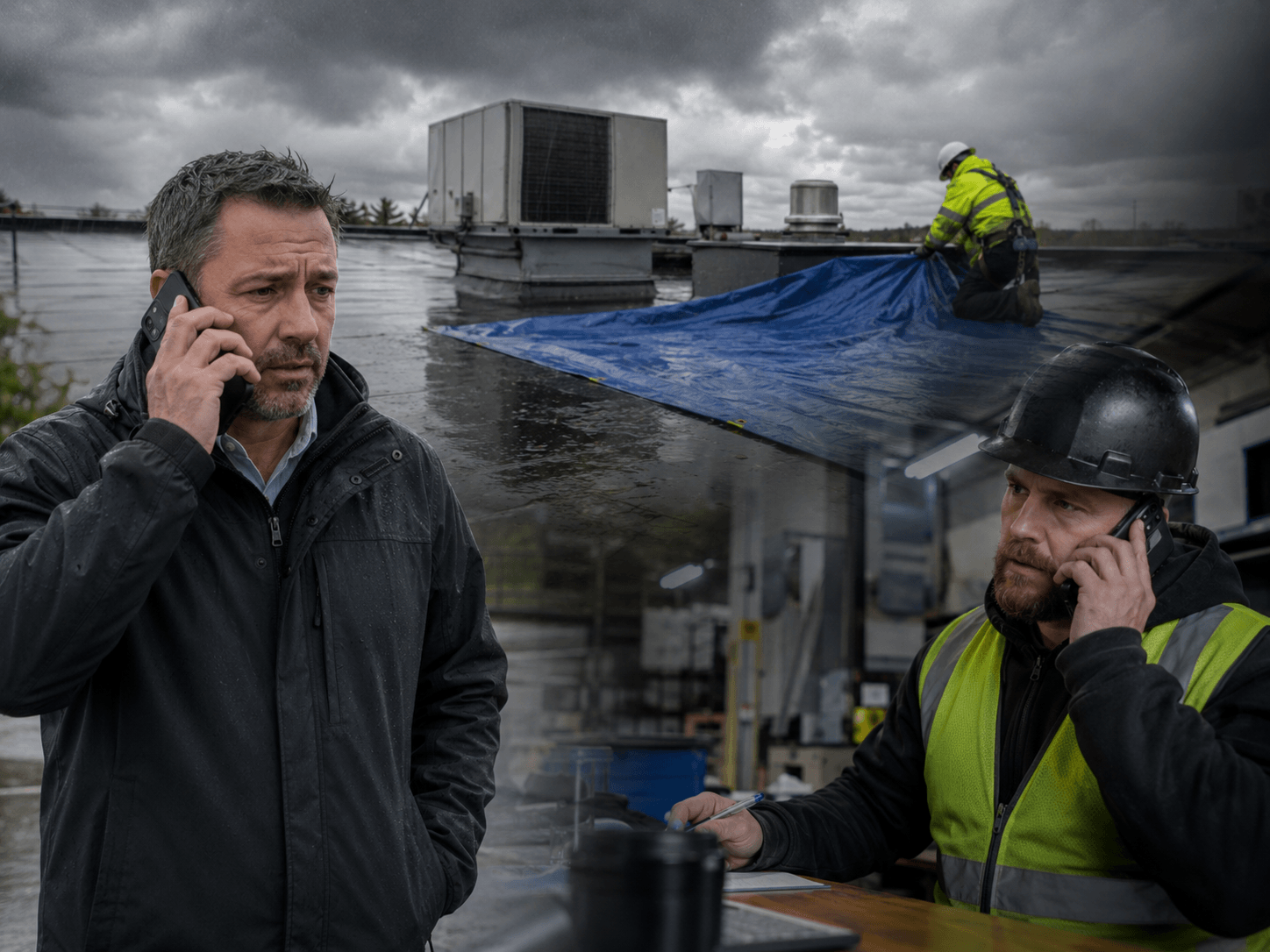
Step 4: Call a Commercial Roofer Before the Damage Expands
After safety and interior protection are underway, contact a roofing contractor experienced with emergency commercial roof leaks. Waiting until the storm fully passes can allow water to spread through insulation, decking, ceiling systems, and interior finishes.
For immediate help, businesses can request 24/7 emergency roof repair in Mount Pleasant when a leak is active, spreading, or threatening operations.
A professional emergency response may include:
- Locating likely roof entry points
- Checking seams, flashing, drains, penetrations, curbs, and membrane damage
- Removing debris blocking drainage
- Applying temporary sealant only where appropriate
- Installing emergency tarping or temporary membrane patches
- Documenting visible roof damage
- Recommending permanent repair after conditions are safe
Temporary mitigation is not the same as permanent repair. Emergency work is designed to stop or reduce active intrusion until the roof can be fully inspected and repaired under safe conditions.
Step 5: Document Damage Before Cleanup Changes the Evidence
Insurance claims, lease disputes, maintenance records, warranty questions, and repair decisions all depend on documentation. Before cleanup removes key evidence, take clear photos and videos.
Document:
- Active water entry points inside the building
- Wet flooring, walls, ceiling tiles, insulation, or drywall
- Damaged inventory, equipment, packaging, furniture, or records
- Buckets, tarps, barriers, and other emergency mitigation steps
- Date and time of the leak
- Weather conditions during the incident
- Employee or tenant reports
- Any visible roof damage after the storm, if safely accessible by professionals
- Maintenance history, prior repair invoices, warranty documents, and inspection reports
Photos should be wide enough to show location and close enough to show damage detail. Videos should slowly pan across the leak area, affected rooms, damaged contents, and temporary mitigation. Save original files rather than only compressed versions sent by text or messaging apps.
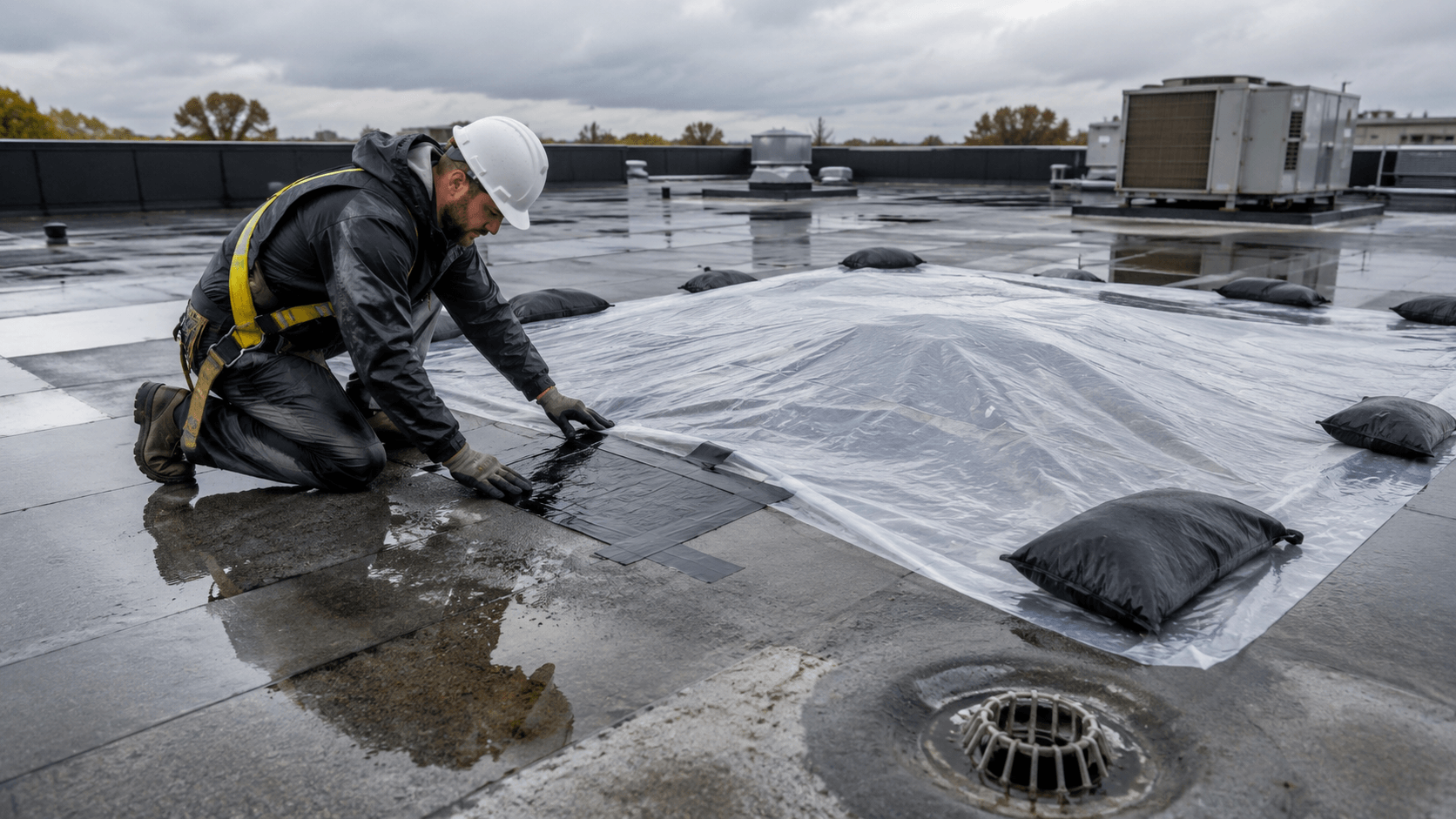
Step 6: Use Temporary Mitigation Without Creating More Roof Damage
Emergency mitigation should be controlled and appropriate for the roof system. Commercial roofs can include TPO, PVC, EPDM, modified bitumen, metal, built-up roofing, coatings, or low-slope assemblies. Each system responds differently to sealants, tapes, fasteners, and temporary patches.
Avoid these common mistakes:
- Sending untrained staff onto a wet or windy roof
- Puncturing the membrane with screws, nails, or anchors
- Applying incompatible caulk or roof cement to single-ply membranes
- Walking across saturated insulation or unstable roof sections
- Blocking drains with plastic, towels, or loose materials
- Ignoring ponding water around drains, scuppers, or gutters
- Assuming the interior drip marks the exact roof entry point
A temporary patch that damages the membrane can increase repair costs, void warranty coverage, or make the leak harder to diagnose. Commercial roof leak response should be handled with the right materials for the roof type and conditions.
Step 7: Check Drainage, Ponding Water, and Roof Debris After the Storm
After the storm passes, drainage should be checked promptly by trained personnel. Low-slope commercial roofs depend on drains, scuppers, gutters, downspouts, crickets, and slope design to move water off the building.
A roof may continue leaking after rain stops if water is ponding around a damaged seam, clogged drain, puncture, open flashing, or saturated insulation area. In coastal South Carolina storms, wind can also push branches, leaves, signage debris, packaging, and loose materials across the roof, blocking drainage paths.
Warning signs include:
- Water still dripping hours after rainfall ends
- Ceiling stains expanding after the storm
- Multiple leak points appearing in different rooms
- Strong interior odor after water intrusion
- Brown water, dirty water, or water carrying insulation particles
- Soft spots, bubbles, wrinkles, or blisters on the roof surface
- Ponding water that does not drain within a reasonable period
- Debris gathered around drains, scuppers, HVAC curbs, or parapet walls
These signs indicate the issue may be larger than a simple surface opening.
Step 8: Schedule an After-Storm Commercial Roof Inspection
An emergency visit is designed to stop immediate damage. A post-storm commercial roof inspection determines what caused the leak, how far water traveled, and what permanent repair is needed.
A proper inspection should review:
- Roof membrane condition
- Seams, laps, and transition points
- Flashing around walls, curbs, vents, pipes, and skylights
- Rooftop HVAC units and penetrations
- Drainage points, gutters, scuppers, and downspouts
- Signs of ponding water
- Previous repair areas
- Interior leak mapping
- Moisture concerns in insulation or decking
- Storm debris, punctures, uplift, or wind-related damage
Commercial properties should not assume that a leak is resolved because the dripping stopped. Water can remain trapped inside roof insulation or beneath membrane layers. Hidden moisture can reduce thermal performance, accelerate deterioration, and lead to recurring leaks.
Step 9: Decide Between Repair, Restoration, or Replacement
After inspection, the next step is selecting the correct permanent solution. Not every emergency commercial roof leak requires replacement, but not every leak should be patched repeatedly.
Repair may be appropriate when the leak source is isolated, the roof system is otherwise sound, and moisture has not spread deeply. Restoration may be considered when the roof is aging but structurally viable and suitable for coating or reinforcement. Replacement may be necessary when the membrane is failing broadly, insulation is saturated, drainage is poor, or past repairs have only delayed a larger problem.
The decision should be based on roof age, material type, leak history, storm damage, moisture findings, warranty status, tenant needs, business interruption risk, and total cost of repeated repairs versus a durable solution.
Step 10: Build a Written Roof Leak Response Plan Before the Next Storm
Businesses recover faster when employees know what to do before water enters the building. A written plan should be simple, visible, and assigned to specific roles.
Include:
- Emergency roofing contact information
- Property manager or facility manager contact
- Building access instructions
- Roof access restrictions
- Electrical shutoff contacts
- Leak containment supplies
- Inventory protection steps
- Photo and video documentation procedure
- Insurance contact information
- Tenant communication process
- Vendor access instructions
- Post-storm inspection protocol
Store supplies in a clearly marked area. Basic supplies may include buckets, absorbent pads, plastic sheeting, painter’s tape, caution signs, floor squeegees, wet-floor cones, gloves, flashlights, clipboards, and waterproof labels.
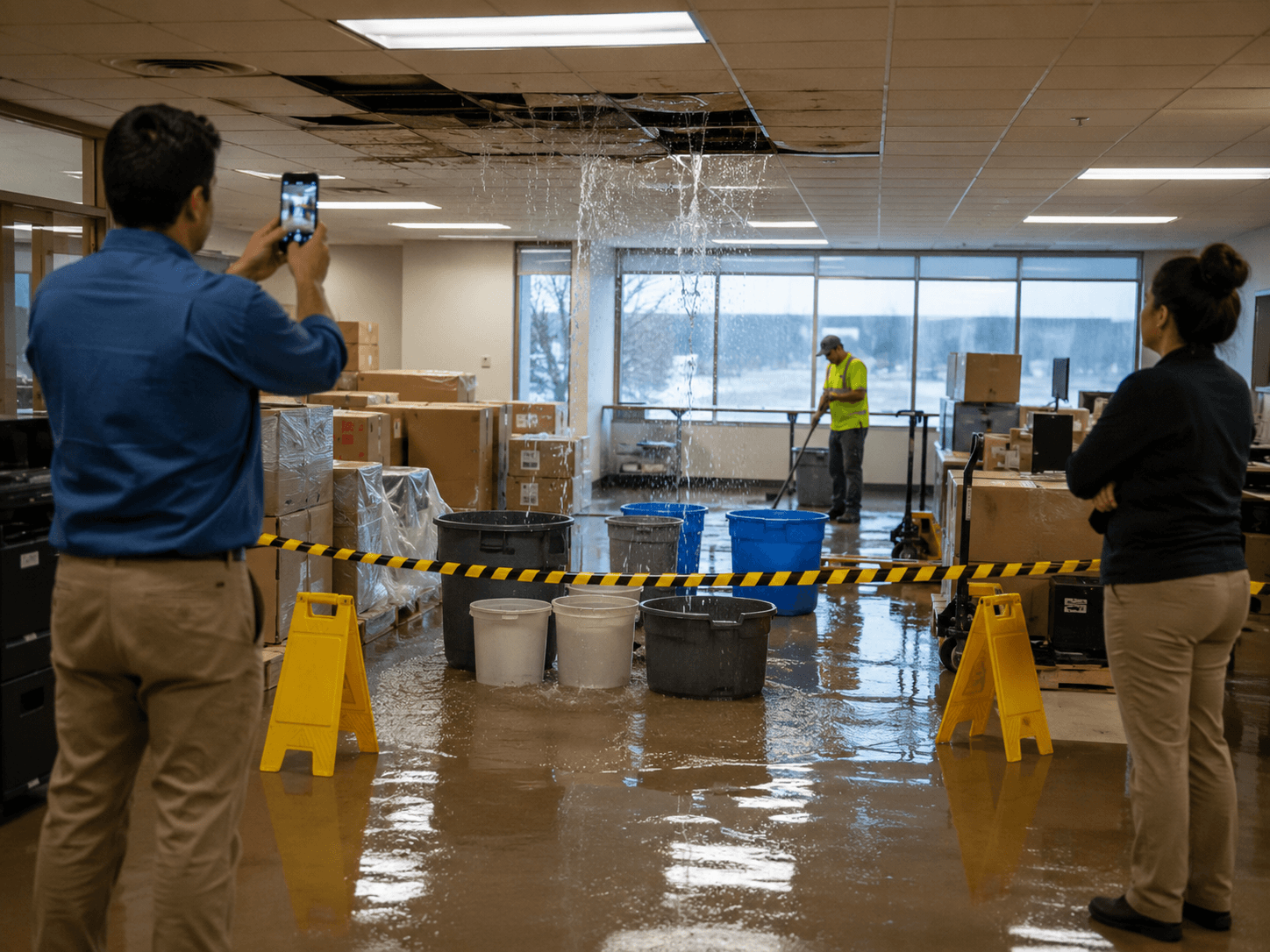
Emergency Commercial Roof Leak Checklist
Use this sequence when a leak appears:
- Keep people away from the leak area.
- Block off wet floors and unsafe ceiling zones.
- Move inventory, electronics, records, and equipment.
- Collect water with containers, pads, or diverters.
- Photograph and video the damage before cleanup.
- Contact an emergency commercial roofing contractor.
- Avoid roof access during unsafe weather.
- Save damaged materials when needed for documentation.
- Monitor the leak area until rainfall stops.
- Schedule a full after-storm roof inspection.
This checklist should be posted where managers, maintenance staff, and key employees can access it quickly.
Common Causes of Emergency Commercial Roof Leaks
Commercial roof leaks in Mount Pleasant often come from a combination of weather exposure, aging materials, drainage problems, and maintenance gaps.
Common causes include:
- Open membrane seams
- Punctures from debris or foot traffic
- Cracked flashing
- Loose counterflashing
- Damaged pipe boots
- HVAC curb leaks
- Clogged drains or scuppers
- Ponding water
- Wind uplift
- Deteriorated roof coatings
- Failed previous repairs
- Damaged skylights
- Parapet wall leaks
- Rusted metal panels or fasteners
- Storm debris impact
The visible leak is usually a symptom. The inspection must identify the roof-side failure that allowed water into the assembly.
How We Help Businesses Reduce Interruption
A commercial roof leak response must protect the building and the business at the same time. We focus on fast stabilization, clear communication, useful documentation, and practical next steps. For offices, retail properties, restaurants, warehouses, medical spaces, professional buildings, and multi-tenant properties, the priority is to reduce operational disruption while preventing the leak from becoming a larger building problem.
MasterRoof Mount Pleasant supports businesses with emergency mitigation, roof leak investigation, after-storm inspection, repair recommendations, and documentation that helps owners and managers make decisions with confidence.
Conclusion
An emergency commercial roof leak response plan protects people first, then property, inventory, equipment, documentation, and operations. The strongest plan is simple: isolate the leak area, control interior water, protect business assets, document everything, call a qualified roofer, use temporary mitigation correctly, and schedule a full after-storm inspection. For Mount Pleasant businesses, preparation matters because coastal storms can turn a small roof weakness into an active operational problem within minutes.
FAQ
What should a business do first when a commercial roof starts leaking?
The first step is to keep people away from the leak area and protect them from slip hazards, electrical hazards, saturated ceiling materials, and falling debris. After the area is isolated, move inventory and equipment, collect water safely, document the damage, and contact an emergency commercial roofer.
Can employees go on the roof to stop a leak during a storm?
No. Employees should not access a commercial roof during rain, wind, lightning, darkness, or unsafe conditions. Wet commercial roofs are dangerous, and untrained repairs can damage the roof system. Emergency mitigation should be handled by trained roofing professionals when conditions allow safe access.
Why is an after-storm inspection needed if the leak stops?
A leak may stop when rainfall stops, but water can remain inside insulation, decking, walls, or ceiling systems. An after-storm inspection identifies the actual roof entry point, checks for hidden damage, evaluates drainage, and determines whether the roof needs repair, restoration, or replacement.