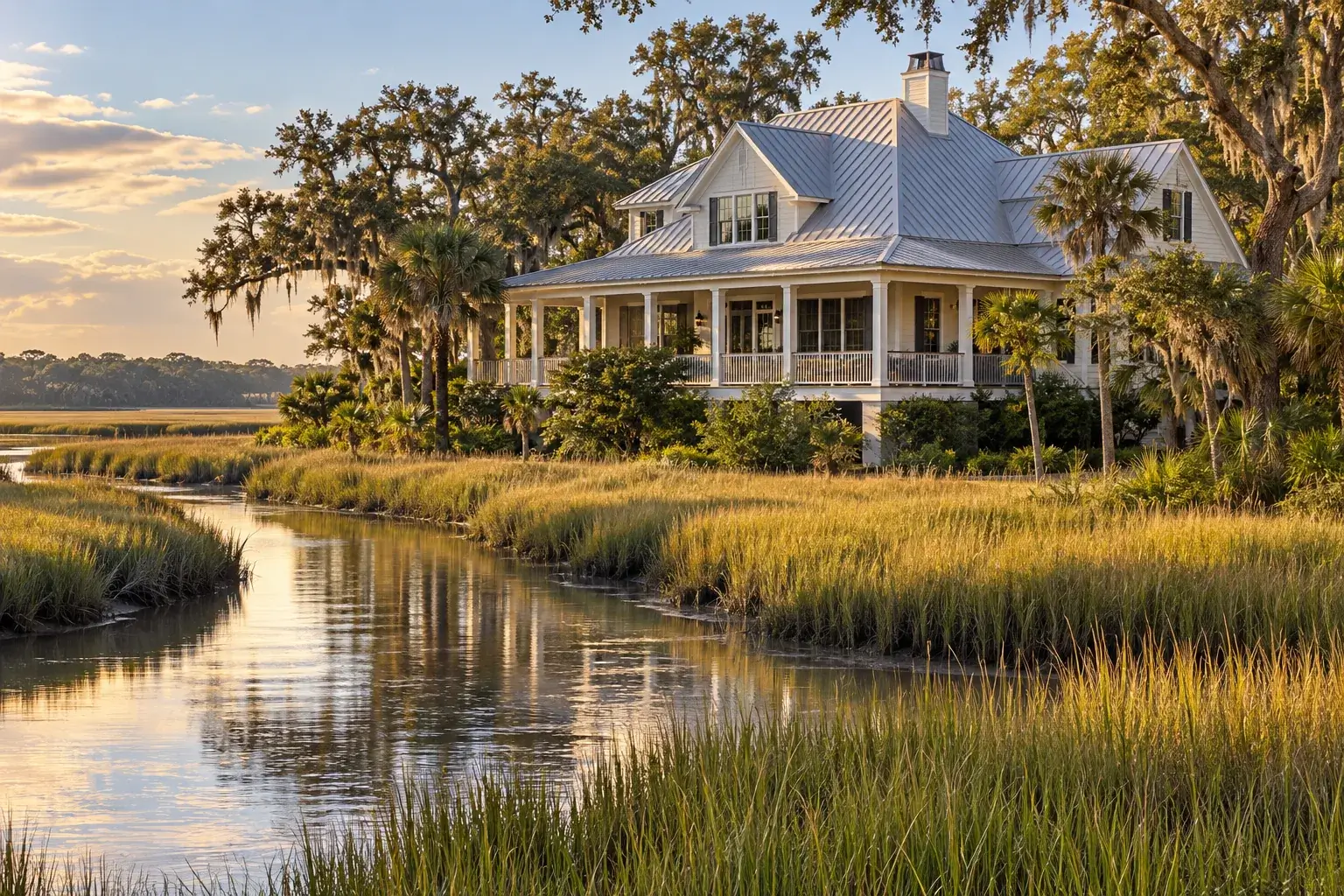
Living near the water in Mount Pleasant, South Carolina, offers beautiful marsh views and coastal scenery, but it also exposes homes to conditions that can shorten roof life. Salt-laden air, persistent humidity, intense sunlight, and tropical storms demand roofing materials that deliver more than attractive curb appeal. At MasterRoof Mount Pleasant, we help homeowners evaluate whether metal roofing provides enough long-term protection, energy savings, and property value to justify its higher initial investment.
For properties near Shem Creek, tidal marshes, and coastal neighborhoods, the answer often depends on the metal selected, corrosion protection, installation quality, and how long the homeowner plans to keep the property.
Why Metal Roofing Makes Sense for Coastal Mount Pleasant Homes
A roof overlooking a tidal creek experiences different environmental conditions from one several miles inland.
Even without direct oceanfront exposure, marsh-side properties can experience airborne chlorides carried by coastal winds. These particles settle on roofing materials and become particularly corrosive when combined with moisture.
Coastal roofs must withstand several overlapping challenges:
- Salt exposure: Accelerates corrosion of vulnerable metals, screws, clips, and flashing.
- High humidity: Keeps surfaces damp and increases the risk of concealed moisture problems.
- Wind-driven rain: Tests panel seams, roof penetrations, and waterproofing details.
- Intense sunlight: Accelerates deterioration of some finishes and sealants.
- Tropical storms: Create substantial uplift forces, especially at roof edges and corners.
Homes near Shem Creek, the Old Village, and marsh-facing sections of Mount Pleasant may therefore need more corrosion-resistant roofing specifications than homes with limited salt exposure.
The important distinction is that metal roofing is not automatically coastal-resistant. Its performance depends on the complete roofing system.
Metal Roof Cost vs. Long-Term Value in Mount Pleasant, SC
Metal roofing generally costs more upfront than architectural asphalt shingles. However, the initial installation price does not represent the entire cost of owning a roof.
How Much Does a Metal Roof Cost?
For preliminary budgeting, broad residential installation ranges can include:
| Roofing system | Approximate installed cost |
| Architectural asphalt shingles | 7 per sq. ft. |
| Standing-seam metal roofing | 16+ per sq. ft. |
| Coastal-grade aluminum roofing | 18+ per sq. ft. |
These are general planning estimates, not Mount Pleasant project quotes. Roof complexity, tear-off requirements, metal thickness, protective finishes, and coastal-grade accessories can substantially change the price.
Understanding Lifetime Roofing Costs
Consider a hypothetical 40-year ownership period:
- Asphalt roof installation: $13,000.
- Second asphalt roof after approximately 22 years: another $13,000.
- Total nominal installation cost: $26,000.
- Alternative metal roof installation: $24,000.
If the metal system remains serviceable throughout those 40 years, it could avoid a second complete roof replacement.
This simplified comparison excludes financing, inflation, maintenance, repairs, and the time value of money. Actual roof lifespans are not guaranteed.
Metal roofing offers its strongest financial argument when homeowners intend to remain in their properties for decades.
Best Metal Roofing Materials for Homes Near Saltwater
Material selection is particularly important for houses near Shem Creek, tidal waterways, and salt marshes.
Aluminum Roofing: Strong Corrosion Resistance
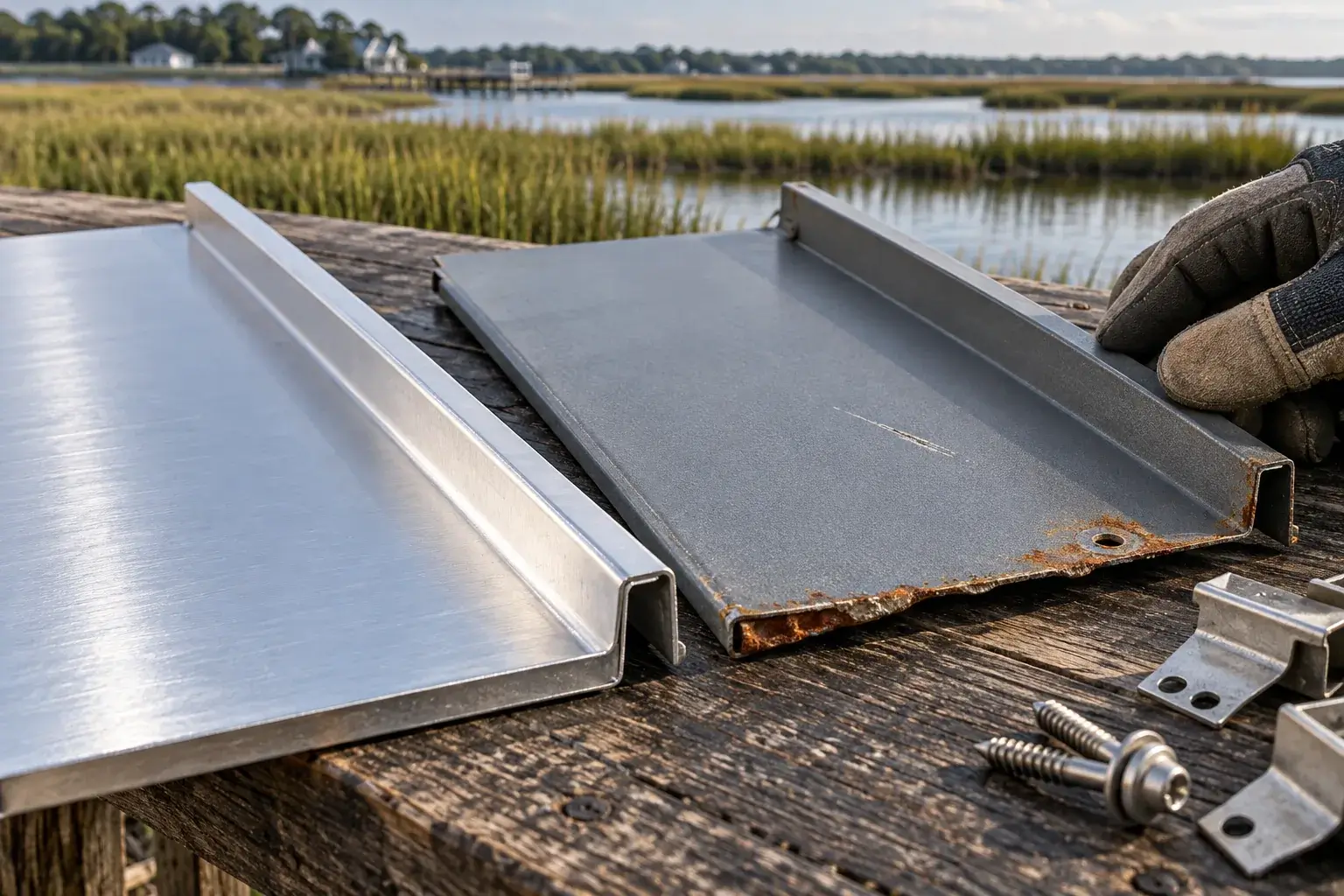
Aluminum naturally forms a protective oxide layer that helps resist corrosion.
According to the Insurance Institute for Business & Home Safety, aluminum roofing offers increased corrosion resistance compared with steel, making it particularly relevant in marine environments.
We often consider properly specified aluminum systems for properties experiencing substantial salt exposure.
Additional advantages include lightweight construction, architectural versatility, and compatibility with durable factory-applied finishes.
Coated Steel Roofing: Performance Depends on Exposure
Galvalume and galvanized steel use protective metallic coatings to resist corrosion.
These materials can perform effectively in suitable environments, but severe salt exposure may accelerate coating deterioration, particularly around scratches, cut edges, and poorly protected connections.
Before recommending coated steel near tidal water, we evaluate manufacturer-approved coastal setbacks, finish warranties, and site exposure.
A standard steel roof should never be assumed suitable for every waterfront property.
Standing-Seam vs. Exposed-Fastener Metal Roofing
Not all metal roof designs provide equivalent long-term performance.
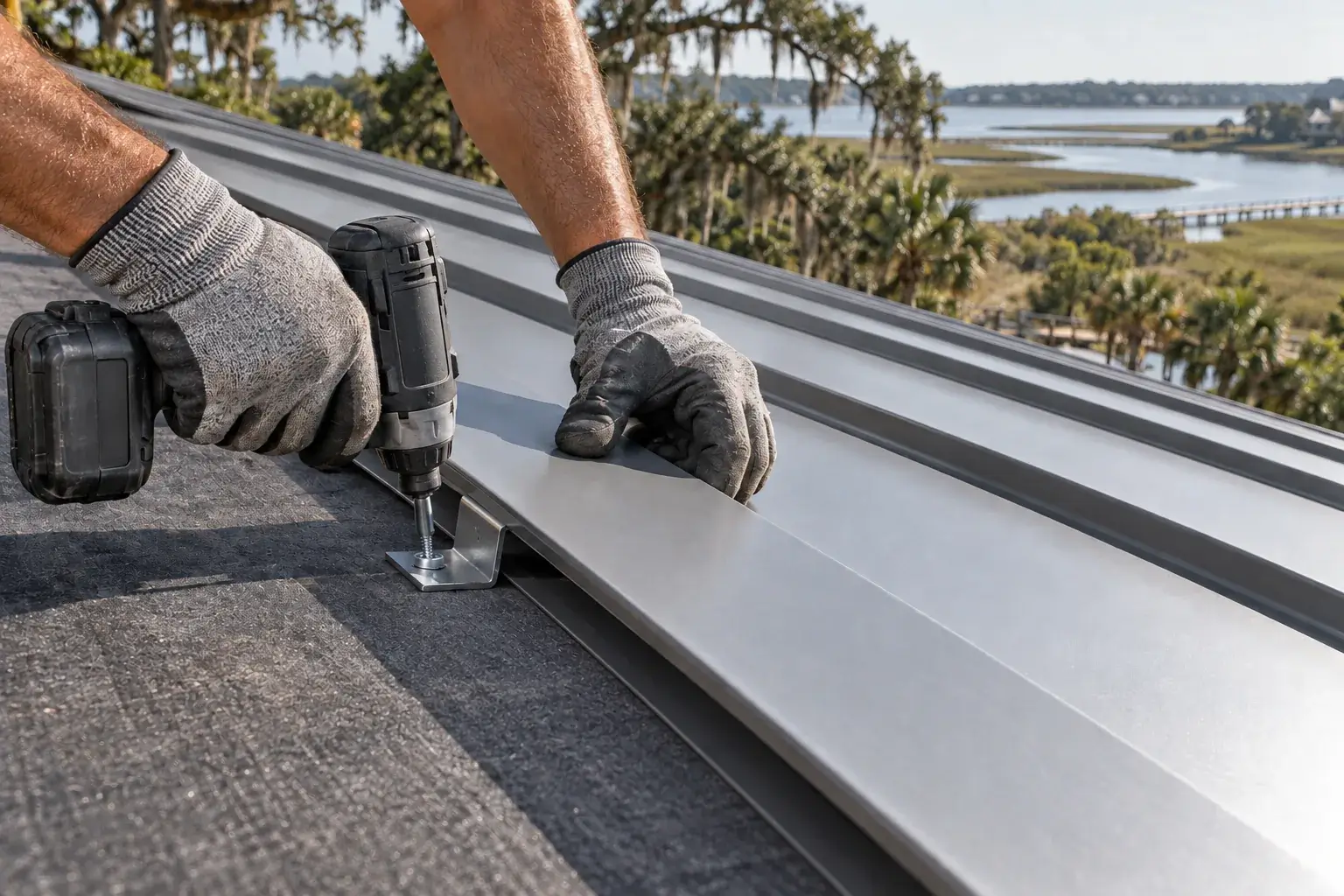
Standing-seam systems generally use concealed clips and fasteners, reducing the number of exposed attachment points subjected to rainfall and salt.
Exposed-fastener systems typically rely on screws with sealing washers penetrating the panels. Over time, washers can deteriorate, fasteners can loosen, and penetrations may require additional attention.
For long-term residential use near coastal waterways, we frequently favor standing-seam designs when the budget and roof geometry support them.
However, panel attachment remains essential. Wind performance depends on the tested assembly, deck condition, clip spacing, roof geometry, and applicable local design requirements.
Can Metal Roofing Lower Energy Bills in South Carolina?
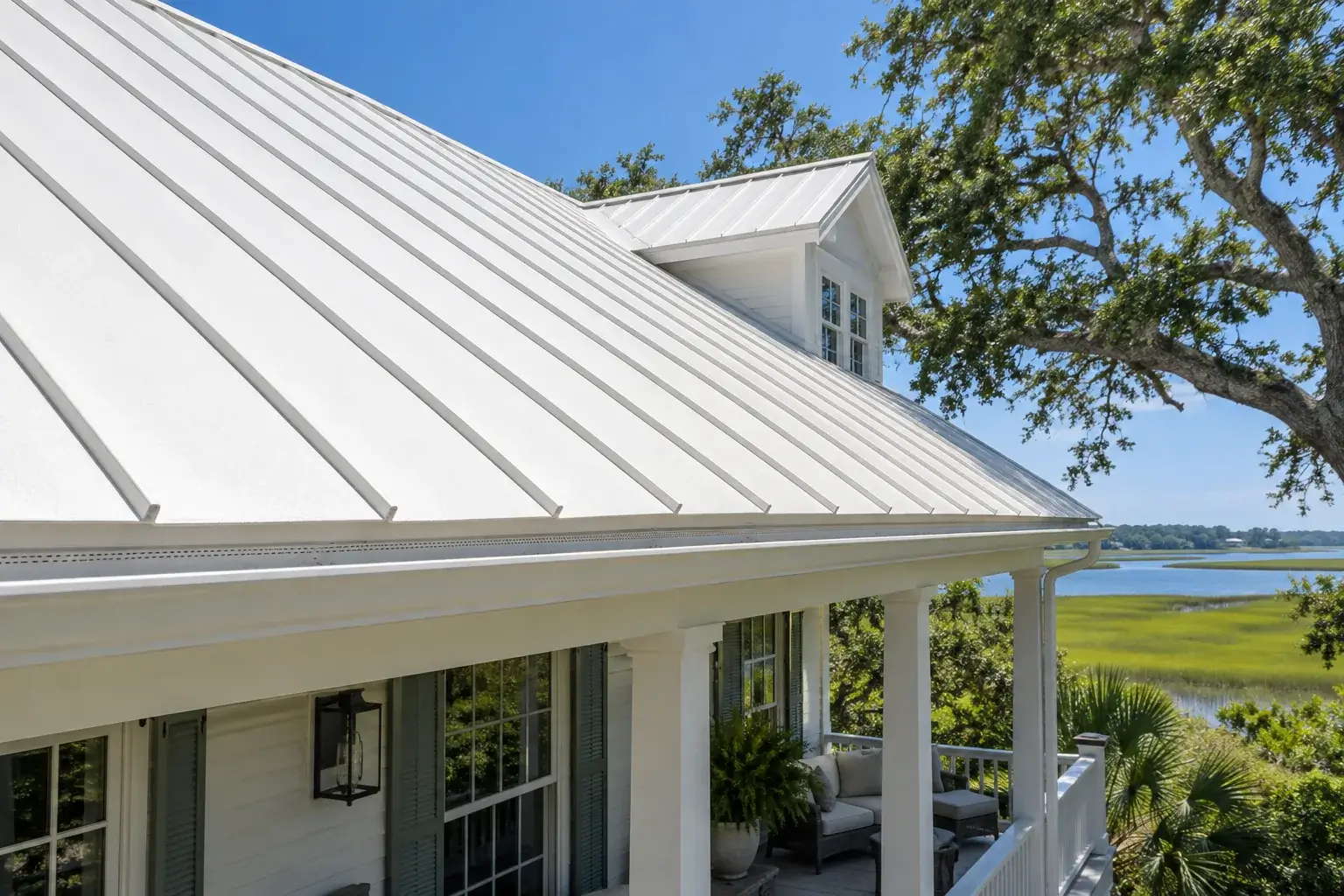
Reflective metal roofing can reduce solar heat absorption, an important advantage during Mount Pleasant's long cooling season.
The key measurement is solar reflectance, which describes how much incoming sunlight a roofing surface reflects.
According to ENERGY STAR's cool-roof guidance, a clean white roof reflecting 80% of sunlight can remain approximately 50°F cooler on a typical summer afternoon than a gray roof reflecting only 20%.
That difference represents roof surface temperature, not indoor temperature or a guaranteed electricity-bill reduction.
Actual savings depend on:
- Roof color and tested reflective properties.
- Attic insulation and ventilation.
- Air-conditioning efficiency.
- Building design and sun exposure.
- Existing roof performance.
Not every metal roof qualifies as a cool roof. Homeowners should compare published reflectance values rather than assume that every metal finish provides equal energy savings.
How Much Maintenance Does a Coastal Metal Roof Require?
Metal roofing is generally low-maintenance, not maintenance-free.
We recommend professional inspections at least annually, with additional checks following significant storms. Highly exposed waterfront properties may benefit from more frequent evaluations.
Important maintenance priorities include:
- Inspecting panel seams and flashing: Identify separation, damage, and potential water-entry points.
- Checking corrosion-prone components: Examine clips, screws, gutters, and roof penetrations.
- Removing organic debris: Prevent leaves and pine needles from retaining moisture against panels.
- Evaluating protective finishes: Identify scratches, fading, coating damage, and exposed metal.
- Following manufacturer cleaning instructions: Remove salt accumulation where recommended without damaging protective finishes.
Special attention should also be paid to incompatible metals. Copper runoff, inappropriate fasteners, or improperly attached solar equipment can contribute to localized corrosion.
Homeowners should avoid walking on metal roofing or attempting high-pressure cleaning without professional guidance.
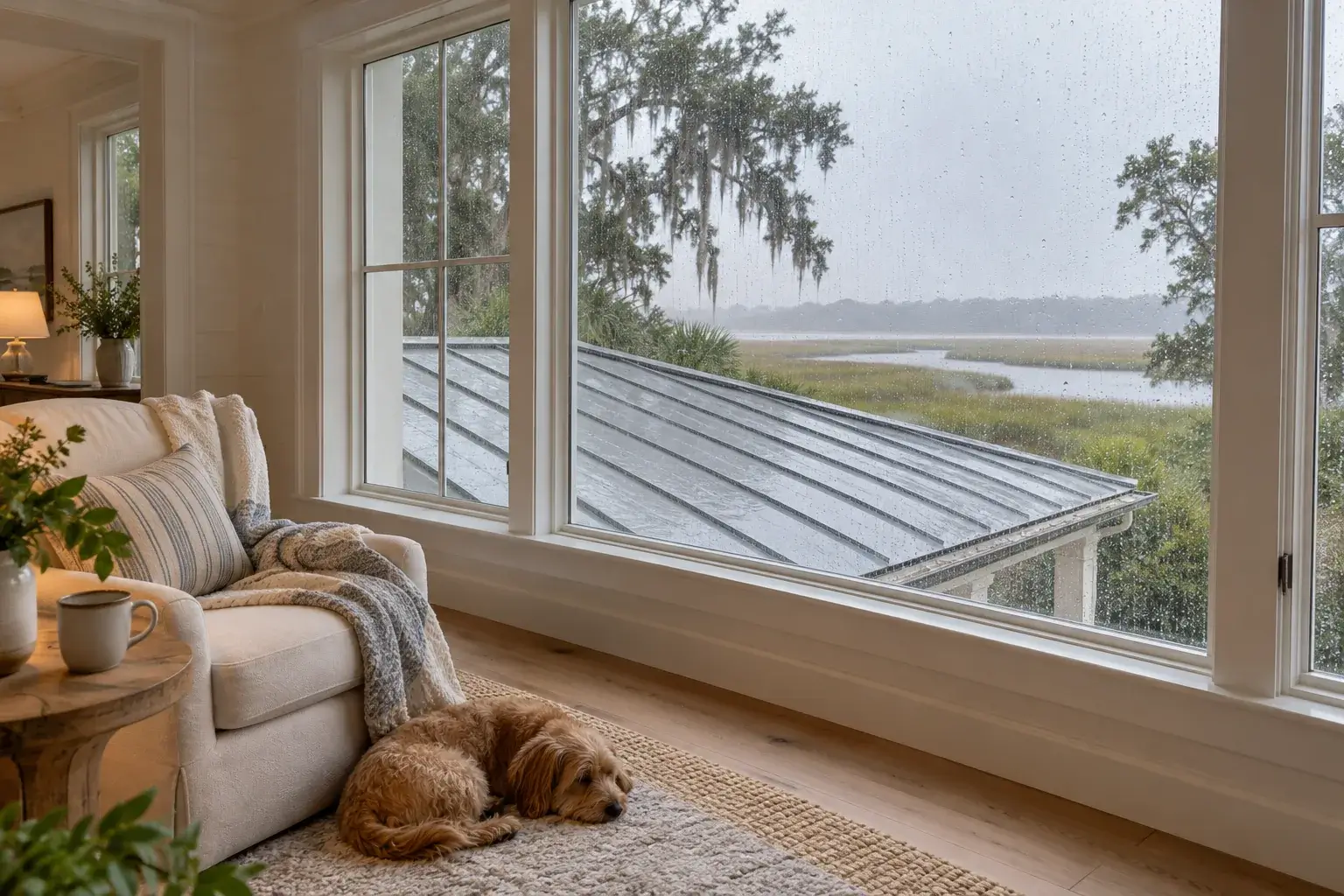
Are Metal Roofs Noisy During Heavy Coastal Rain?
One persistent misconception is that metal roofs are excessively loud during rainstorms.
The distinctive sound associated with metal roofing is more noticeable on exposed agricultural structures, open shelters, or buildings without insulated roof assemblies.
Residential metal roofing installed over suitable roof decking, underlayment, attic insulation, and finished ceilings typically produces much less noticeable noise.
Noise performance depends more on the complete roof assembly than on the metal panels alone.
For homeowners near Shem Creek, summer thunderstorms should not automatically eliminate metal roofing from consideration.
Does a Metal Roof Increase Home Resale Value?
A well-installed metal roof can strengthen a property's appeal by communicating durability, attractive design, and potentially lower future maintenance requirements.
This can be particularly relevant for waterfront and marsh-side properties where buyers may be concerned about corrosion and storm exposure.
Standing-seam profiles also complement many coastal architectural styles, including traditional Lowcountry homes and contemporary waterfront properties.
However, resale premiums are not guaranteed. Buyers consider overall property condition, roof age, neighborhood expectations, and comparable sales.
Documented installation quality, transferable warranties where available, and maintenance records may be more persuasive than marketing claims about exceptionally long roof lifespans.
When Is Metal Roofing Worth the Investment?
Metal roofing may be particularly worthwhile when:
- The property experiences recurring salt exposure.
- The homeowner expects to retain the property long-term.
- Corrosion-resistant materials are specified appropriately.
- The roof design supports reliable drainage and wind-resistant installation.
- Reduced replacement frequency is more important than the lowest initial price.
Conversely, premium metal roofing may provide less financial benefit for a homeowner planning to sell soon or for a complex roof where installation costs substantially outweigh expected savings.
The most useful comparison is a written proposal detailing substrate selection, panel thickness, finish warranty, fastener compatibility, coastal exclusions, and installation requirements.
For homeowners exploring metal roofing for coastal homes, we recommend evaluating these specifications before comparing final prices.
Conclusion
A properly specified metal roof can offer meaningful long-term value for homes near Mount Pleasant's marshes, creeks, and salt air. Its potential advantages include corrosion resistance, energy efficiency, attractive architectural styling, and fewer complete replacements over a long ownership period.
However, coastal durability cannot be determined by roofing material alone. Aluminum selection, compatible fasteners, protective finishes, effective drainage, and professional installation all influence performance.
For homeowners prioritizing long-term protection over the lowest upfront cost, a well-designed coastal metal roof can be a worthwhile investment.
FAQ
1. How long does a metal roof last near saltwater in Mount Pleasant?
A properly installed, appropriately specified metal roof may provide 40–60 years or more of service under favorable conditions. However, severe salt exposure, coating deterioration, installation defects, and inadequate maintenance can substantially shorten that lifespan. Manufacturer-approved coastal specifications and warranty exclusions should always be reviewed.
2. Is aluminum or steel roofing better for homes near Shem Creek?
Aluminum is often preferred for properties with significant salt exposure because it offers excellent natural corrosion resistance. Coated steel may also be appropriate when manufacturers approve the specific coastal conditions. The best choice depends on exposure, roof design, budget, protective finishes, and compatibility with other building components.
3. Is a metal roof worth the extra money compared with asphalt shingles?
Metal roofing can justify its higher initial cost when its longer service life reduces the need for future replacements. Reflective finishes, reduced maintenance demands, and resale appeal may provide additional value. We recommend comparing projected ownership costs and manufacturer warranties rather than installation prices alone.