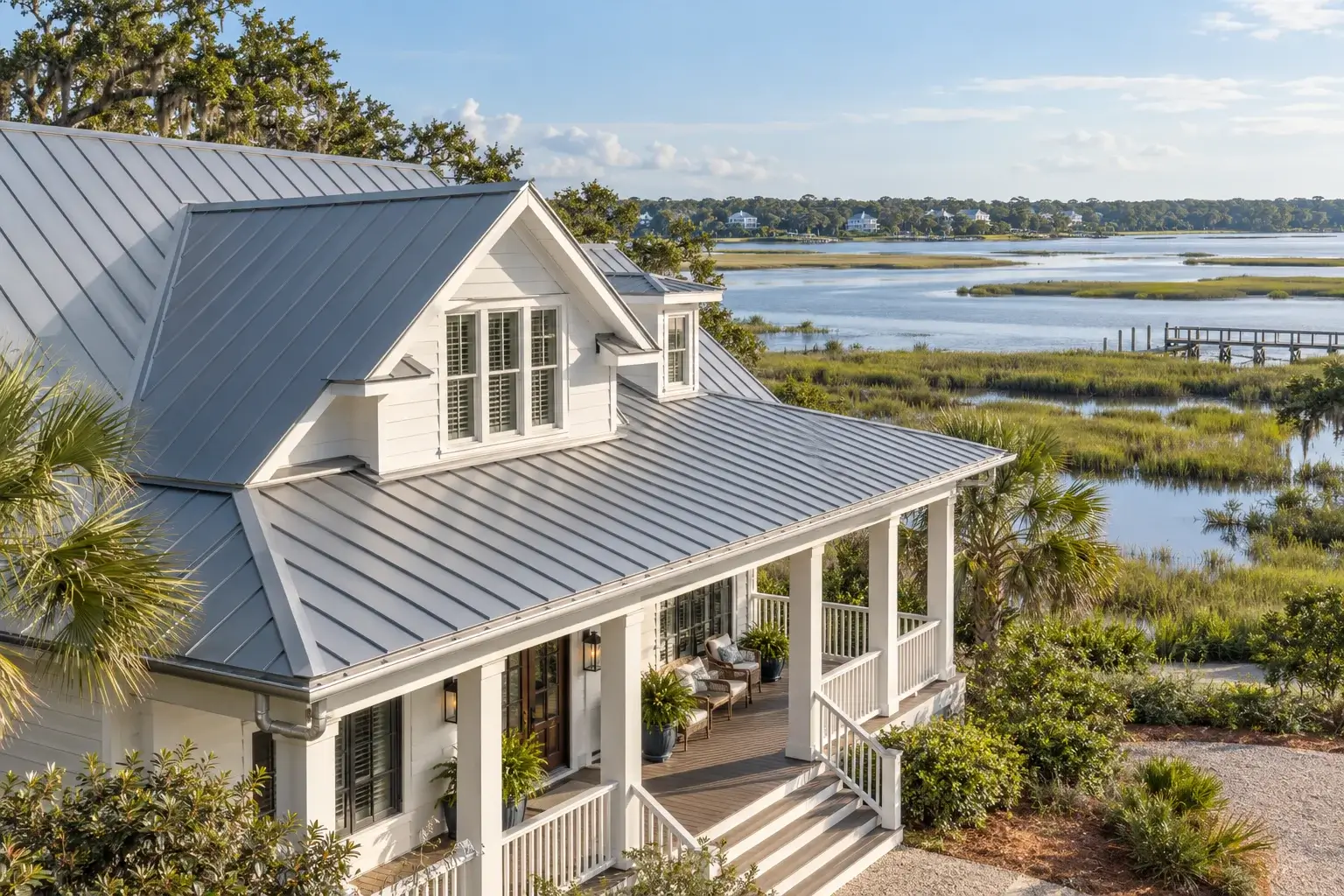
Metal roofing can be an excellent choice for coastal South Carolina, but proximity to salt water changes how the roof must be specified, installed, and maintained. At MasterRoof Mount Pleasant, we evaluate metal roofing as a complete system rather than selecting panels based only on appearance or expected lifespan. Homes near Charleston Harbor, tidal creeks, marshes, and the Atlantic are exposed to airborne chlorides, persistent humidity, intense sunlight, heavy rain, and strong winds. A coastal metal roof therefore needs the right substrate, protective coating, compatible fasteners, precise flashing details, and a moisture-control strategy designed for Mount Pleasant conditions.
Why Salt Air Is Hard on Metal Roofing in Mount Pleasant
Salt does not need to arrive as visible ocean spray to affect a roof. Tiny chloride-containing droplets can travel inland on coastal winds and settle on panels, seams, fasteners, flashing, gutters, and exposed metal edges.
According to FEMA corrosion protection guidance for coastal construction, salt spray from breaking waves and onshore winds significantly accelerates metal corrosion. FEMA notes that airborne salt concentrations typically decline rapidly within approximately 300 to 3,000 feet of the shoreline, yet accelerated corrosion has been documented 5 to 10 miles inland. Historic testing cited by FEMA found iron samples located 80 feet from the shoreline corroded roughly ten times faster than comparable samples 800 feet inland.
That matters in Mount Pleasant because coastal exposure does not stop at beachfront property. Homes near marshes, tidal waterways, Sullivan's Island approaches, Charleston Harbor, and exposed coastal corridors can experience repeated salt deposition combined with high humidity.
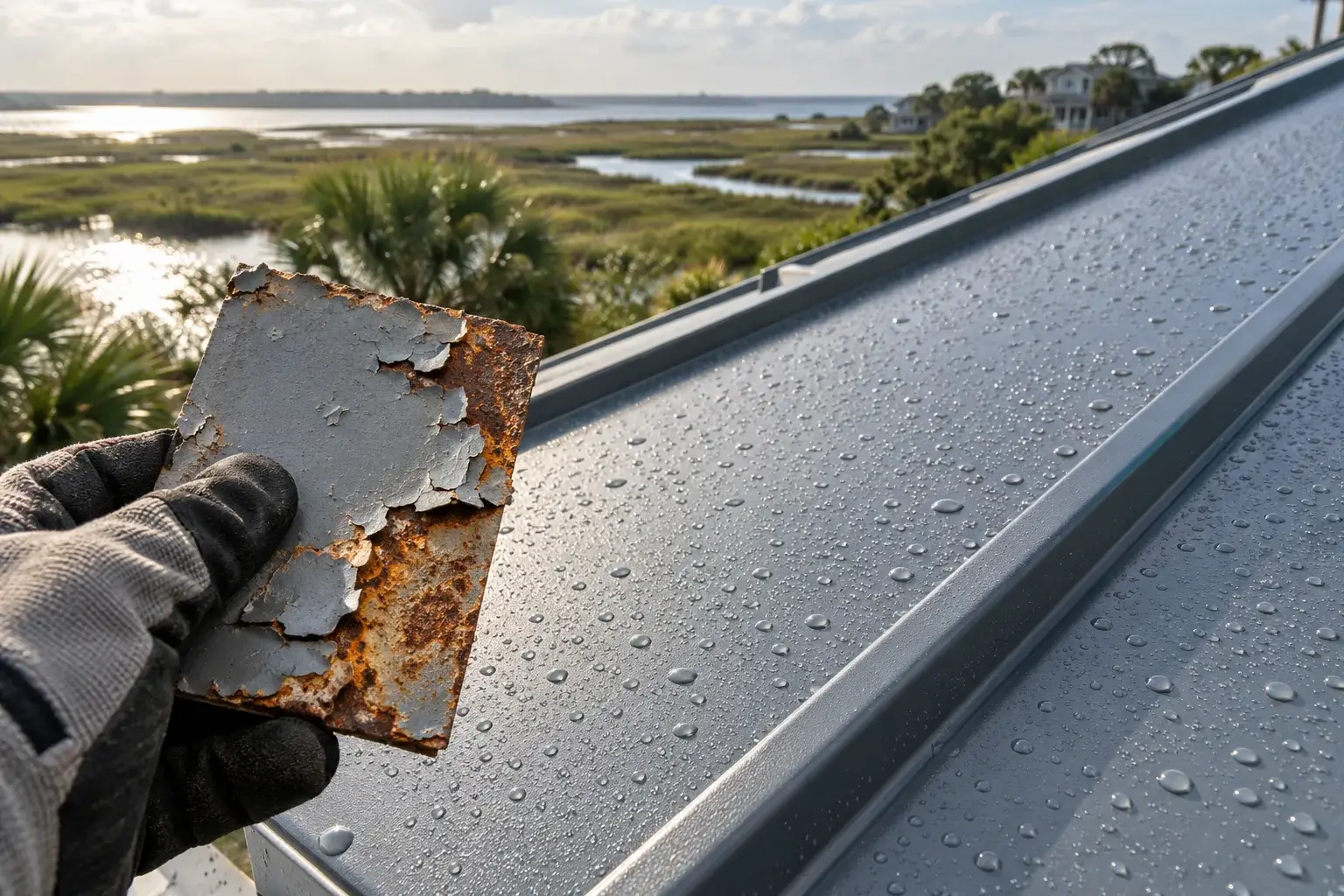
Salt itself is only part of the problem. Moisture creates the electrolyte needed for corrosion reactions. When salty residue remains damp because of humidity, shaded roof sections, debris, condensation, or poor drainage, corrosion can accelerate.
Choosing the Right Metal for Coastal Roofing
Not every metal roof provides the same resistance to salt exposure.
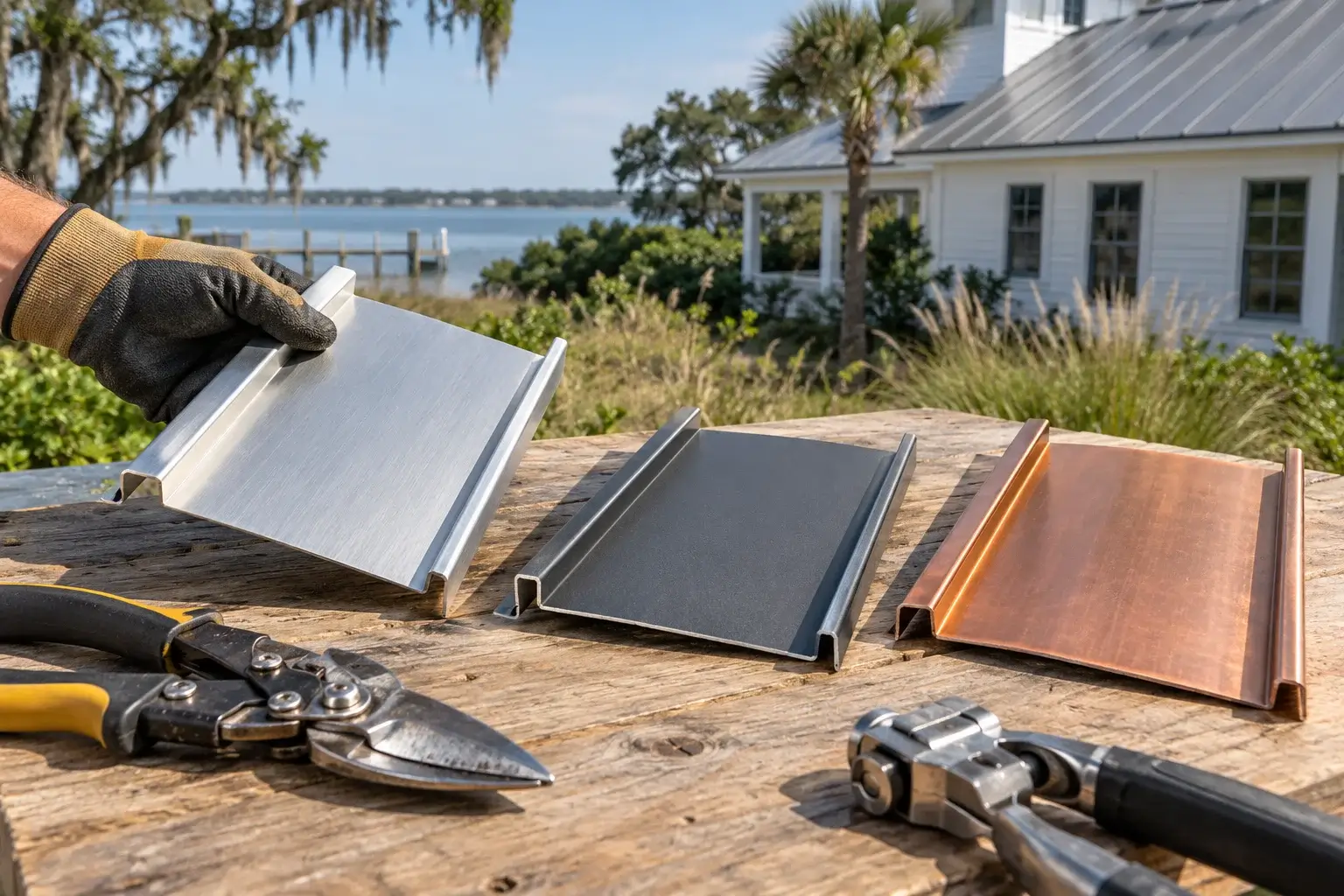
Aluminum Roofing
Aluminum is particularly valuable in aggressive coastal environments because it does not rust like carbon steel. Instead, its surface naturally develops an oxide layer that provides additional protection.
That does not make aluminum immune to every form of corrosion. Poorly matched fasteners, incompatible flashing metals, damaged finishes, or copper runoff can still create serious problems. However, properly specified aluminum roofing is often an attractive option for homes with substantial salt exposure.
Coated Steel Roofing
Steel can also perform effectively near the coast when the substrate and protective system are appropriate. Galvanized steel uses zinc protection, while aluminum-zinc coated products provide another barrier between the steel core and the environment.
The critical word is coated. Once moisture and chlorides repeatedly reach inadequately protected steel, corrosion can progress beneath the finish.
For homeowners considering coastal metal roofing in Mount Pleasant, material selection should therefore reflect the property's actual exposure rather than relying on a generic recommendation for "metal roofing."
Coastal Metal Roof Coatings Are Critical
The visible paint finish is part of a multilayer protective system.
High-quality architectural metal roofing commonly uses durable factory-applied coatings designed to resist ultraviolet exposure, fading, chalking, and environmental deterioration. PVDF-based finishes are frequently specified for premium architectural applications because of their strong weathering performance.
Coating selection becomes especially important near salt air. Homeowners should verify:
- the panel substrate beneath the paint;
- the coating system and manufacturer;
- whether the product is approved for coastal installation;
- minimum permitted distance from saltwater environments;
- required cleaning or maintenance;
- exclusions contained in the finish warranty.
A long warranty means little if the property falls outside the manufacturer's coastal exposure requirements.
Installation damage matters as well. Scratches, improperly treated cut edges, drilling debris, and metal filings can create localized corrosion points. Small steel particles left on a finished panel may rust and stain the roof even when the panel coating itself remains intact.
Fasteners Can Determine How Long a Metal Roof Performs
A premium panel installed with the wrong fasteners is not a premium roofing system.
Salt exposure makes fastener selection especially important because screws, clips, washers, rivets, flashing, and panels may consist of different metals. When incompatible metals contact each other in the presence of salty moisture, galvanic corrosion can occur.
Fasteners must therefore be chemically compatible with the roof panels and associated flashing. Stainless steel hardware is frequently used in demanding coastal applications, but the exact grade and fastening system should follow the roofing manufacturer's engineering requirements.
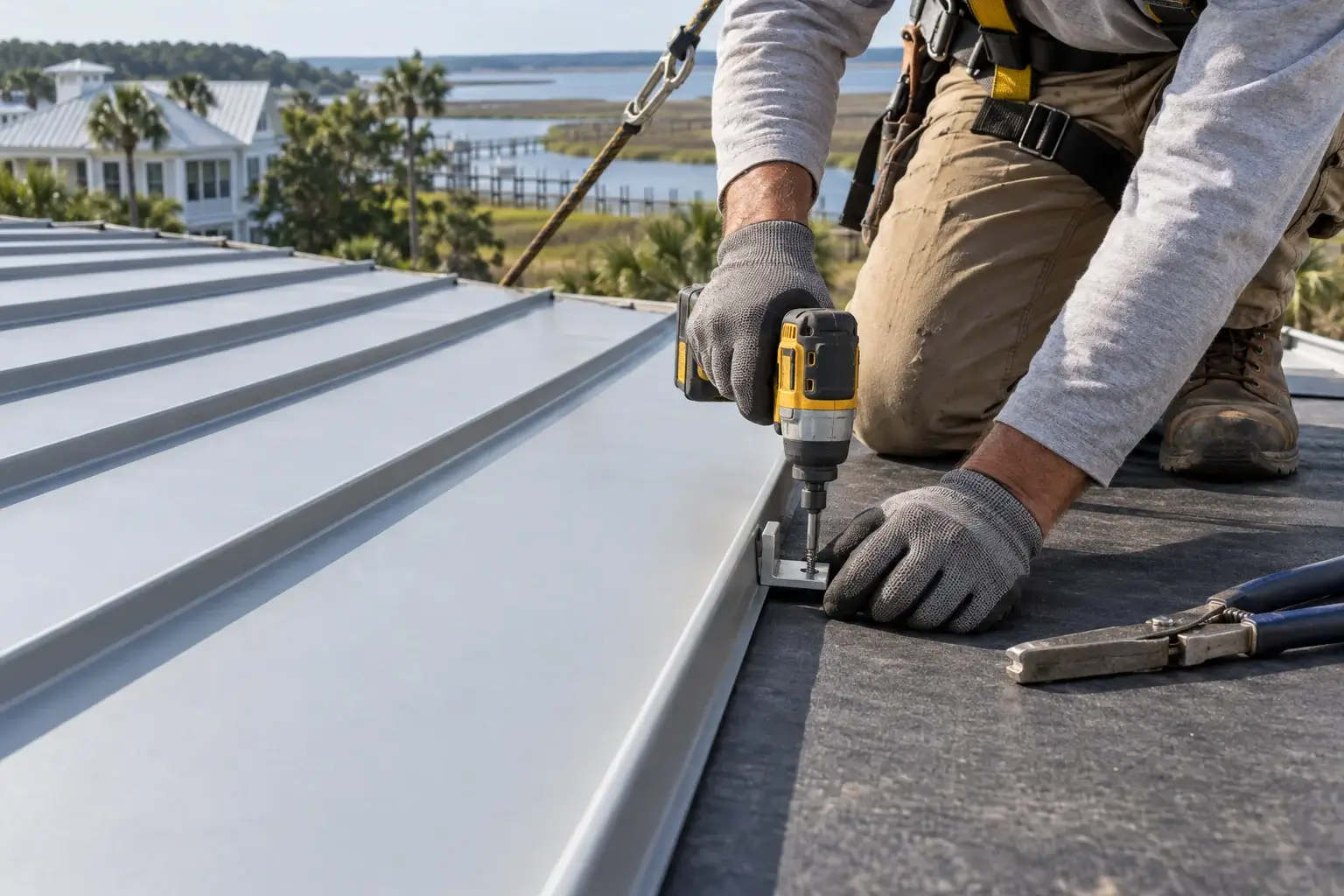
Standing-seam systems provide another advantage because many structural fasteners and clips are concealed beneath the panels. Concealed fastening reduces the number of exposed penetrations and rubber washers subjected directly to ultraviolet radiation, rain, salt, and temperature cycling.
Exposed-fastener roofs can still perform successfully, but washers and fasteners require closer inspection because deterioration can eventually allow moisture around penetrations.
Installation Quality Matters as Much as the Metal
Coastal durability depends heavily on workmanship.
Metal panels expand and contract as roof temperatures change. A correctly installed system must accommodate that movement without stressing seams, clips, flashings, or fasteners.
Particular attention should be given to:
Eaves and rake edges. Wind pressure is greatest around roof perimeters, making attachment and edge detailing critical.
Valleys. Concentrated water flow makes valley dimensions, seams, sealants, and debris clearance especially important.
Roof penetrations. Plumbing vents, exhaust penetrations, chimneys, skylights, and mechanical equipment require properly integrated flashing rather than excessive reliance on surface sealant.
Panel cuts. Cutting techniques should avoid unnecessary damage to protective coatings.
Metal debris. Drilling swarf and metal shavings should be removed immediately instead of being left to oxidize on the finished surface.
Thermal movement. Clips and attachment patterns must allow movement according to the panel manufacturer's system design.
In coastal construction, small installation errors can become corrosion initiation points long before the main panel reaches the end of its expected service life.
Ventilation and Moisture Control Under a Metal Roof
Coastal roof performance is not limited to the exterior surface. Mount Pleasant's humid climate makes attic moisture management equally important.
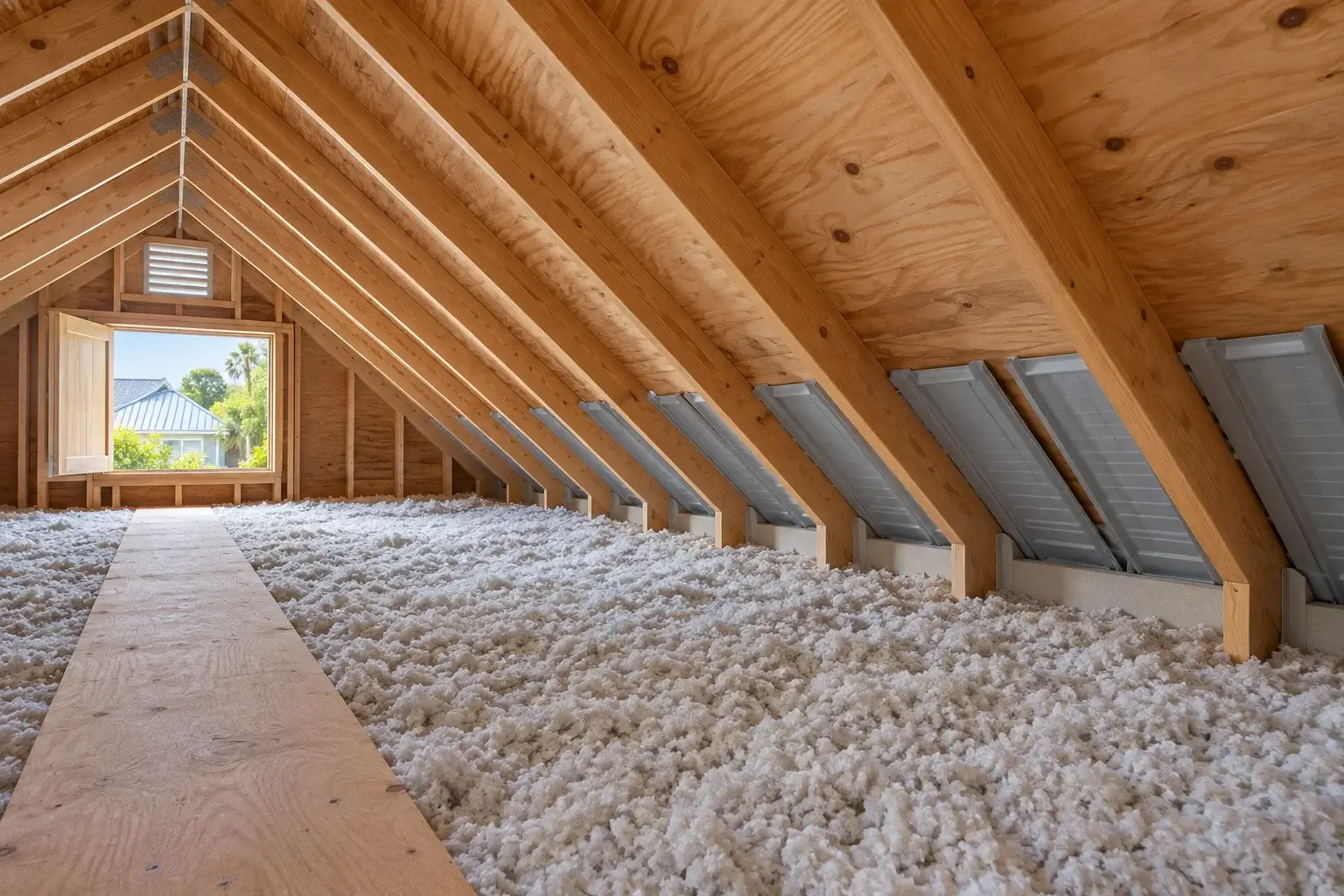
For a conventional vented attic, effective performance requires appropriately designed intake and exhaust ventilation combined with air sealing and insulation. The U.S. Department of Energy's guidance on vented attic assemblies explains that ventilation along the roofline can allow hot, humid attic air to escape, while air sealing at the ceiling plane reduces moisture movement from conditioned living space.
More ventilation is not automatically better. Some homes use properly designed unvented conditioned attic assemblies, which follow different moisture-control principles. Mixing vented and unvented strategies without proper design can create condensation problems.
Before installing metal roofing, we recommend evaluating blocked soffits, inadequate exhaust ventilation, disconnected ducts, bathroom exhaust terminating in the attic, insulation problems, and signs of roof-deck moisture.
Preventing Premature Coastal Corrosion
A coastal metal roof should be inspected periodically rather than ignored until leakage appears.
Important inspection areas include exposed fasteners, panel scratches, sealants, ridge details, flashings, valleys, gutters, roof penetrations, and locations where debris collects.
Branches, leaves, pine needles, and organic debris can hold moisture against coated metal. Standing water should also be investigated because metal roofing performs best when surfaces can drain and dry.
Homeowners should also watch for runoff from incompatible metals. Water flowing from copper components onto aluminum, galvanized steel, or certain coated surfaces can contribute to galvanic reactions.
If the roofing manufacturer requires freshwater rinsing for coastal warranty compliance, that maintenance schedule should be documented and followed rather than assumed.
Is Metal Roofing a Good Choice Near the Marsh or Coast?
Yes — when the entire roof is designed for coastal exposure.
Metal roofing can provide excellent water shedding, strong wind performance, low maintenance requirements, and long service potential. Its suitability, however, depends on more than selecting a standing-seam profile.
For Mount Pleasant homes, the strongest specification combines a corrosion-resistant substrate, coastal-rated coating, compatible hardware, engineered attachment, carefully fabricated flashing, proper drainage, and an appropriate attic moisture strategy.
A lower-cost metal system that compromises those components may perform worse than a properly designed roof made from another material.
Conclusion
Metal roofing can be one of the strongest long-term roofing options for Mount Pleasant homes exposed to salt air, marsh moisture, humidity, wind, and intense coastal weather, but coastal performance depends on specification and workmanship. Homeowners should evaluate the panel substrate, coating warranty, fastener compatibility, flashing details, ventilation strategy, installation methods, and maintenance requirements as one integrated system. Selecting materials specifically approved for the property's exposure level is far more important than choosing metal roofing based on appearance or advertised lifespan alone.
Frequently Asked Questions
What type of metal roofing is best near salt air in Mount Pleasant?
Aluminum is particularly attractive for severe coastal exposure because it does not rust like conventional steel. Properly coated steel systems can also perform well when the substrate, coating, fasteners, and manufacturer specifications are appropriate for the home's distance and exposure to saltwater.
Can salt air cause a metal roof to rust?
Yes. Salt deposits combined with moisture can accelerate corrosion, particularly on exposed steel, damaged coatings, incompatible fasteners, cut edges, and areas that remain wet. Proper material selection, drainage, coating protection, and compatible hardware significantly reduce this risk.
How should homeowners maintain a coastal metal roof?
Inspect the roof periodically for coating damage, corrosion, loose or deteriorated fasteners, flashing problems, debris accumulation, blocked drainage, and damaged sealants. Follow the panel manufacturer's coastal maintenance requirements, including freshwater rinsing when required by the product or warranty.