

A roof replacement estimate for a coastal South Carolina home should function as a construction scope, not a single price. At MasterRoof Mount Pleasant in Mount Pleasant, SC, we expect the estimate to define how the old roof will be removed, how concealed damage will be priced, which weather-resistant components will be installed, who handles permits, and what happens when site conditions change.
1. Tear-Off: Layers, Area, Protection, and Disposal
The estimate should state whether complete removal includes shingles or roofing, underlayment, nails, flashings, ridge materials, vents, and deteriorated accessories. It should identify how many existing layers are included in the quoted price.
If an additional concealed layer is found, the proposal should define the charge per square, layer, or documented labor and disposal cost. Tear-off protection should also cover landscaping, siding, windows, driveways, HVAC equipment, and pools.
2. Roof Decking: Inspection Standards and Unit Pricing
No contractor can verify every section of decking before tear-off. A proper estimate therefore needs an inspection procedure plus a unit price for replacing damaged plywood, OSB, or plank decking.
The scope should identify the replacement material, thickness, price per sheet or square foot, and how additional work will be documented. Soft, delaminated, rotten, inadequately fastened, or structurally compromised decking should not be covered simply to preserve the original estimate.
3. Underlayment: Product Type and Water-Shedding Strategy
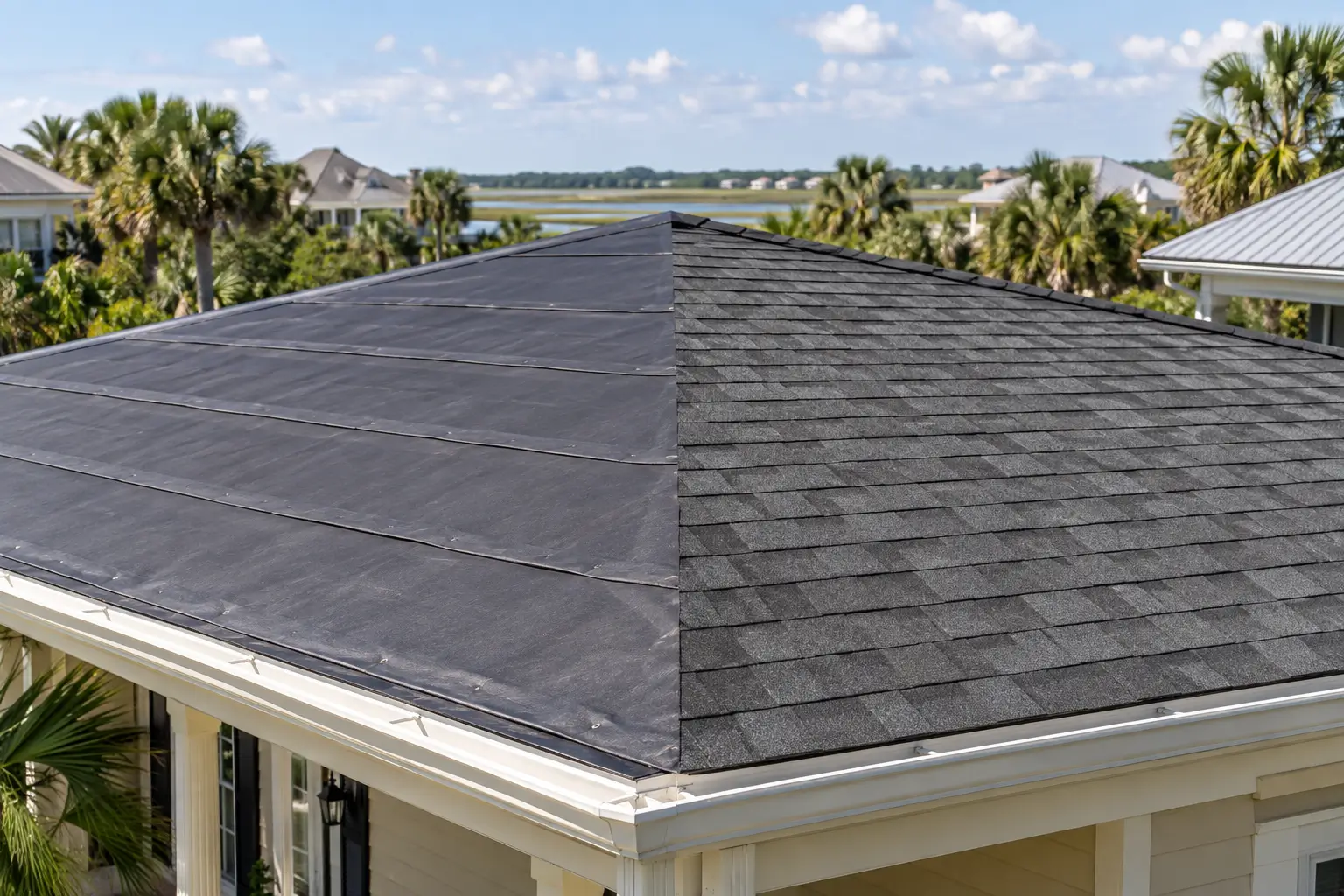
“Underlayment included” is not enough. The estimate should name the product or performance type, fastening method, and locations receiving self-adhered membrane.
For coastal roofs, secondary water protection matters because wind-driven rain can reach beneath displaced or damaged roof covering. The proposal should specifically address valleys, eaves, penetrations, roof-to-wall transitions, and low-slope areas. If full-deck self-adhered underlayment is proposed, it should be written into the scope rather than implied.
4. Flashing: What Is Replaced and What May Be Reused
The estimate should separately address chimney flashing, step flashing, counterflashing, wall flashing, pipe boots, skylight flashing, valley metal, drip edge, and transitions between roof materials or slopes.
“Reuse existing flashing” should be supported by inspection criteria. Coastal exposure increases concern about corrosion, exposed fasteners, incompatible metals, and aging sealants.
5. Ventilation: Intake and Exhaust Must Be Calculated Together
Replacing roof covering without evaluating attic airflow can preserve an existing ventilation defect. The estimate should identify intake vents, exhaust vents, net free ventilating area, and components being removed or replaced.
The 2021 IRC generally requires minimum net free ventilation equal to 1/150 of the vented space, with a 1/300 alternative when specified conditions are met. Adding ridge vent does not solve blocked or inadequate soffit intake.

6. Wind-Rated Materials: Product Testing, Fastening, and Edges
“Architectural shingles” is not a wind specification. The estimate should identify the manufacturer, product line, wind classification, fastening pattern, starter-strip system, ridge-cap product, and high-wind installation requirements.
The 2021 IRC roof assembly provisions require asphalt shingles to meet wind-resistance classifications appropriate to the applicable design wind speed. Code tables move from ASTM D7158 Class D, G, or H at lower listed wind speeds to Class H at the highest ranges. Wind performance also depends on roof geometry, nail placement, deck condition, starter courses, and perimeter detailing.
Fastener selection should be explicit. Roofing nails should meet the specified material, size, penetration, and corrosion-resistance requirements rather than being left to an undefined “standard installation.”
7. Starter, Ridge, and Perimeter Details
Wind uplift concentrates at roof edges, corners, ridges, and pressure zones. A complete estimate should identify drip edge, starter shingles at eaves and rakes, ridge caps, required sealants, and manufacturer-approved edge details.
The proposal should make the roof system traceable from decking through the perimeter and ridge.
8. Cleanup and Property Protection
Cleanup should be a written responsibility, not a verbal promise. The estimate should include daily debris control, final roofing-waste removal, magnetic nail sweeps, gutter cleanup, driveway inspection, and protection of landscaping and exterior finishes.
It should also state who pays disposal fees.

9. Warranty: Separate Workmanship From Material Coverage
The estimate should identify the contractor workmanship warranty and manufacturer material warranty separately. It should state coverage length, exclusions, registration requirements, transferability, and whether upgraded manufacturer coverage is included.
A “lifetime” material label does not mean labor, storm damage, leaks from excluded components, or every accessory is covered for life.
10. Timeline: Start Conditions, Dry-In, and Weather Delays
The estimate should provide an expected project duration and explain what may extend it. Coastal South Carolina weather can interrupt tear-off, dry-in work, inspections, deliveries, and cleanup.
The scope should explain how exposed sections will be protected if rain develops, how much roof may be opened at once, and whether decking repairs or inspections can extend the schedule.
11. Permit Responsibility: Assign It in Writing
The estimate should state who applies for the permit, pays fees, schedules inspections, and closes the permit. The Town of Mount Pleasant permit requirements say permits are generally required for construction, alteration, and repair work; the Town also identifies a valuation-based exception for some work unless an inspection is required.
12. Change Orders: Define Hidden-Cost Rules Before Tear-Off
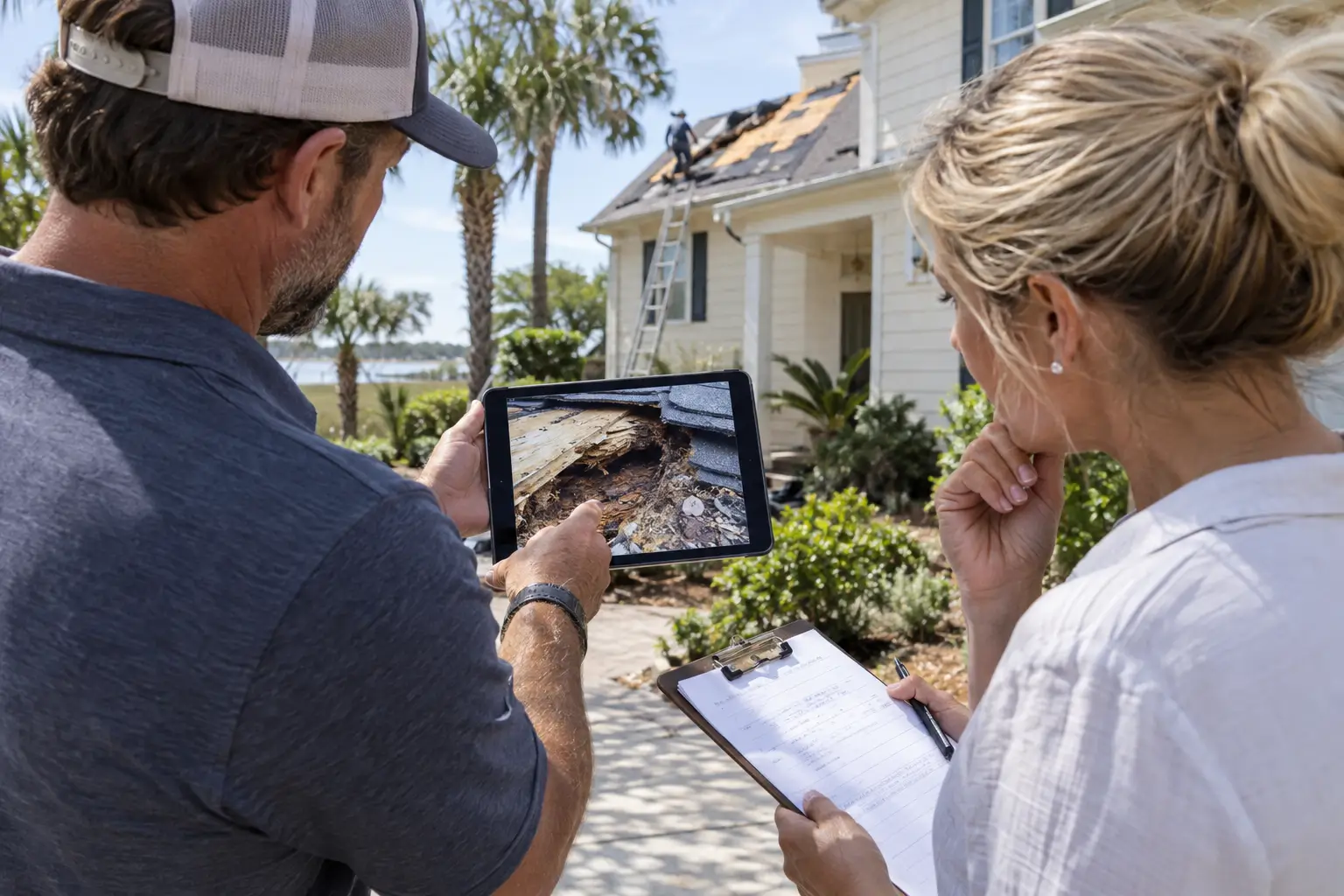
The estimate should explain how unforeseen conditions are priced. Common examples include damaged decking, concealed flashing defects, fascia deterioration, extra roof layers, structural problems, or code-required corrections.
We prefer photographs and written authorization before non-emergency additions are performed. This prevents a low initial bid from becoming an uncontrolled final invoice.
Homeowners comparing proposals can get a roof replacement estimate in Mount Pleasant and use this checklist to compare scope rather than headline price.
CONCLUSION
For a coastal South Carolina home, a roof estimate should define the complete assembly: tear-off, decking, underlayment, flashing, ventilation, wind-rated materials, perimeter details, fasteners, cleanup, warranties, timeline, permits, and change-order rules. The strongest proposal makes hidden assumptions visible before construction begins. MasterRoof Mount Pleasant uses this level of detail because coastal roof performance depends on how every component works together, not just the shingles visible from the street.
Frequently Asked Questions
What should be included in a roof replacement estimate in Mount Pleasant, SC?
It should include tear-off, disposal, decking inspection and replacement pricing, underlayment, flashing, ventilation, wind-rated materials, starter and ridge components, fasteners, cleanup, warranties, project timing, permit responsibility, and change-order procedures.
How can we compare two roofing estimates with very different prices?
Compare the scopes line by line. Check whether both include the same tear-off assumptions, decking allowances, flashing work, ventilation, wind-rated components, permit costs, cleanup, workmanship warranty, and manufacturer warranty. A lower price may reflect fewer included components rather than lower cost for identical work.
Why are wind ratings especially important for coastal South Carolina roofs?
Coastal homes face elevated wind pressures, wind-driven rain, and repeated storm exposure. Product ratings matter, but the roof must also use correct fastening, starter courses, edge details, flashing, and sound decking so the assembly can resist uplift and water intrusion as one system.