

A roof can look normal from the driveway and still be compromised after severe weather. At MasterRoof Mount Pleasant, we treat post-storm evaluation as a building-envelope check, not a search for obvious missing shingles. Tropical systems, hail, high winds, and wind-driven rain can weaken seals, bruise shingles, disturb flashing, overload drainage, and create moisture paths that remain invisible until the next hard rain. In Mount Pleasant, SC, waiting for a ceiling stain can mean waiting until damage has already moved beneath the roof covering.
Why Roof Damage Can Stay Hidden After a Storm
Storm damage is often progressive. Wind can flex a shingle edge enough to weaken its factory seal while leaving the shingle lying flat afterward. Hail can displace protective granules or bruise the asphalt layer without creating an immediate hole. Flashing may shift only slightly yet admit wind-driven rain.
The roof can therefore pass a ground-level visual check while failing at critical details. The first storm creates the weakness; later weather exposes it.
National Weather Service Charleston records show the scale of wind exposure possible in Charleston County. During Hurricane Hugo in 1989, the Charleston airport measured a 98 mph gust and downtown Charleston recorded a 108 mph gust. Coastal roof stress is not theoretical.
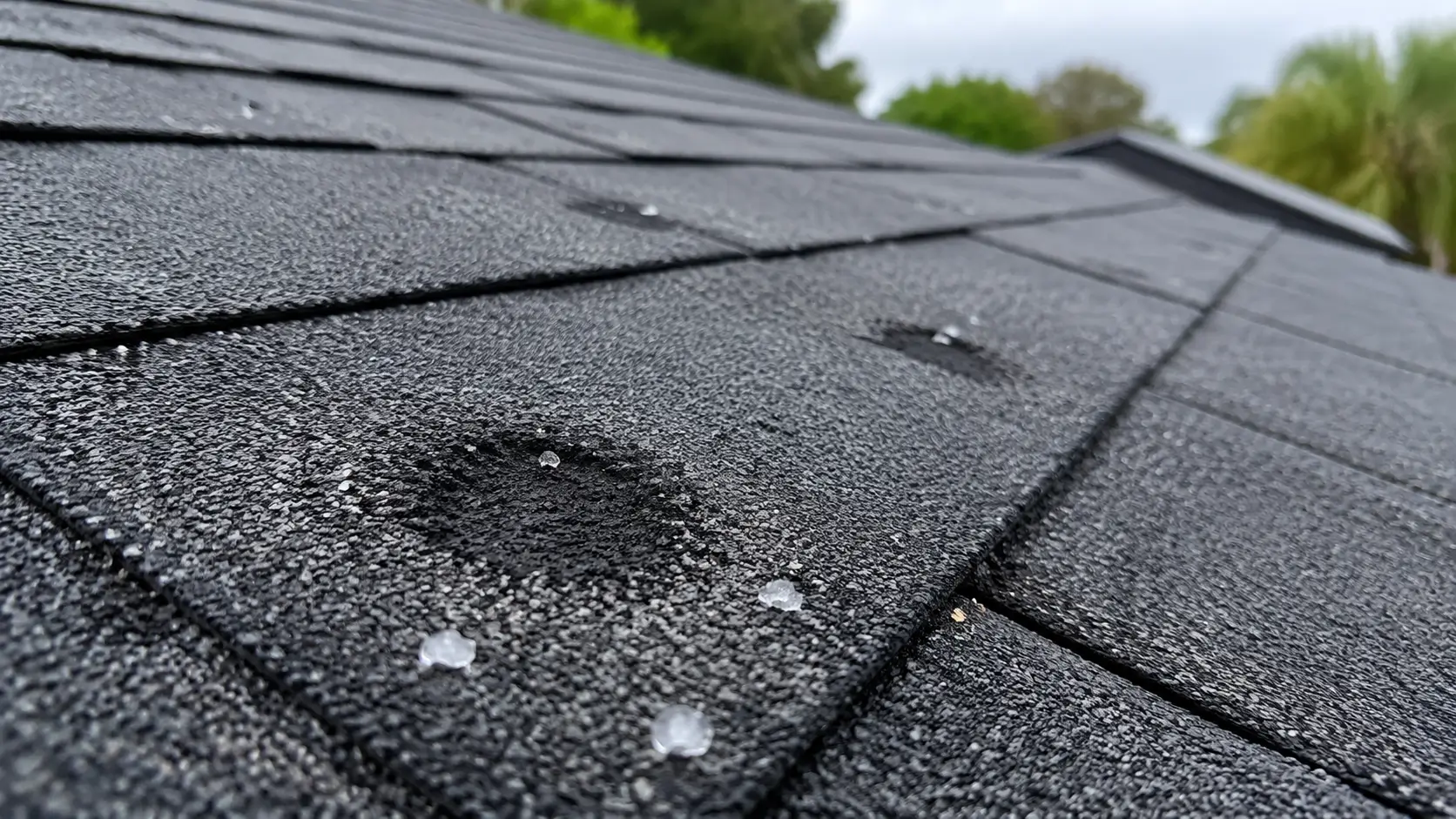
Bruised Shingles: Hail Damage Without a Visible Hole
Hail damage is frequently misunderstood because homeowners expect punctures. Asphalt shingles are layered systems: granules protect the asphalt from ultraviolet exposure, while the asphalt and reinforcing mat provide weather resistance and strength. A hailstone can crush or loosen granules, bruise the asphalt, or fracture the mat underneath.
A fresh impact may appear as a dark, irregular area where granules were displaced. More serious damage can create a soft spot or underlying fracture. These defects matter even when the shingle remains in place because exposed asphalt weathers faster and a damaged mat has less resistance to future movement and moisture.
We also distinguish hail impacts from blistering, foot traffic, manufacturing variation, and normal age-related granule loss. Not every dark mark is storm damage.
Lifted Shingle Seals After High Winds
Wind uplift is one of the easiest forms of damage to miss. Pressure around eaves, rakes, ridges, hips, and corners can raise a shingle during a gust, strain its adhesive bond, and let it settle back into nearly the same position.
That creates a deceptive condition: the roof looks intact, but some seals no longer provide their intended resistance.
IBHS wind-uplift research identifies the seal between self-sealing asphalt shingles as a critical factor in high-wind performance. Wind resistance depends heavily on the bond that keeps one shingle adhered to the course below.
We look for lifted tabs, creases, displaced courses, exposed fasteners, disturbed sealant lines, and edge movement. A weakened seal may survive light rain yet fail during the next severe thunderstorm.
Damaged Flashing Creates Small but Persistent Leak Paths
Flashing protects transitions at walls, chimneys, valleys, vents, skylights, pipe penetrations, and other interruptions in the roof plane. These details are especially vulnerable during wind-driven rain because water is pushed toward joints and under edges.
Post-storm defects can include bent step flashing, loose counterflashing, disturbed pipe boots, separated sealant, shifted vent components, debris impact, and loosened fasteners.
A small flashing opening may admit only limited water initially. Moisture can then travel along decking, rafters, underlayment, or fasteners before becoming visible indoors, so a ceiling stain may appear far from the actual entry point.
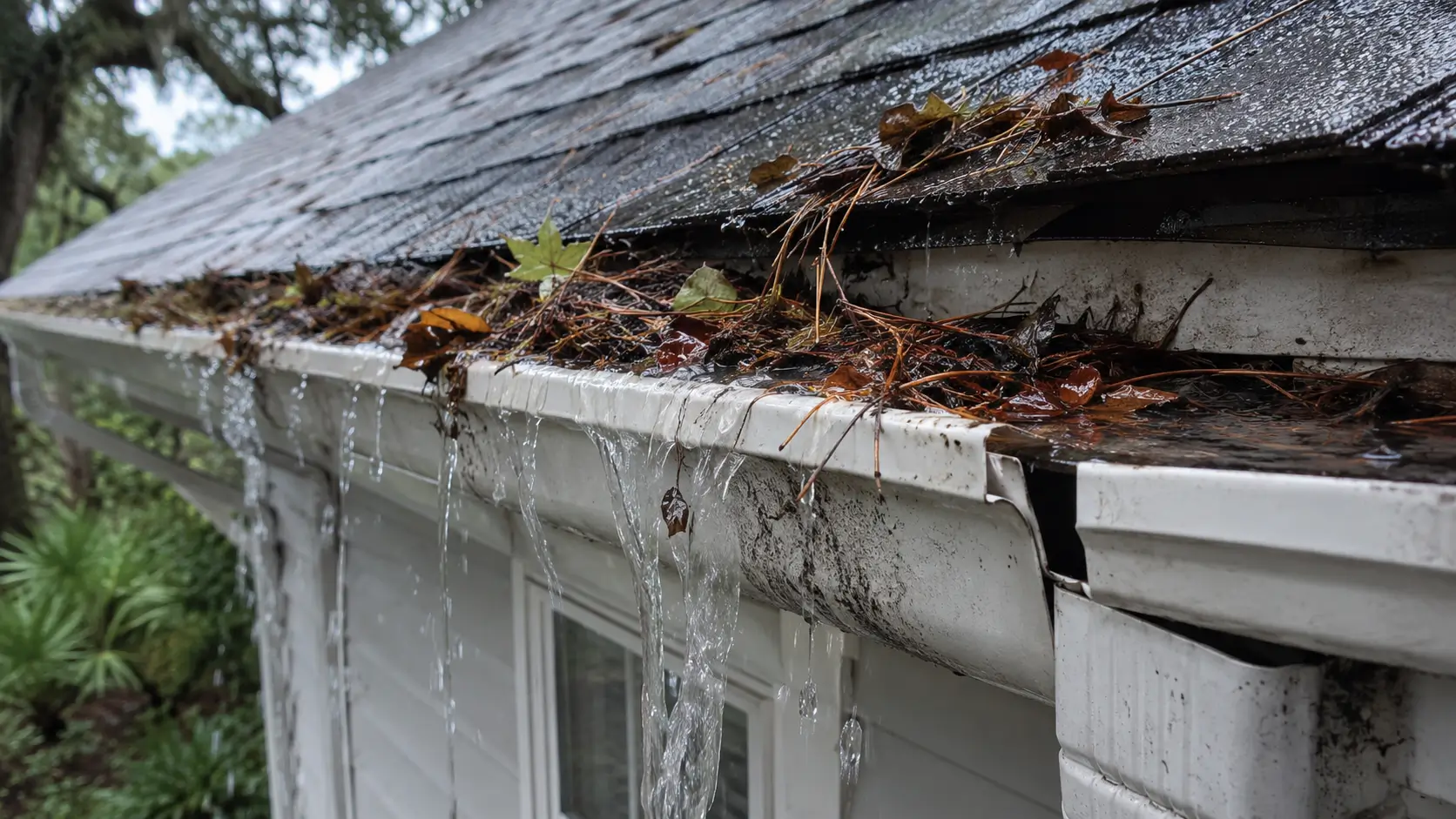
Clogged Gutters Can Turn Heavy Rain Into Roof-Edge Damage
High winds move leaves, pine needles, twigs, roofing granules, and broken vegetation into gutters and valleys. Tropical rain can compact that debris into drainage restrictions.
When gutters cannot move water efficiently, water may back up at eaves, spill behind gutter lines, saturate fascia, or repeatedly wet roof edges. Overflow can also concentrate water around exterior walls and foundations.
A post-storm inspection should include gutters, downspouts, valleys, and discharge points. We also note unusual granule accumulation. Some granule shedding is normal with age, but a sudden increase after hail or severe wind can support a broader damage pattern when roof-surface evidence is present.
Soft Roof Decking Can Signal Hidden Moisture
Soft decking is not diagnosed by appearance alone. Roof sheathing can lose stiffness after prolonged moisture exposure, but a single storm does not create rot overnight. Severe weather may instead expose an existing weakness or create a new water-entry point that starts wetting the deck.
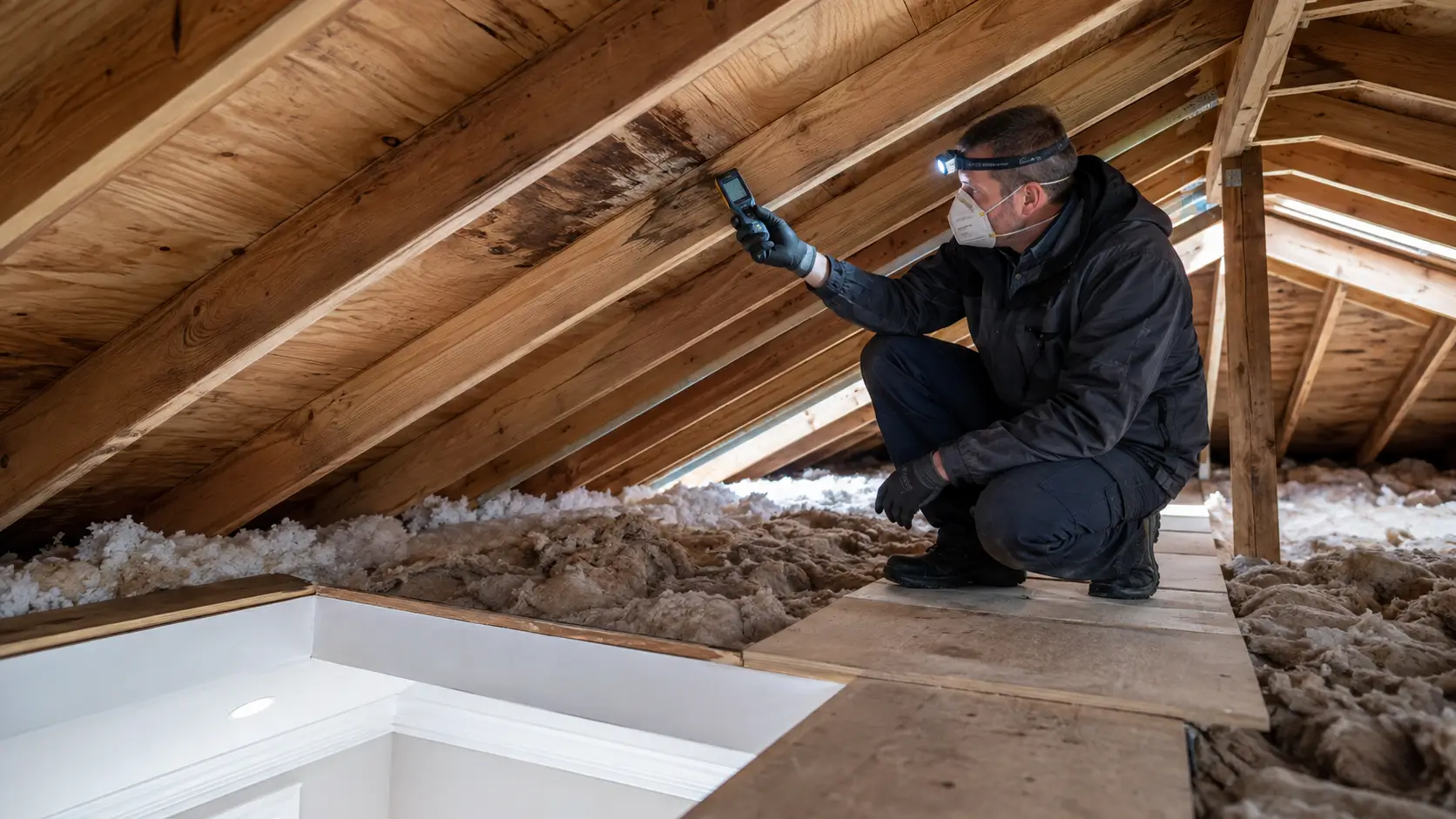
Warning signs include localized deflection, a spongy feel under professional foot traffic, darkened sheathing in the attic, rusty nail tips, damp insulation, musty odors, or abnormal moisture readings.
When attic access is safe and relevant, inspecting the underside of the roof deck can reveal moisture patterns that have not yet reached finished ceilings.
Tropical Storms, Hail, and High Winds Leave Different Damage Patterns
Different storms require different inspection priorities.
Tropical storms and hurricane-related weather combine prolonged rain, repeated gusts, wind-driven water, debris impact, and drainage overload. Roof edges, flashing transitions, ridge components, penetrations, gutters, and wind-exposed slopes deserve particular attention.
Hailstorms require a systematic impact assessment. We examine shingles for granule displacement, bruising, and mat damage while checking metal vents, flashing, and gutters for corroborating impact evidence.
High-wind thunderstorms can break seals without producing widespread missing shingles. Corners, eaves, rakes, hips, ridges, and previously repaired sections are priority areas because uplift pressure is not distributed uniformly across a roof.
The cause matters because repairs should address the actual failure mode rather than only the most visible symptom.
No Interior Leak Does Not Mean No Roof Damage
Interior leakage is a late indicator. A roof system includes the exterior covering, underlayment, flashing, decking, fasteners, penetrations, and drainage components. Water must bypass enough of those defenses before it reaches drywall.
A storm can damage the outer layer while underlayment temporarily prevents visible leakage. Water may also enter only when rain approaches from a particular direction or wind pressure reaches a certain threshold. A roof can therefore remain apparently dry for days or weeks before a later storm reveals the weakness.
The absence of a stain does not prove the roof escaped damage.
What a Professional Post-Storm Roof Inspection Should Cover
A useful inspection is systematic rather than cosmetic. Depending on roof type, access, age, and storm conditions, we evaluate:
- Shingle surfaces for impacts, creases, tears, and abnormal granule loss
- Adhesive seals and tabs for wind lifting
- Ridges, hips, eaves, rakes, and corners
- Flashing at walls, chimneys, valleys, vents, and pipe penetrations
- Ridge vents, boots, and exposed fasteners
- Gutters, downspouts, valleys, and drainage restrictions
- Fascia, soffits, and roof edges for displacement
- Debris-impact locations and reopened previous repairs
- Attic decking, insulation, and moisture indicators when accessible
- Interior ceilings and walls for developing stains
For local homeowners, a roof inspection after a storm in Mount Pleasant creates a documented baseline before minor storm defects develop into larger leaks.
When Should a Roof Be Inspected After Severe Weather?
Inspection timing should balance urgency with safety. No one should climb onto a wet roof during lightning, active high winds, or unstable post-storm conditions.
Once conditions are safe, inspection is appropriate after a significant tropical system, hail event, severe thunderstorm, fallen-limb impact, or wind event that affected nearby trees, fences, siding, or neighboring roofs. It also makes sense after prolonged wind-driven rain even when immediate damage is not obvious.
Several days or weeks passing does not erase the value of an inspection. Creased shingles, weakened seals, flashing movement, clogged drainage, moisture staining, or soft decking may still be identifiable. The objective is to find the defect before repeated weather exposure compounds it.

Documenting Storm Damage Before Repairs
Good documentation turns an inspection into a usable record. We recommend date-stamped overview photos, close-ups, notes identifying slopes and components, interior photographs where moisture is present, and clear separation between pre-existing wear and storm-related concerns.
When repairs are necessary, documentation should show the defect before it is disturbed whenever safely possible. Homeowners should preserve previous inspection reports, maintenance invoices, and older roof photographs that help establish chronology.
A roofing inspection documents observed conditions; insurance coverage decisions remain with the carrier under the policy terms.
What Homeowners Can Safely Check From the Ground
Before a professional arrives, homeowners can perform a limited ground-level review. Look for shingles in the yard, bent gutters, damaged downspouts, displaced ridge pieces, tree limbs, visible flashing movement, valley debris, and new interior water stains.
Check the attic only if access is safe. Use a flashlight to look for damp insulation, darkened decking, dripping fasteners, or unexpected daylight. Avoid wet materials near electrical wiring.
Do not walk a storm-damaged roof simply because it looks dry. Loose shingles, debris, damaged edges, and hidden soft decking can make footing unpredictable.
CONCLUSION
Post-storm roof inspections matter because consequential damage is not always obvious. Hail can bruise shingles without puncturing them. Wind can weaken seals and leave tabs resting flat. Flashing can shift enough to admit directional rain. Gutters can clog and force water toward vulnerable edges. Moisture can begin affecting decking before a ceiling stain appears.
After tropical storms, hail, or high winds in Mount Pleasant, the practical question is not whether the roof looks damaged from the driveway. It is whether the roof system still performs as designed at its most vulnerable points. A timely inspection provides that answer while defects are easier to document, monitor, and repair.
FAQ
How can a roof be damaged after a storm if no shingles are missing?
Wind can partially break shingle seals, crease tabs, or disturb flashing without removing materials. Hail can bruise asphalt shingles or displace granules while leaving the roof visually intact from the ground. These defects may not leak until later weather exposes the weakened area.
How long after a storm can hidden roof damage become visible?
Some damage is immediate but difficult to see; other symptoms appear after subsequent rain, heat cycles, or repeated wind exposure. A leak may emerge days or weeks later if water enters only under a specific wind direction or rainfall intensity. Inspection remains useful even when the storm was not recent.
Should I get a roof inspection after every tropical storm or hailstorm?
An inspection is especially valuable after storms that produce hail, strong winds, wind-driven rain, fallen debris, or visible damage to nearby properties. It is also warranted when the roof is older, has previous repairs, or has known vulnerable areas. The goal is to verify performance before hidden defects become larger failures.