
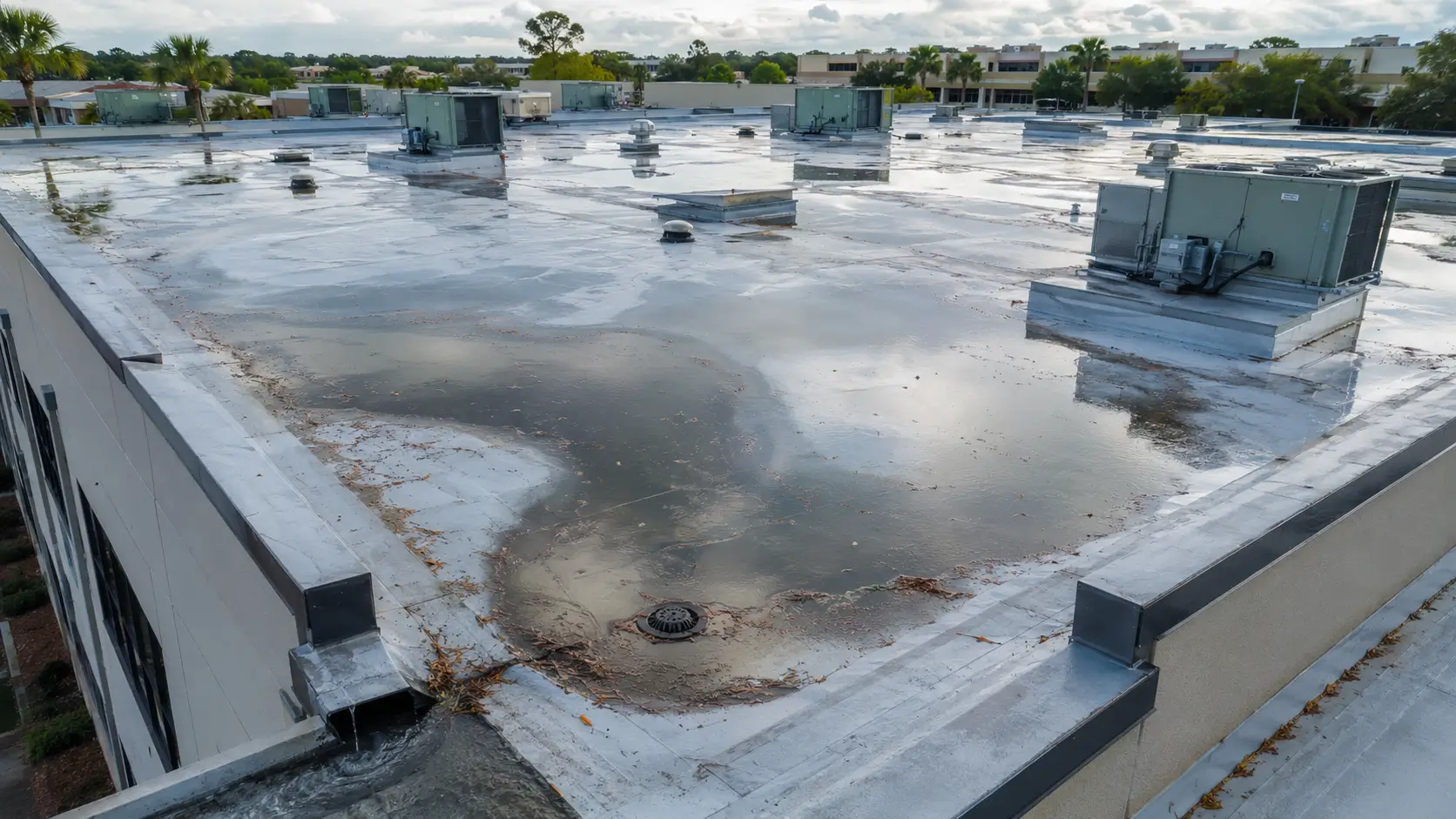
After a Lowcountry downpour, water should move across a low-slope roof toward drains, scuppers, gutters, or designated discharge points. When broad puddles remain, the roof is showing a drainage problem that can shorten its service life and allow moisture into the building. At MasterRoof Mount Pleasant, we treat recurring ponding water as a condition requiring investigation—not a cosmetic issue—because coastal rainfall, high humidity, wind-driven debris, and repeated wetting magnify small roof defects.
What Counts as Ponding Water?
A low-slope roof drains more slowly than a steep-slope roof, but it should not function as a permanent basin. Residual water immediately after rainfall may be normal while runoff continues. Concern begins when water repeatedly collects in the same depressions, drains unusually slowly, or remains for roughly 24 to 48 hours during conditions that should permit drying.
Acceptable drainage time depends on roof design, membrane manufacturer, warranty terms, shade, humidity, wind, and outlet configuration. Even so, recurring pools indicate that slope, drainage capacity, surface condition, structural deflection, or rooftop equipment placement should be evaluated.
The National Roofing Contractors Association recommends that membrane, liquid-applied, and spray polyurethane foam systems be designed for positive roof drainage. Positive drainage directs water toward outlets without leaving persistent depressions.
Why Ponding Water Is Especially Serious in the Lowcountry
Mount Pleasant roofs face intense rain, humid air, tropical weather, salt exposure, and wind-carried leaves, pine needles, and sediment. A roof may drain adequately during a light shower but become overwhelmed during a high-volume storm when outlets are partially blocked or rainfall reaches the roof faster than drains can discharge it.
Humidity slows evaporation. A shallow pool can keep seams, flashings, coatings, and repairs wet for extended periods. When storms occur on consecutive days, vulnerable areas may never fully dry. Sediment also settles in ponds, holding moisture, supporting biological growth, staining reflective membranes, and concealing cracks or seam defects.
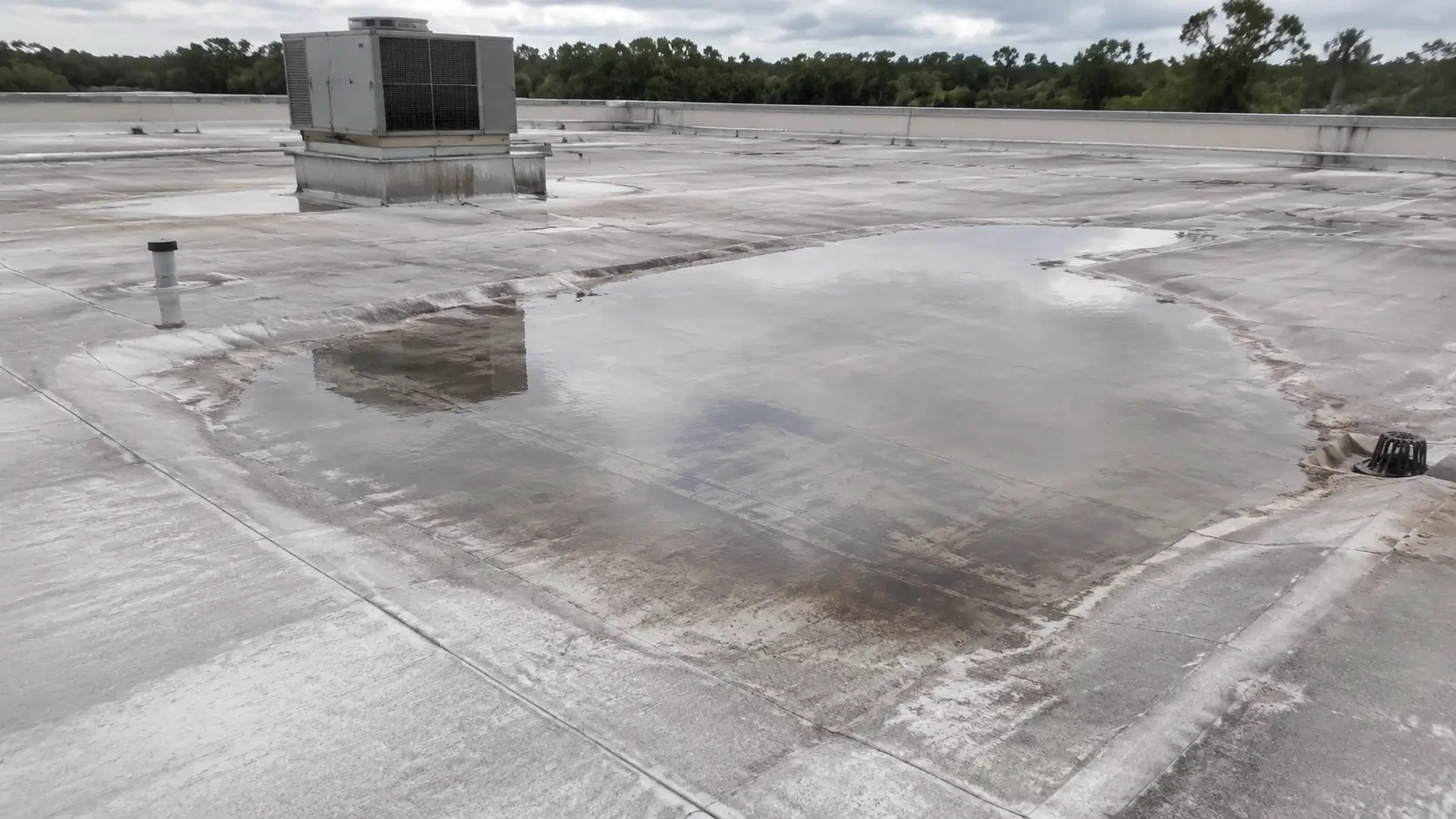
Standing Water Adds Significant Roof Load
One inch of water covering one square foot weighs approximately 5.2 pounds. A one-inch-deep pool covering 1,000 square feet adds about 5,200 pounds of temporary load to the roof.
That weight can deepen an existing depression where decking, insulation, or framing has deflected. The deeper area collects more water during the next storm, adding more load and worsening the low spot. This feedback cycle explains why ponding areas may gradually expand.
Standing water does not automatically indicate imminent structural failure. However, deep or enlarging ponds, sagging deck lines, bowed ceilings, displaced roof components, or sudden drainage changes require prompt professional evaluation and may justify a structural review.
How Ponding Water Damages Low-Slope Roof Membranes
Prolonged Wetting and Hidden Openings
Roof membranes are designed as water-resistant systems, but continuous immersion creates harsher exposure than normal rainfall and runoff. Water can exploit pinholes, cracks, unsealed fasteners, deteriorated patches, and small voids around penetrations. A defect that survives a brief shower may leak when submerged for several hours.
Uneven Thermal Movement
Ponded areas heat and cool differently from dry membrane. Water moderates the temperature beneath the pool while nearby roofing heats rapidly in direct sunlight. Repeated uneven movement stresses membrane sheets, adhesives, seams, flashing corners, and repair materials.
Sediment can also reduce the reflectivity of white TPO, PVC, or coated roofs. Dirt and biological film absorb more solar heat, increasing localized temperature swings and accelerating surface aging.
Coating Failure
Persistent immersion can soften incompatible coatings, expose poor adhesion, or produce blisters where moisture vapor becomes trapped. Recoating without correcting the depression, blocked outlet, compressed insulation, or inadequate slope usually produces another short-lived repair.
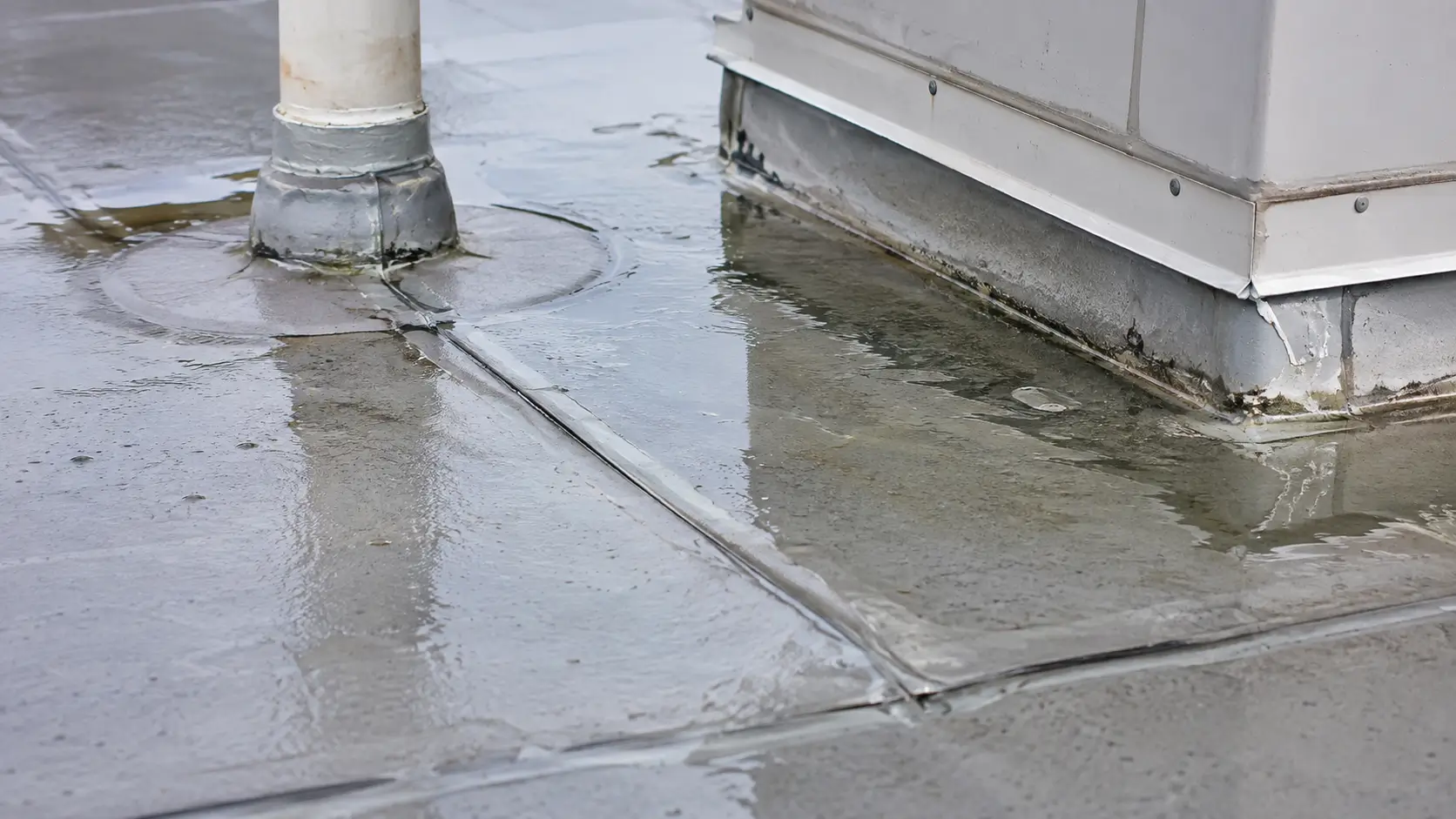
Why Seams, Flashings, and Penetrations Become Vulnerable
Many low-slope roof leaks begin at transitions rather than through an intact field membrane. Ponding raises the exposure level at these details and gives water more time to enter imperfect joints.
On TPO, PVC, and EPDM roofs, vulnerable points include seams, T-joints, patches, pipe boots, pitch pans, termination bars, and drain connections. Modified bitumen concerns include open laps, cracked asphalt, deteriorated flashing cement, and displaced granules. Coated roofs commonly crack around penetrations, fasteners, drains, and substrate joints.
Water may enter at one point and travel laterally through insulation before appearing indoors. A ceiling stain can therefore be far from the actual roof defect. Sealing directly above the stain without moisture tracing often fails.
Wet Insulation Can Expand the Damage
Once water enters the assembly, insulation may absorb or trap moisture. Wet insulation can lose thermal performance, deform under foot traffic, and create deeper membrane depressions. Saturated areas may remain hidden because the surface appears intact and the ceiling has not yet stained.
Moisture trapped between vapor-resistant layers can migrate as temperatures change. Over time, fasteners and metal decking may corrode, adhesives may weaken, and gypsum or wood-based components may deteriorate.
A visual inspection cannot confirm whether insulation is dry. Suspected areas may require infrared scanning, capacitance testing, core sampling, or another diagnostic method selected for the roof system.
Ponding Water, Interior Humidity, and Mold Risk
Exterior ponding does not create indoor mold by itself. Risk rises when water reaches insulation, ceilings, walls, or stored materials and keeps porous surfaces damp. Paper-faced gypsum, ceiling tile, insulation facers, wood, dust, and cardboard can support growth.
The U.S. Environmental Protection Agency recommends drying wet building materials within 24–48 hours to reduce mold risk. In a humid coastal building, drying may require water extraction, dehumidification, air movement, removal of saturated materials, and repair of the roof entry point—not merely replacing a stained ceiling tile.
Musty odors, recurring discoloration, peeling paint, damp insulation, condensation, or elevated indoor humidity after rain should be documented as possible evidence of hidden moisture.
Common Causes of Ponding Water
Recurring ponding usually results from one or more conditions:
- Blocked drains or scuppers: Leaves, sediment, vegetation, and roofing debris restrict water flow.
- Inadequate slope: The deck or tapered insulation lacks a continuous drainage path.
- Compressed insulation: Foot traffic, equipment servicing, or stored materials create depressions.
- Structural deflection: Decking or framing sags between supports.
- Poor equipment placement: HVAC curbs, conduit supports, solar racks, or walk pads interrupt runoff.
- Insufficient outlet capacity: Drains or scuppers cannot manage intense rainfall.
- Improper repairs: Thick patches create ridges that divert water into new low areas.
- Drain settlement: The surrounding membrane drops while the drain remains too high.
- Wind-driven debris: Storm debris forms temporary dams behind curbs and parapets.
The repair must match the cause. Clearing a drain cannot correct structural sagging, and applying sealant cannot restore missing slope.
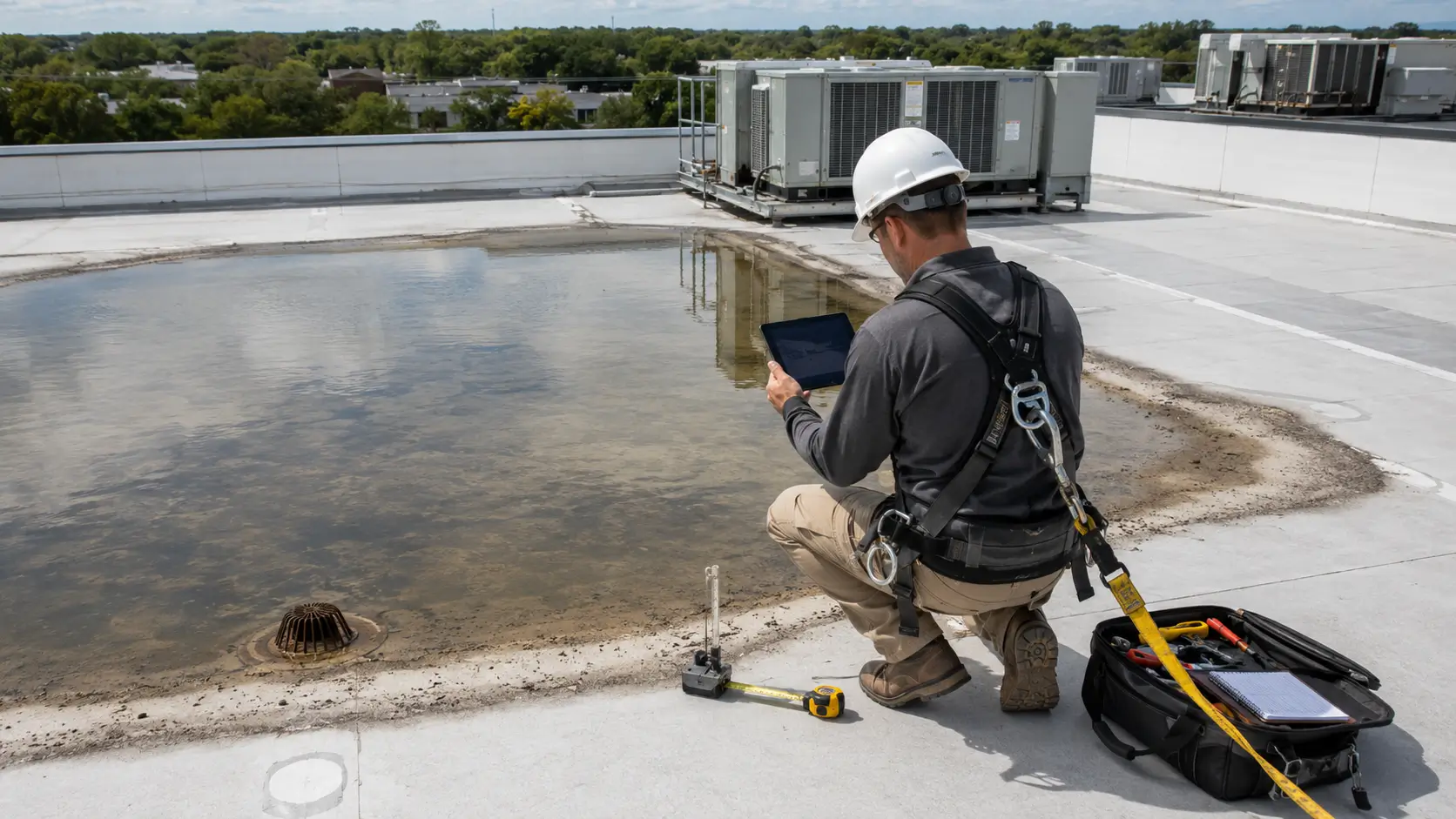
Detailed Post-Rain Roof Inspection Checklist
Inspect the roof only after lightning, high winds, and slippery conditions have passed. Access should be limited to trained personnel following approved fall-protection procedures.
1. Record the Storm Conditions
Document when the rain started and stopped, the inspection time, and whether subsequent conditions were sunny, shaded, humid, windy, or rainy. Drainage time cannot be evaluated accurately without this context.
2. Photograph and Map Every Pond
Take wide photographs showing each pond relative to drains, parapets, HVAC units, and penetrations. Add close photographs of the membrane and pond perimeter. Mark each location on a roof plan so changes can be tracked after future storms.
3. Measure the Size and Depth
Record the approximate length, width, and maximum depth without damaging the membrane. An expanding perimeter or increasing depth may indicate progressing settlement, insulation compression, or structural deflection.
4. Check Drains, Scuppers, Gutters, and Overflows
Confirm that drain strainers are secured and clear. Look for sediment rings, vegetation, corrosion, loose sealant, damaged drain bowls, and outlets positioned above the surrounding membrane.
Verify that overflow scuppers or secondary drains are unobstructed. Water marks around an overflow may show that the primary system was blocked or overwhelmed during the storm.
5. Trace the Drainage Path
Use debris lines and clean streaks to determine how water moved. Check whether curbs, pipes, walk pads, conduit, patches, or abandoned equipment redirected runoff. Inspect crickets and saddles behind wide penetrations where water commonly becomes trapped.
6. Inspect Seams and Flashings
Examine every seam touching or bordering the pond. Look for fishmouths, wrinkles, edge lifting, voids, failed welds, adhesive separation, loose cover tape, cracks, open laps, failed sealant, loose fasteners, and membrane bridging.
Seam probing should be performed only by qualified roofing personnel using tools and procedures appropriate for the membrane.
7. Examine the Field Membrane
Look for punctures, cuts, blisters, exposed reinforcement, erosion, cracking, coating loss, biological film, and soft areas. Avoid walking through deep water because submerged debris may puncture the roof, while wet surfaces can conceal unstable decking.
8. Check for Softness or Deflection
From safe, dry areas, note unusual movement, depressions, or softness. Stop loading suspicious sections. Soft areas may indicate wet insulation, damaged cover board, compressed substrate, or deteriorated decking.
9. Inspect the Interior Below
Check ceilings, walls, structural members, mechanical rooms, and storage areas beneath or downslope from the pond. Document stains, drips, peeling finishes, rust, swollen materials, damp insulation, and musty odors.
Compare interior symptoms with roof drainage paths rather than assuming the leak is directly above the stain. Water can travel along insulation joints, structural members, conduits, and deck flutes before becoming visible.
10. Review the Roof’s History and Reinspect
Compare findings with previous photographs, repairs, warranty records, and tenant reports. Recurring leakage during specific wind directions or rainfall intensities can reveal defects that remain hidden during dry weather.
Reinspect after a defined drying period. Persistent water, an enlarging pond, active leakage, or new membrane damage should trigger professional diagnosis.
How Ponding Water Should Be Repaired
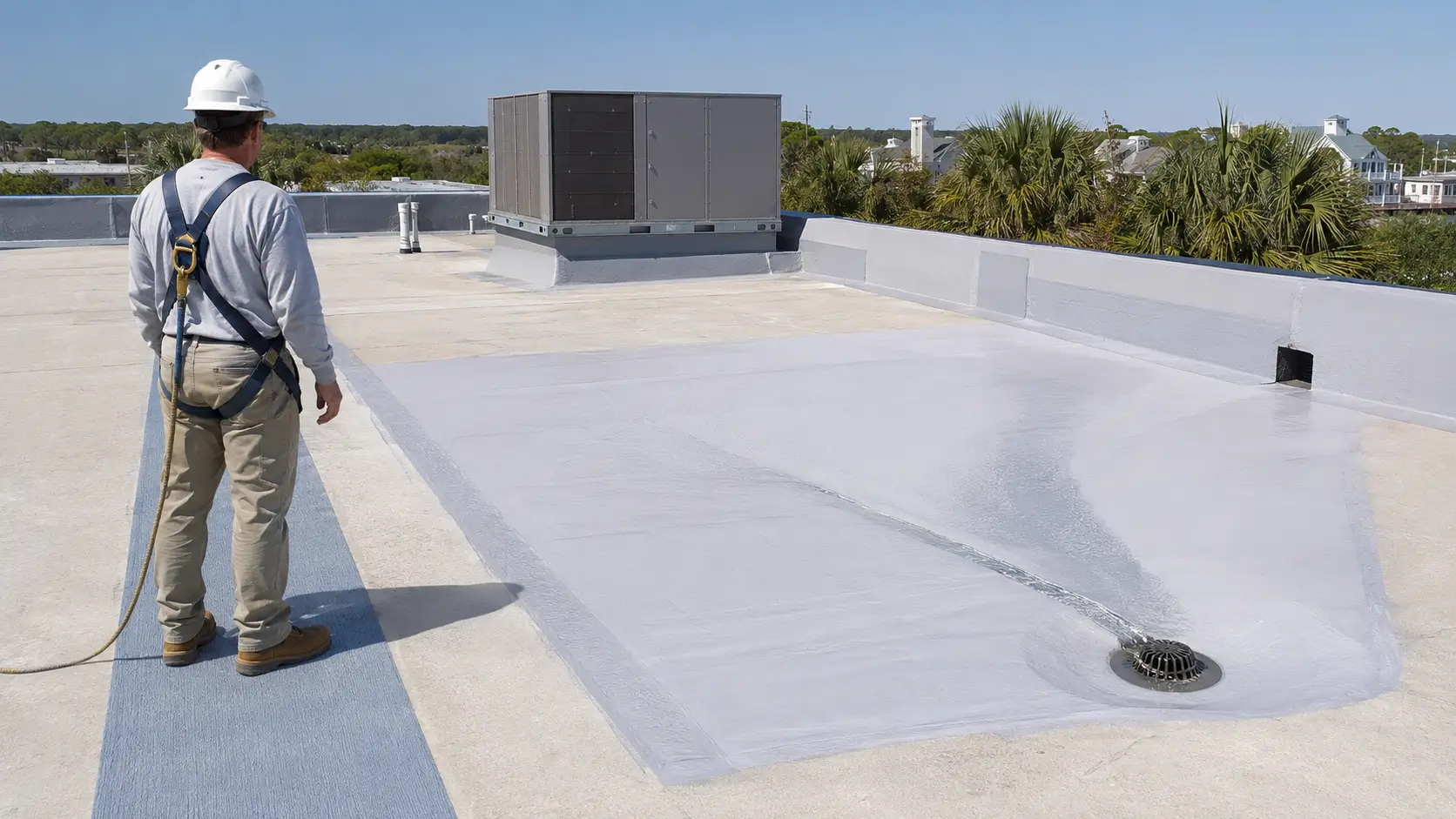
Effective repair begins with diagnosis. Debris removal and drain cleaning may resolve a maintenance-related obstruction. Local low areas may require tapered insulation, drain sump correction, additional crickets, or replacement of compressed insulation. Damaged membrane and flashing must be repaired with materials compatible with the existing system.
Widespread deflection may require deck or structural correction. Insufficient drainage capacity may require additional outlets, larger leaders, or improved overflow drainage. Changes to drainage or structural components should comply with applicable codes and involve qualified design professionals when necessary.
Property owners who need to repair ponding water on flat roofs should expect the repair scope to address both the visible pool and its underlying cause. A durable solution restores drainage, removes wet materials where required, repairs membrane defects, and establishes a documented maintenance plan.
When Ponding Water Requires Immediate Attention
Request prompt professional evaluation when water remains after normal drying conditions, reaches flashing terminations, covers electrical or mechanical components, becomes deeper than after previous storms, or coincides with interior leakage.
Immediate action is also necessary when ceiling materials bulge, water approaches energized equipment, the roof feels unstable, or structural deformation is visible.
Do not puncture the membrane, force debris into internal drains, or apply generic sealant over wet surfaces. These actions can worsen leakage, damage drainage piping, trap moisture, and complicate warranty coverage.
Preventing Recurring Ponding Water
We recommend inspecting low-slope roofs seasonally, after major storms, and after contractors service rooftop equipment. Drains, scuppers, gutters, and downspouts should remain clear, while walk pads and equipment supports should be positioned so they do not obstruct runoff.
Each inspection should use the same roof plan and photograph locations. Tracking pond dimensions, outlet condition, seam changes, repairs, and interior symptoms makes deterioration measurable. Small drainage defects are far less expensive to correct before they lead to wet insulation, corrosion, mold remediation, tenant disruption, or premature roof replacement.
Conclusion
Ponding water on a Lowcountry low-slope roof is a measurable warning sign involving drainage, membrane durability, seam integrity, hidden moisture, and added structural load. A disciplined post-rain inspection can distinguish temporary residual water from a recurring defect, identify the source before damage spreads, and guide a repair that corrects both the pond and its underlying cause.
Frequently Asked Questions
How long is too long for water to remain on a low-slope roof?
Water that repeatedly remains for approximately 24 to 48 hours during weather that should permit drying deserves professional evaluation. Actual drainage expectations depend on the roof design, membrane manufacturer, warranty requirements, shade, humidity, and recent rainfall.
Can ponding water void a commercial roof warranty?
It can affect coverage when a warranty excludes damage related to inadequate drainage, structural deflection, poor maintenance, or unauthorized modifications. Warranty language varies, so the roof system manufacturer or warranty provider should review the condition before repairs begin.
Can a roof coating fix ponding water?
A coating may repair compatible surface defects, but it cannot correct inadequate slope, clogged drainage, wet insulation, compressed substrate, or structural sagging. The drainage cause must be resolved first, and the coating must be approved for the roof system and expected water exposure.