
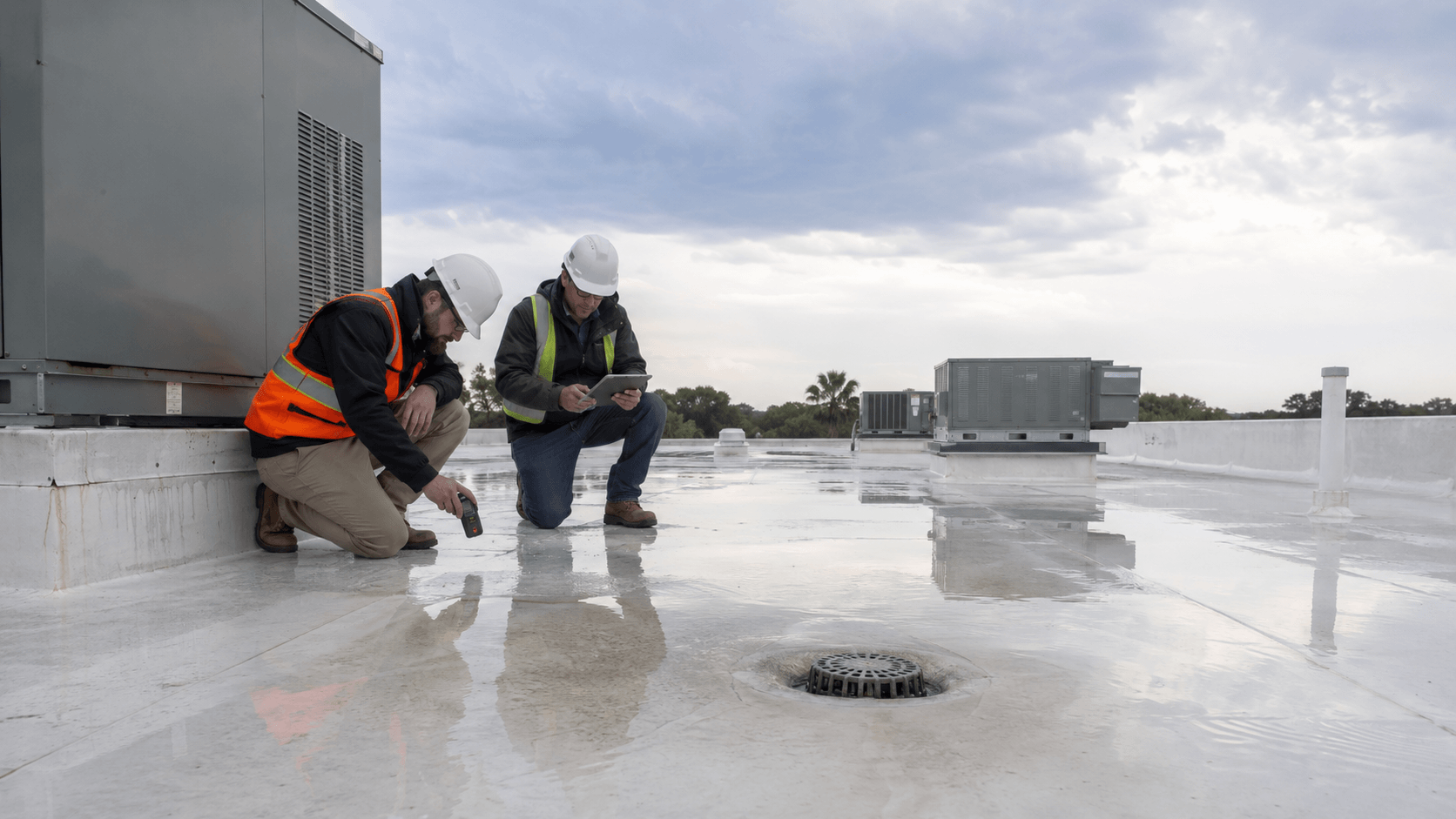
Flat roof leaks after heavy rain require fast, structured action because the visible drip may represent a much larger moisture path above the ceiling. At MasterRoof Mount Pleasant, we help property managers determine whether water entered through a membrane defect, failed flashing, rooftop equipment curb, blocked drain, scupper, or saturated roof assembly before interior damage spreads.
Mount Pleasant’s Lowcountry climate places commercial roofs under repeated moisture pressure. The South Carolina State Climatology Office reports that the Coastal Plain averages approximately 50 to 52 inches of rainfall annually, with a secondary precipitation maximum located roughly 10 to 20 miles inland from the coast. Intense downpours, wind-driven rain, tropical systems, high humidity, and debris accumulation can expose weaknesses that remain hidden during light rain.
Why Heavy Rain Exposes Flat Roof Problems
A low-slope roof must move water toward internal drains, scuppers, gutters, or downspouts while seams, penetrations, flashings, and perimeter details remain watertight. A partially blocked drain or shallow low spot may handle a brief shower but retain water during sustained rain.
Water can also travel laterally within the assembly. It may enter at an HVAC curb, migrate through insulation, follow deck flutes, and appear many feet from the opening. Property managers should treat the first interior symptom as evidence of a water-intrusion route—not proof of the exact defect. Mount Pleasant roofing systems face additional exposure from wind-driven rain, tropical weather, humidity, drainage problems, and seasonal storms.
1. Ceiling Stains, Drips, and Discolored Tiles
Brown rings, yellow discoloration, damp acoustical tiles, peeling paint, and localized dripping indicate that water has passed through part of the building envelope.
We recommend documenting each area before moving ceiling tiles or beginning cleanup. Record the suite, exact location, time first observed, rainfall conditions, drip rate, nearby electrical equipment, and whether the stain existed before the storm. Photograph the ceiling and mark the location on a floor plan.
Do not assume the opening is directly above the stain. Water may travel along metal decking, insulation facer, conduit, framing, or suspended-ceiling components. Several aligned stains may indicate one drainage or rooftop-equipment problem rather than separate punctures.
A swollen, sagging, or bulging ceiling requires immediate isolation. Keep occupants away and do not stand beneath water-loaded drywall or ceiling materials.
2. Bubbling, Blistering, or Wrinkling Membrane
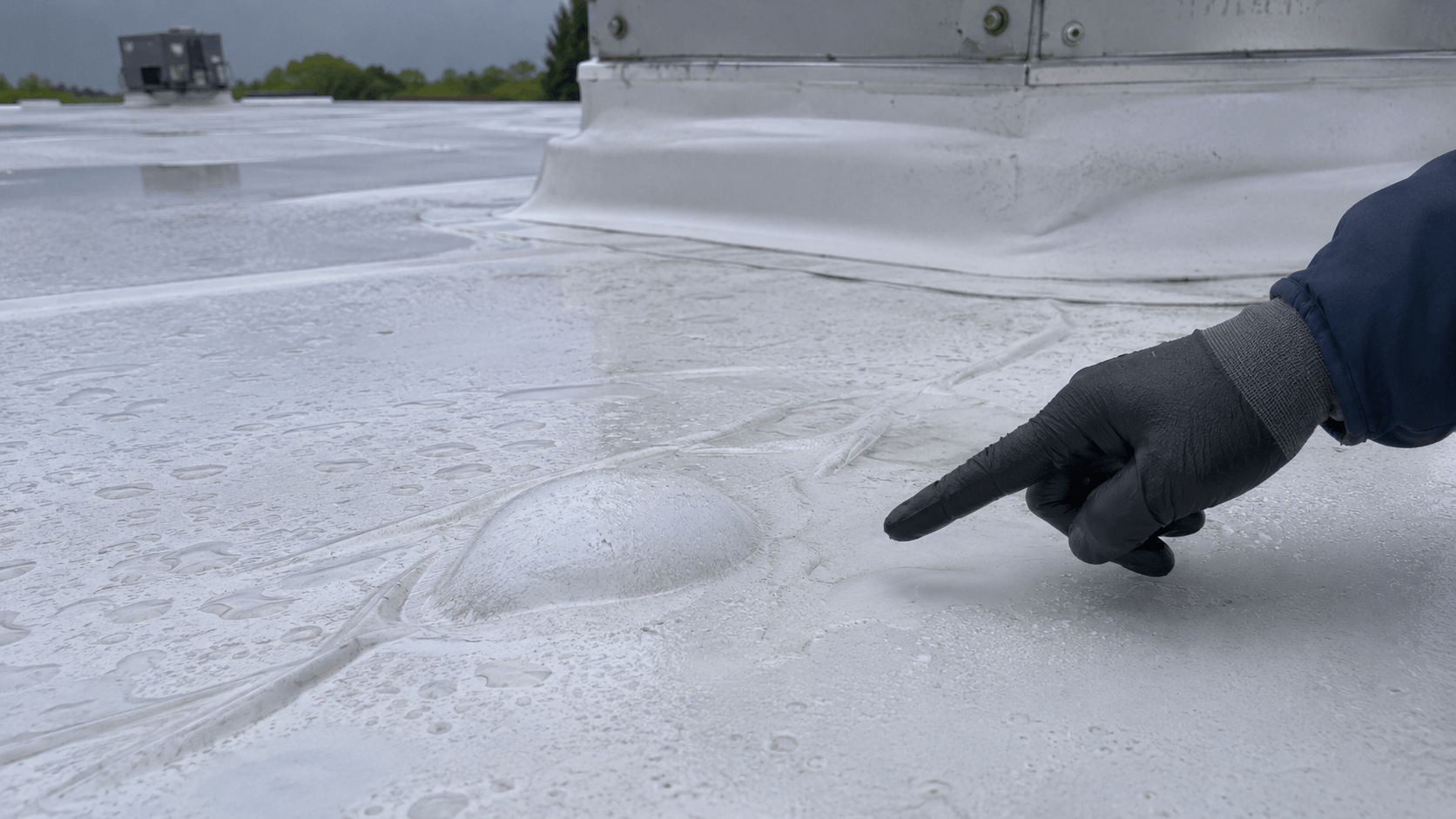
Bubbles and blisters in TPO, PVC, EPDM, modified bitumen, or coated surfaces may indicate trapped air, vapor, or moisture. Heavy rain can reveal an existing adhesion problem or force water into a compromised seam.
Never cut, puncture, press, or drain a membrane bubble. Opening it without identifying the roof construction can create a direct leak path, damage insulation, and complicate warranty coverage. Evaluation should consider its size, firmness, location, proximity to seams or penetrations, and whether moisture is present below it.
Wrinkles around curbs, parapets, and penetrations also deserve attention because membrane movement can stress welds, adhesive bonds, termination bars, and flashing transitions. A wrinkle that terminates at an open seam, cracked coating, or deteriorated sealant joint may identify the route used by wind-driven rain.
3. Wet Insulation Beneath the Roof
Wet insulation is one of the most expensive hidden consequences of a flat roof leak. Water can spread beyond the visible stain, especially in assemblies with multiple insulation layers or fluted metal decks.
Saturated insulation may lose thermal performance, add weight, hold moisture against the deck, and prevent the assembly from drying. Repeated wetting can enlarge the affected area even when each interior leak appears minor. A patch may stop new water while leaving damaged insulation trapped below.
We evaluate moisture extent through interior evidence, targeted probes or core samples where appropriate, and non-destructive moisture surveys when justified. The repair scope should separate dry materials from wet insulation that must be removed. Covering saturated components can conceal corrosion, decay, microbial growth, and continuing deterioration.
The size of the ceiling stain should never define the repair boundary. A small interior mark may correspond with a considerably larger wet area beneath the membrane.
4. Leaks Near HVAC Units and Rooftop Equipment
HVAC units create multiple transitions: curbs, flashing, counterflashing, fasteners, access panels, conduit, refrigerant lines, condensate drains, and service platforms. Any of these details can become a water-entry point during wind-driven rain.
A leak near an HVAC unit may come from failed curb flashing, separated membrane corners, deteriorated sealant, loose panels, an overflowing condensate line, or the equipment itself. Record whether the leak occurs only during rain, only while the unit operates, or under both conditions. That timing helps separate roof intrusion from mechanical condensation.
Check whether the affected ceiling area is directly below the unit, down-slope from it, or aligned with the roof-deck direction. Water entering at a curb can migrate away from the equipment before it reaches the occupied space.
Service traffic can also puncture or abrade membranes. Dropped tools, displaced walkway pads, sharp access panels, and repeated foot traffic may damage the roof around frequently serviced units. We recommend coordinating roofing and HVAC contractors when the source crosses both systems; assigning the issue to only one trade may leave the defect unresolved.
5. Blocked Drains, Scuppers, Gutters, and Downspouts
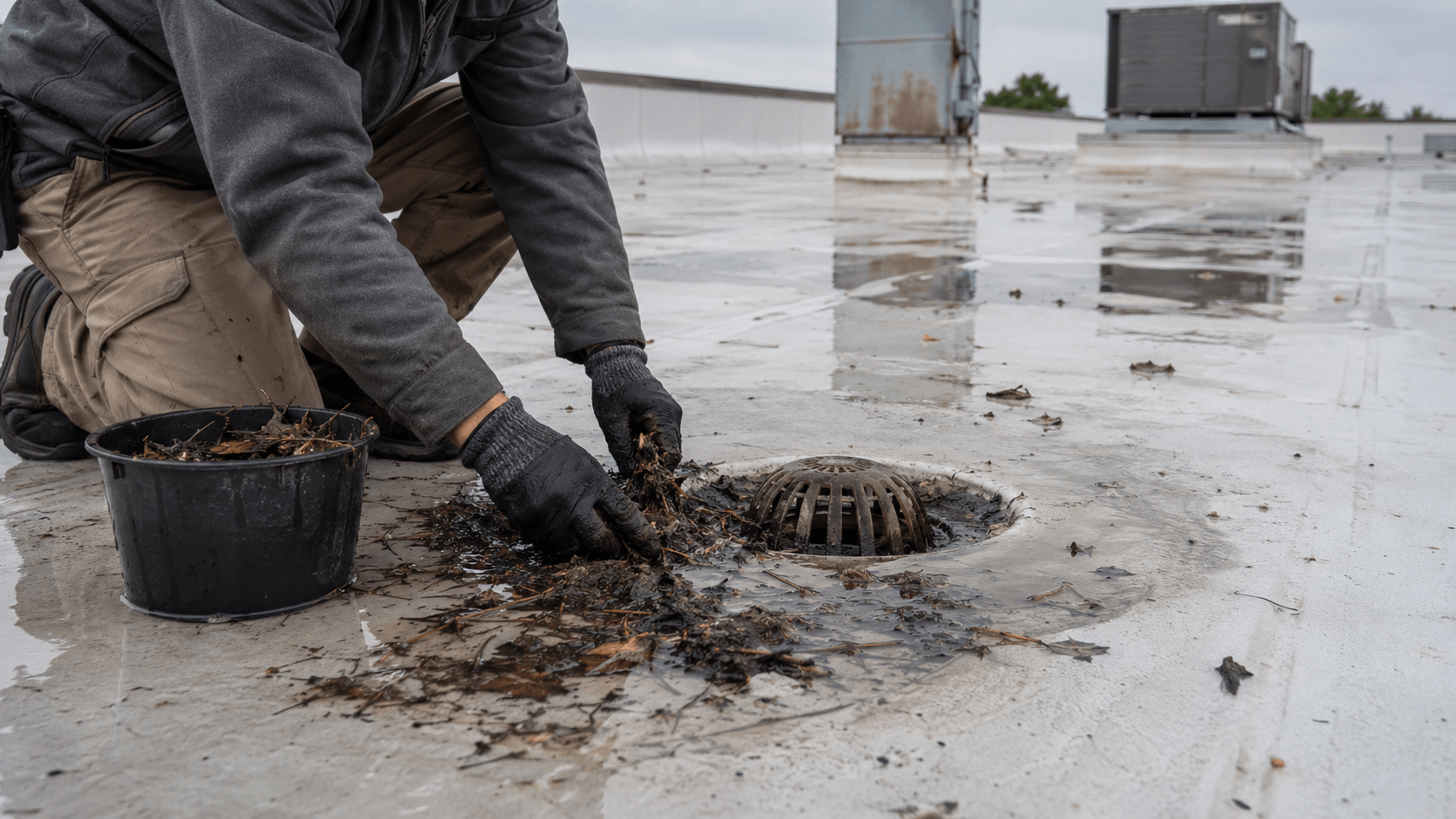
Leaves, pine needles, sediment, packaging, roofing debris, and vegetation can obstruct strainers or scuppers. A partially restricted drain may empty slowly during normal weather but become overwhelmed during heavy rain.
Warning signs include:
- Water lines around drain bowls
- Debris packed against strainers
- Ponding that remains after surrounding areas dry
- Staining beneath scuppers
- Water flowing over parapets
- Overflowing gutters
- Slow or backed-up downspouts
- Repeated leaks near columns or exterior walls
Interior leakage near columns may correspond with internal drain piping, while moisture near exterior walls may point toward scuppers, conductor heads, gutters, or perimeter flashing.
Standing water increases pressure on seams, previous repairs, penetrations, and weak flashing. It can also deepen low spots as insulation compresses or decking deflects. Heavy Lowcountry rain tests drainage capacity alongside seams, rooftop equipment, flashing, and perimeter details.
Property staff should not clear drains during lightning, strong wind, or unsafe roof conditions. Once access is safe, debris should be removed without pushing it into internal piping. Recurring ponding should be investigated for slope, structural, or insulation problems rather than treated only as a cleaning issue.
6. Tenant Complaints That Reveal Leak Patterns
Tenant reports often provide the earliest evidence of a developing problem. A complaint about a musty odor, stained tile, slippery floor, humid air, or intermittent drip may appear isolated. Several reports tied to the same storm can reveal a larger moisture zone.
We recommend maintaining one centralized leak log. Each entry should include:
- Date and time reported
- Building, floor, suite, and room
- Photos or video
- Rainfall and wind conditions
- Duration and approximate drip rate
- Affected ceilings, walls, flooring, or contents
- Temporary containment actions
- Earlier incidents in the same area
Plotting complaints on a floor plan may show whether leaks follow a drain line, parapet, expansion joint, HVAC row, roof penetration, or deck direction.
Tenant descriptions should be recorded precisely. “Water near the air vent,” “musty smell after rain,” and “tile becomes stained only during wind” provide more diagnostic value than a maintenance ticket labeled simply “roof leak.”
Recurring complaints should not be closed merely because the ceiling dries. Replacing a stained tile without finding the source removes evidence while moisture may remain above it.
Immediate Steps After a Flat Roof Leak
Property managers should use a controlled response sequence:
- Restrict access beneath sagging ceilings, active drips, and wet electrical components.
- Move inventory, electronics, records, furniture, and tenant property.
- Use containers and absorbent materials without creating trip hazards.
- Photograph active leakage, ceiling damage, flooring, and affected contents.
- Record the time, rain conditions, affected rooms, and tenant reports.
- Notify ownership, risk management, and the roofing contact.
- Preserve damaged materials when required for insurance documentation.
- Begin professional extraction and drying after the source is controlled.
The U.S. Environmental Protection Agency recommends responding to water-damaged materials within 24 to 48 hours to reduce the likelihood of mold growth. Its commercial-building guidance also states that wet ceiling tiles and fiberglass or cellulose insulation generally require removal rather than cosmetic drying alone.

What a Professional Flat Roof Leak Inspection Should Include
A complete inspection should connect interior evidence with rooftop conditions. We begin with stains, moisture patterns, tenant reports, deck direction, and mechanical locations. The rooftop assessment then examines:
- Membrane seams and field areas
- Punctures, cuts, and surface abrasion
- Previous patches and temporary repairs
- Parapet and wall flashing
- Roof penetrations
- Drains and drain bowls
- Scuppers, gutters, and downspouts
- Expansion joints
- Edge metal and coping
- HVAC curbs and equipment supports
- Ponding areas and compressed insulation
The inspection should answer four questions:
- Where is water most likely entering?
- How far has moisture traveled?
- Which materials remain serviceable?
- What repair will restore drainage and watertight continuity?
For recurring leaks, widespread wet insulation, deteriorated flashing, or membrane damage around equipment, professional flat roof repair in Mount Pleasant should address both the entry point and affected assembly. A surface patch is insufficient when water has migrated beneath the membrane or drainage continues to overload the area.
Repair materials must also be compatible with the existing roof system. General-purpose caulk, roofing cement, or an unverified coating may fail to bond properly, interfere with future repairs, or damage certain membranes.
When the Leak Requires Emergency Attention
Emergency response is warranted when water enters near electrical panels, lighting, servers, medical equipment, inventory, occupied spaces, or structural components.
Immediate attention is also necessary when:
- Ceilings are sagging or bulging
- Water spreads rapidly across several rooms
- Multiple tenants report leakage
- A drain is blocked while rain continues
- A membrane section is visibly open
- Water reaches walls, elevator areas, or electrical rooms
- Inventory or business operations are at immediate risk
The roof should not be accessed during lightning, strong wind, or unsafe wet conditions. Interior containment, electrical isolation by qualified personnel, documentation, and tenant protection come first. Active storm-leak guidance also emphasizes keeping occupants away from sagging ceilings and avoiding unsafe rooftop access until conditions improve.

Preventing Repeat Leaks After Heavy Rain
A preventive program should include scheduled inspections, post-storm checks, drain and scupper cleaning, repair-history mapping, rooftop-equipment coordination, and photographic documentation. Roofs with tree exposure, recurring ponding, numerous penetrations, or frequent service traffic require closer observation.
Record the condition of drains, seams, curbs, flashings, and previous repairs before and after storm season. Photographs should be taken from consistent locations so changes can be compared over time.
Unauthorized penetrations and temporary sealant repairs should be corrected with compatible roof-system materials. Contractors servicing rooftop equipment should use designated walk paths and report membrane damage immediately.
Drainage components should be checked before forecasted tropical weather and again after major rain, once roof access is safe. Cleaning a blocked strainer may resolve the immediate restriction, but repeated debris accumulation, persistent ponding, or slow drainage requires a broader correction plan.
Conclusion
Flat roof leaks after heavy rain should be managed as building-envelope failures, not isolated ceiling problems. By documenting stains, membrane changes, wet insulation, HVAC-area leaks, drainage restrictions, and tenant complaints, property managers can limit damage and support accurate repairs. MasterRoof Mount Pleasant helps commercial properties trace water intrusion, determine the full moisture extent, and restore the roof before the next Lowcountry downpour.
FAQ
How quickly should a property manager respond to a flat roof leak?
The affected area should be secured immediately, and extraction, inspection, and drying should begin as soon as conditions are safe. Wet commercial materials should be evaluated within the EPA’s 24-to-48-hour response window because hidden moisture can spread beyond the visible stain.
Why does a flat roof leak only during heavy rain?
Heavy rain can overwhelm partially blocked drains, deepen ponding, and expose weak seams, flashing, scuppers, or HVAC curb details that remain watertight during lighter showers. Wind can also drive rain into openings that do not leak under calm conditions.
Can wet flat-roof insulation be dried instead of replaced?
It depends on the insulation type, contamination, saturation level, roof assembly, and how long it remained wet. Saturated or damaged insulation often requires removal, and the repair area should be defined through moisture evaluation rather than by the size of the ceiling stain.